How to Prepare for a Month of Intense Writing

Updating this post from last year, in preparation for NaNoWriMo. These considerations were best addressed in October, but it’s never too late to think about how to prepare for the  month ahead.

How to Prepare for a Month of Intense Writing

What can you do in advance to make sure you can focus on the 50,000 word goal ahead of you? Below are some questions to ponder in October.

YOU, The Writer

What physical or personal needs do you need to meet before Nov 1?

What can you do in advance?

What activities will you need to delay or put aside?

What activities help you write?

What prevents you from writing?

Can you give up TV, Facebook, movies for the month?

Do you have a plan for daily needs (meals, exercise?

Do you need to enlist outside support?

Will you need to change your sleep schedule?

Do you need/have a writing partner?


YOUR WRITING

What is your most creative time of day?

Is it practical to work then?

Where do you work best?

Do you have a physical place only for writing?

Can you set one up for this month?

Will you work alone, join others, or both?

Do you have a general idea in mind for your story?

Do you have a daily word count goal?

Do you have a writing buddy to hold you accountable?


YOUR JOB

Can you write around your job schedule?

How will NaNoWriMo impact your job performance?

How will your job impact NaNoWriMo?

Is your employer aware you are undertaking NaNoWriMo?

Can you say no to extra work, overtime, travel?


YOUR FAMILY and FRIENDS

Is your family on board with your commitment to NaNoWriMo?

Can you assign extra duties/chores for this month?

Can you establish a daily “Do Not Disturb, I’m Writing” time?

Can you enlist help from family or friends with meals, childcare, carpool?

Do you know how to use a crock pot and/or order a pizza?

Will you need to take time off to enjoy Thanksgiving?

Will your friends understand if you can’t meet for lunch?

Do you have an end-of-NaNo celebration planned?


How can you use MATH to be successful at NaNoWriMo?

The NaNoWriMo goal is 50,000 words in the month of November.  To be successful, I believe you should write every day, but how much?

If you write every day, for 30 days, that’s a daily word count of 1,667.

If you take off Thanksgiving to watch parades, the daily word count becomes 1,725.

If you take off Thanksgiving and Sundays, the daily word count becomes 2,000.

If you need to work primarily on weekends (9 days), the daily word count is 5,555.

How many days do you plan to write? Divide 50,000 by the number of writing days, and you have your daily word count.


Think about your life and how NaNoWriMo will affect it on these levels. Do you need to create a writing nest in your home? Learn to DVR your TV shows and freeze some meatloaf meals? Would hooking up with a writing buddy keep you honest? Practice turning off that inner editor and critic, because in November, she needs to Go Away
 

Back to Basics Workshop

Back to Basics Online Workshop

When: August 4-11, 2013

Where: Online via Yahoo Groups

How much: $25/30

Sponsored by: The Mary Roberts Rinehart Pittsburgh Chapter of Sisters in Crime

Back to Basics  Workshop is about writing efficiently and effectively. It will combine a daily lesson with both original exercises and exercises applied to your own work in progress. This workshop is open to new writers, or to writers who want to sharpen their skills. It’s also open to all genres.

The schedule of topics will be:

Sunday – Point of View

Monday – Passive vs. Active Writing

Tuesday – Show Not Tell

Wednesday – Strong Word Choices

Thursday – Managing Backstory

Friday –  Delivering Dialogue

Saturday –  Creating Conflict.

Each morning I will post a lesson, with examples to illustrate each point, and exercises to practice the lesson of the day. In workshop mode, we will exchange and review the exercises day by day.

For  more details and to register, visit the Pittsburgh Sisters in Crime website.

Save the (Literary Reading) Date!

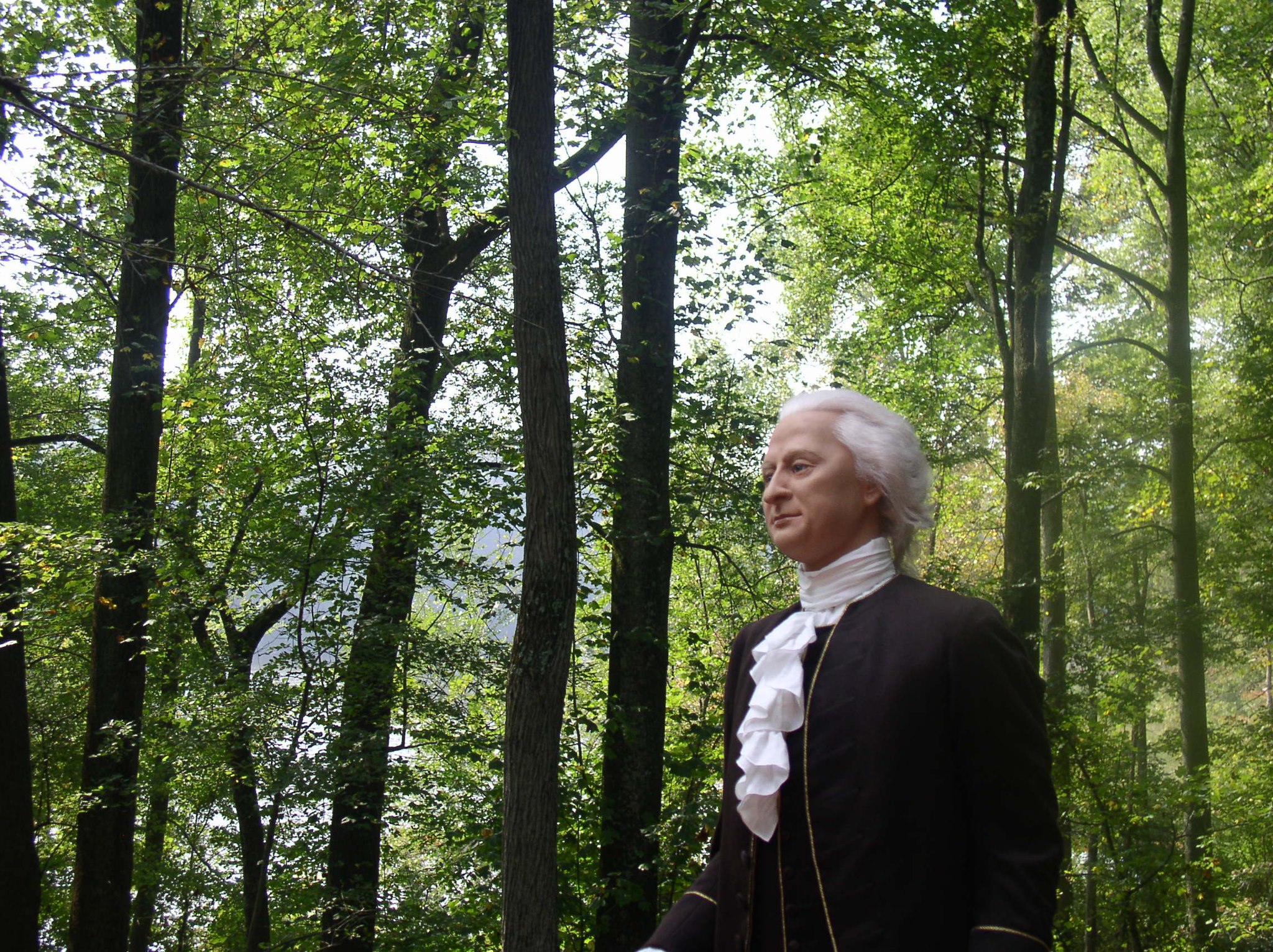
John DickinsonWho: Ramona DeFelice Long and Russell Reece

What: Literary Reading and Colonial crafts

When: Saturday, August 24, 2013

Where: John Dickinson Plantation, Dover, Delaware

Why: This reading is offered via my 2013 Individual Artist Fellowship (in Creative Nonfiction) from the Delaware Division of the Arts. Russell is an 2013 IAF Honorable Mention in Fiction. Russell and I will be reading about working, writing, and living in Delaware.

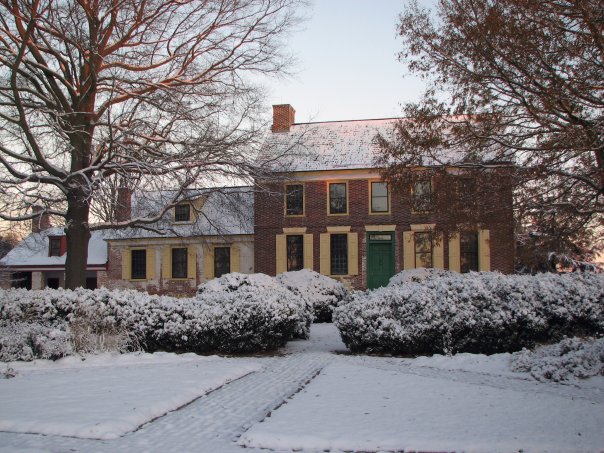
After the reading, we plan to offer a colonial craft project (quill pen making or crafting a hand sewn book) as well as a tour of the plantation. John Dickinson was coined the “Penman of the Revolution” for his writings about independence and liberty. The John Dickinson Plantation is a working 18th century plantation complete with a period farm complex and the beautifully restored home of one of America’s leading patriots.

Throughout Delaware in 2013, the seventeen artists recognized with IAF grants from the Delaware Division of the Arts will presented their work to the public. This year’s fellows include painters, poets, choreographers, jazz musicians, playwrights, photographers, folk musicians, writers, and sculptors.

An exhibition of the artists’ works and styles will be on display at the Biggs Museum of American Art in Dover, Delaware. The exhibition will open on August  2 and run through October 13, 2013, with an Opening Reception & Awards Presentation on Saturday, September 14.

~John Dickinson plantaiton


Review of the Arkansas Review

arkansas-review-v43-n2-august-2012The August 2012 issue of The Arkansas Review, A Journal of Delta Studies was reviewed this month by NewPages.com. My contribution to the issue, a memoir piece called “Getting to Grand Isle,” gets a nice mention.

NewPages.com, a online resource for readers, writers, students, teachers, provides “news, information and guides to literary magazines, independent publishers, alternative periodicals, independent bookstores, indie record labels, alternative newsweeklies and more.”

It’s a good review, and I’m happy about the shout-out!

Fleur-de-lis-red.svg

How To Be a Next Big Thing

~Special thanks to Edith Maxwell for the invitation to participate in The Next Big Thing Blog Hop. A quick trip to Edith’s blog will show you how she came to write her Local Foods Mystery series. Edith’s alternate writing persona is Tace Baker, whose mystery Speaking of Murder  features a Quaker linguistics professor solving a murder in small-town Massachusetts.~

The Next Big Thing is a Q&A for women writers. To do the Next Big Thing, a writer answers 10 questions about their current work and then tags a few other authors who will share the status of their own WIPS. My answers are below, with writer friend links to follow: Continue reading “How To Be a Next Big Thing”

How To Scale the 100 Page Wall

What is the 100 Page Wall?

The 100 Page Wall is a barrier that hits a writer at or near the end of Act 1.

Has this ever happened to you? You are enthusiastically writing a new story, either free writing or working with a loose mental outline. The words flow out onto the screen or page in such a beautiful rush, you are convinced this book will write itself.

And then – bam! Your momentum slams to a halt. You reel back, your enthusiasm changed to exhaustion. The rush is gone, replaced by the realization that you’re not quite sure where to go next. Or maybe you’ve started to head down the wrong way. Or–gulp!–maybe there’s no way to head and your story just died.

Welcome to the 100 Page Wall.

That is my term and this is my theory, but it’s a theory based on working with a lot of writers and hearing repeatedly about this experience. It’s always the same: the author starts on a new idea with gusto. For about 100 pages, the author writes without a hitch, and then a hitch appears at 100 pages.

Why 100 pages? I think that’s how much new, free-floating story data the brain can keep before the need to organize and shape arises. This happens to planners and pansters both, so it’s not so much about method as a mental wake-up call.

The first 100 pages of a story is a busy lot. The conflict must be set up; the characters met; the setting presented; the story problem put forth; the hero/heroine journey laid ahead. These are the tasks of Act 1.

In a standard manuscript of 400 pages, Act 1 takes up about 1/4. When Act 1 ends, a protagonist makes a decision that will marry him/her to the conflict. There’s no turning back for the protagonist.

For an author, the end of Act 1 presents an equal commitment. Looming ahead is the vast Act 2, which will be a vast empty wasteland if you don’t have enough story to fill it.

The 100 Page Wall forces the author to take stock. And breathe. And realize, this book is not going to write itself. It’s like coming down to earth after being in the rapture of Easy Writing Land.

It’s fun to write 100 pages, but now the sticking-to-it begins. That middle is big. If you’re going to fill it up, you will need to work. If you don’t love the story as much on page 100 as you did on page 1, writing it may be turning into a chore that will only get harder.

Also, on page 1, you thought you had a great idea that would be a good novel. On page 100, maybe you’ve solved the story problem or you are close to doing so. This is where you may discover one of two things: you don’t have enough story to sustain a novel and/or you are really writing a short story.

How do you avoid hitting the 100 Page Wall? You can’t. You shouldn’t.

I think writers who hit the Wall do so because they need it. Whether it’s exhaustion, overload, commitment anxiety or running of out things to do next, the 100 Page Wall is a wake up call.

The challenge is not to panic. Because you hit the Wall doesn’t mean you need to stop. It means you need to pause, think about what to do next, maybe go for a walk, and do some planning before you move on.

If you can’t think of what to do next, or how to add enough to the conflict you’ve developed to make another 200-300 pages out of it, be grateful. You can put aside this story without investing more time on it–time that will be unproductive. Better to stop at 100 pages that didn’t go anywhere, than to write another 300 of a hot mess that wasted your time and effort. Moving on to a new story can be a positive act.

If/when you hit the 100 Page Wall, embrace the pause. Question why it happened, but in a productive way.

~ Should you stop and throw away this work in progress because an idea is not a story?

~ Should you acknowledge it’s the right size and shape for a terrific short story?

~ Should you soldier on because, after you think about it for a while, you know what’s ahead to enter the vast expanse of Act 2 and come out on the other side?

~ Should you stop free-writing and put down an outline or story board the middle so you can wrestle a plan out of it?

Have you ever made the brave decision to abandon a story that’s not working? Stuck with one because you knew it could be worked out but you had to wrestle with it a while? Or have you never hit the Wall and you are the rare and lucky author whose books just write themselves?

Ramona

This post is the copyrighted property of Ramona DeFelice Long. Distribute or reuse only with permission of the author.

How To Follow Up a Writers Conference

Writers conferences come in many shapes and sizes, but after a good one, a writer walks away with a slew of notes, a bundle of new contacts, and a host of opportunities. Here are five things to do ASAP after a writers conference.

1 ~ Express appreciation: Conferences don’t present themselves and few (if any?) conference chairs are salaried positions. This year’s conference chair donated a hefty portion of his/her life planning, booking, organizing, and troubleshooting an event that involves the care, feeding, and teaching of hundreds of people. A written note, an email, a Facebook post, a tweet, a box of chocolates—the medium doesn’t matter, just send a thumbs up to the folks who brought the whole shebang together. Everyone from the conference chair to the hotel guy who set out the chairs, put on a team effort.

Equally, if you had a legitimate issue, or a helpful suggestion for next year, wait a few days and then send a polite note to the person you believe can take care of it. No need to alert the world, or bother someone over something they can’t control, but if an issue is real, the organizer will want to know.

2 ~ Keep in touch: There are a couple of ways to do this. First, all those business cards you picked up from the freebie table, a workshop, or at lunch? Spread them out on your desk.

If you’d like to continue or develop a meaningful exchange with someone, this is the time to send out a Facebook friend request, to follow on Twitter or any other social media you use. If you want to stay in touch through email, send out a note saying so. A handwritten note by post is also lovely. However you reach out, do it now.

If you shared a fabulous dinner, if someone helped out in a workshop, if you have mutual friends or writing contacts, if you spoke about their writing—jot it down on the back of the card. When you’re done, rubber band them and write the name of the conference and year. If you plan to attend next year, dig out this bundle before the conference and refresh your memory. Reviewing last year’s business cards helps you recall your good time, and people like to know they’ve been remembered. There’s nothing wrong with using a memory aid.

3 ~ Tame the paper collection. You probably have pages of scribbles and handouts. Now that your desk is cleared of business cards, cover it again with notes and handouts.

For handouts, those you took to be polite but won’t ever use? Toss ’em. No one will know. Those you want to keep, put in a file folder, binder or whatever means you use to store craft materials. Please DO NOT make copies and/or post on your blog, hand out to your critique partners, or distribute handouts unless you have permission from the workshop leader. Free distribution of the handouts, without permission, is not okay. If you want to to share with a particular group for a particular reason, send a note to the person who put together the handout. I would always say yes to sharing with a small critique group. For redistribution on a larger scale, I might say yes provided I am given credit and my name remains on the handout.

For your notepad covered with advice, tips, what to do and what not to do, quotes, names, books you should read….The longer you wait, the harder it will be to read your sloppy handwriting. Decipher it now.

4 ~ Respond to the professionals: Did you attend a kickass workshop on query writing? Listen to someone teach you how to organize your writing day? Take part in a read & critique? Get inspired by a keynote speech? Send an email expressing what helped or what you enjoyed. Be specific. As a workshop leader, I can tell you it is meaningful and helpful when someone writes and says, I really was intrigued by your tips on how to end a chapter. That tells me, hey, that worked! I need to know that for the future, and I appreciate anyone who takes the trouble to help me.

5 ~ Send requested partials, full manuscripts and so on, if requested  by an agent or editor. If you had a successful pitch session or chatted with an agent who asked to see something from you….well, I probably don’t need to put out a reminder on this one, do I?

Ramona

Tomorrow’s Topic – How To Use an Ellipsis Versus a Dash

How To Write a Dialogue Tag

What is a Dialogue Tag?

A dialogue tag is used to identify a speaker in a written conversation. It is the “he said” or “she said” that follows the spoken words.

Let’s examine a correct dialogue tag. Here a simple formula: Open quotation mark + spoken words + comma + close quotation marks + speaker + verb for said + period.

Example: “This is how you write a dialogue tag,” Ramona said.

For a longer sentence, the dialogue tag may be inserted in the middle, to ID the speaker while she is still speaking. The formula begins the same way. After the verb for said comes another comma + open quotation mark + spoken words + period/exclamation point/question mark + close quotation mark.

Example: “This is one way, ” Ramona said, “but this is not the only way.”

If the spoken words are a question or a shout, the comma is replaced…

…by a question mark: “Is this how you do it?” Ramona asked.

…or an exclamation point: “Yes, it is!” Ramona cried.

Sounds straightforward, right? Yet, errors in dialogue tags are common and one of the easiest ways a writer can ruin her manuscript’s clean copy.

How do you mess up a dialogue tag? Let us count the ways:

1. Instead of a said verb, replace with an action verb. What this does is turn the dialogue into a standalone sentence. That requires it be treated as a standalone sentence, not as a part of a sentence. This is not incorrect. The mess up happens (often!) when the writer misuses the punctuation before the dialogue tag–keeps the comma.

Incorrect: “Writers get this wrong so often,” Ramona shook her head. “It’s a shame because it hurts credibility.”

Correct:: “Writers get this wrong so often.” Ramona shook her head. “It’s a shame because it hurts credibility.”

If what follows the dialogue is not a dialogue tag but instead shows an action by the speaker, the spoken words must end in a period, exclamation point, or question mark–punctuation that ends the sentence.

2. Use a verb that’s not a speaking verb.

Incorrect:  “Writers try to make me speak without using my mouth,” Ramona shrugged. “It happens all the time.”

Correct: “Writers try to make me speak without using my mouth.” Ramona shrugged. “It happens all the time.”

Shrugged is not a way of speaking. Nor is sighed, glared, laughed, chuckled, yawned, nodded, pointed, hit, conspired. Speaking verbs are said asked, yelled, shouted, stated, blurted, demanded, guessed, cried, inquired.

Said is by far the most popular speaking verb. It requires little to no processing by the reader. It performs the very simple but important task of helping to identify the speaker. You can’t go wrong with said.

You can go wrong if you try to get too fancy and use anything but said. When you start with stated and moved into shared, confided, noted, offered, explained, ejaculated…if you get to ejaculated, you’ve gone too far. Go back to said.

3.  Overwriting by overloading with unnecessary adverbs.

An occasional adverb is acceptable~ “I can’t believe  you told him my weight,” Louise said angrily.

But the adverb must match the dialogue ~“I can’t believe you told him my weight,” Louise said proudly.~ Huh?

Examples of unnecessary adverbs:

~ “Cut it out!” Louise shouted loudly. – How else can you shout, but loudly?

~ “Stop it!” Louise whispered softly. – Same as above. Can you whisper any way but softly?


Correct use of grammar doesn’t catch an editor’s eye. Grammar is meant to be blind. When it’s misused, the editor and reader will notice. A wrongly placed comma or annoying adverb is not the kind of notice you’re looking for when you have two characters conversing.

Ramona


It’s Been a Ball, TLC!

On Saturday, my little world was rocked by the announcement that the Lipstick Chronicles blog will be closing its doors on January 1.

I’ve been along for the TLC ride since its inception in 2005. Back then, the bloggers–all  mystery writers–focused the posts on their books and the craft of writing. Then the posts broadened to families and social issues and world affairs.  Not many subjects were skipped over by TLC–or the cadre of daily commentors, the back-bloggers, who happily provided opinions and insights from outside perspectives.

This announcement will change up my morning routine of enjoying the daily post with my opening cup of coffee. A true community evolved among the bloggers and the back-bloggers. I will miss them all.

I had the pleasure of guest blogging at TLC on several occasions. To preserve my own little spot in TLC history, here are some of my contributions to the Lipstick discussion:

The Vending Machine is about language, food, and sensuous art: http://thelipstickchronicles.typepad.com/the_lipstick_chronicles/2005/10/vending_machine.html

The Bad Boyfriend Talk  discusses a mother’s attempt to teach her son how to treat girls right: http://thelipstickchronicles.typepad.com/the_lipstick_chronicles/2006/06/the_bad_boyfrie.html

Who Would You Voodoo?  ponders the lure of black, or white, magic: http://thelipstickchronicles.typepad.com/the_lipstick_chronicles/2007/10/who-would-you-v.html

An Open Letter to Craig, Daniel Craig invites you into the Blond Bond sisterhood: http://thelipstickchronicles.typepad.com/the_lipstick_chronicles/2008/11/an-open-letter-to-daniel-craig.html

Everybody’s Doing It  is my helpful (and yes, self-serving) testimonial in support of independent editors: http://thelipstickchronicles.typepad.com/the_lipstick_chronicles/2009/11/everybodys-doing-it.html

To my friends at the Lipstick Chronicles: It was a pleasure. Every darn minute of it.

xoxo~

Ramona

The Soldier

THE SOLDIER by Rupert Brooke

If I should die, think only this of me:
That there’s some corner of a foreign field
That is forever England. There shall be
In that rich earth a richer dust concealed;

A dust whom England bore, shaped, made aware,
Gave, once, her flowers to love, her ways to roam;
A body of England’s, breathing English air,

Washed by the rivers, blest by suns of home.
And think, this heart, all evil shed away,
A pulse in the eternal mind, no less                                      

Gives somewhere back the thoughts by England given;
Her sights and sounds; dreams happy as her day;
And laughter, learnt of friends; and gentleness,
In hearts at peace, under an English heaven.                                          

This weekend I received an unexpected email from a young girl asking about a local literary event. In it, she said she was “awfully inspired by poetry.” It was a sweet note, and it touched me. How often in this cynical, crazy, increasingly chaotic world of publishing do we remember what it was like to be young and moved by words?

I’m grateful to this young lady for reminding me.

I am not a poet, but today I want to share my favorite poem: Rupert Brooke’s The Soldier. Rupert Brooke was a gifted artist best known for the war sonnets he wrote during World War 1. He was also so physically beautiful, he was once called “the handsomest young man in England.” You can judge for yourself.

Rupert Brooke was 27 when he was commissioned into the Royal Navy. He served less than a year, from August 1914 to April 1915, when he succumbed to sepsis after an insect bite became infected. He died on a hospital ship moored in the Aegean Sea and was buried in Greece.  His gravesite remains there to this day, but he is included in the World War 1 poets honored on a memorial slab in Westminster Abbey.

Why am I offering a crash course on Rupert Brooke this morning? Because Friday is Armistice Day—Veterans Day in the U.S, Remembrance Day in other countries—a holiday commemorating the end of the first world war.

It has been said that the world lost its innocence during World War 1. I believe this. In February of this year, the last remaining U.S. World War 1 veteran died. Frank Buckles served as an ambulance driver near the front lines in Europe. In World War 2, he spent three years as a civilian POW in the Japanese-held Philippines.

In his latter years, he advocated for the establishment of a World War 1 memorial in Washington, D.C. Frank Buckles was 105 when he died. He was buried at Arlington Cemetery with full military honors.

World War I brought modern warfare to the world. With it came words and phrases that added to our historical and cultural language: No Man’s Land. Big Bertha. Over There. “Lafayette, we are here.” Doughboy. Trench warfare. Blimp. Shell shock. Mustard gas. Flanders Field. The Great War. Whiz-bang. Joystick. Pillbox. Storm trooper. Tank. The Big Push. Tommy. Flying Ace. Eleventh Hour. The War to End All Wars.

It also brought a body of artistic work that, in my mind, has never been fully appreciated. That may change. This past year, the play War Horse, based on a children’s novel about a horse drafted into service during the Great War, blew away audiences with its moving story and creative use of puppetry. A movie by the same name will be release in the spring.

So in addition to the poetry of Rupert Brooke, I’d like to recommend the following works set during or about World War I. These are some of my favorites. Please add your own:

After the Dancing Days by Margaret Rostkowski

War Horse by Michael Murpurgo

All Quiet on the Western Front  by Erich Maria Remarque

The Good Soldier by Ford Madox Ford

The Inspector Ian Rutledge novels by Charles Todd

A Very Long Engagement by Sebastien Japrisot

Death of a Hero by Richard Aldington

War Game by Michael Foreman

Lord of the Nutcracker Men by Iain Lawrence

Birdsong by Sebastian Faulks

Johnny Got His Gun by Dalton Trumbo