Delaware Division of the Arts


Literary Reading
Saturday, August 24, 2013 at 1:00 p.m.
Literary Reading at John Dickinson Plantation

Join two local authors representing the Delaware Division of the Arts’ Individual Artist Fellowship Program for a literary reading at the home of one of the state’s most treasured historical figures.
Ramona DeFelice Long of Newark and Russell Reece of Bethel will share stories and discuss the value and impact of place in their writing. Following the reading will be a site tour and colonial craft.
John Dickinson Plantation is located at 340 Kitts Hummock Road, Dover, Delaware.
Directions
The Plantation is located southeast of the Dover Air Force Base on Kitts Hummock Road (County Road 68). Kitts Hummock Road intersects with the northbound side of Delaware Route 9, one-half mile northeast of the intersection of Route 9 and U.S. Route 113.
Contact Information
Phone: (302) 739-3277
John Dickinson Plantation Facebook Page
This program is free and open to the public. It is made possible, in part, by a grant from the Delaware Division of the Arts, a state agency dedicated to nurturing and supporting the arts in Delaware, in partnership with the National Endowment for the Arts and with support from the Delaware Division of Humanities and Culture.

Award Winners XIII
The Biggs Museum of American Art is hosting an exhibition–and two parties–to promote the work of the Delaware Division of the Arts’ 2013 Individual Artist Fellowship Winners. Seventeen Delaware musicians, painters, sculptors, dancers, folk artists and writers will share museum space to highlight their work. The Award Winners XIII exhibition will run from August 2 to October 13, 2013.
The exhibition will open on Friday, August 2, with a First Look pARTy. If you are hanging out in, around, or you can find your way to Dover, stop in!

Upcoming this Summer: A Workshop, an Art Party, and a Reading
Three big events will dominate the summer of 2013 for me: an Art Party to open the exhibition of works by fellowship winners; an online workshop on writing basics; and a literary reading at an historic plantation. Check them out below!
Event #1
First Look pARTy! at the Biggs Museum of American Art
 Friday, August 2, 2013, from 5:00 to 7:00

Be one of the first to see the works of this year’s DDOA Individual Artist fellows at the Biggs Museum of American Art in Dover, Delaware. This year’s Award Winners XIII exhibit will feature works by the seventeen Delawareans honored with IAF grants from the State of Delaware in 2013. Each IAF artist will have a spot in the exhibit. From the Biggs Museum’s Exhibition calendar:
Award Winners XIII: August 2 – October 13, 2013
For thirteen years, the Biggs Museum has partnered with the Delaware Division of the Arts (DDOA) to showcase the artistic talents of Delaware in an annual summer exhibition. The annual Award Winners exhibition features the talent of the current Individual Artist Fellows of the Delaware Division of the Arts (DDOA). Delaware artists: painters, photographers, sculptors, writers, musicians and craft artisans, have the honor of winning the DDOA’s annual distinguished fellowship prizes. The fellows are chosen by jurors from hundreds of entries. In a partnership with the DDOA, the staff of the Biggs Museum invites each year’s Award Winners to the only group exhibition honoring their combined accomplishment.
The annual Award Winners exhibition is one of the most important annual projects at the Biggs Museum in carrying out its mission to celebrate artistic diversity, provide public educational access to Delaware’s fine-arts community, and to bring more awareness of both the museum and art to the community. Award Winners traces the evolution of the local art scene in Delaware and is presented to the public with hopes of encouraging conversation, comparison, debate and reflection of the diverse nature of work being created in Delaware.
`
Event #2
Back to Basics Workshop
Online workshop running from August 4 – August 11 (one week) sponsored by the Mary Roberts Rinehart Pittsburgh Chapter of Sisters in Crime. The workshop is both a beginner and refresher course and is open to any writer. From the chapter website::
When: August 4-11, 2013 (1 week)
Where: Online via Yahoo Groups
How Much: $25 for Members, $30 for Non-Members
This is not your Grandma’s Grammar class, folks. This is about writing. This is about writing efficiently and effectively.
This workshop is designed to be both new for the beginning writer, and a review for the more experienced writer. Each day will be a lesson on a specific writing topic: Point of View; Passive vs. Active Writing; Show Not Tell; Word Choices; Backstory; Delivering Dialogue; Creating Conflict. I will post a lesson, with examples to illustrate each point, and exercises to practice the lesson of the day. In workshop mode, we will exchange and review the exercises day by day.
Preparation
This workshop will be of particular use for beginning writers, to learn some fundamentals. For writers with some or more experience, the daily offerings on writing topics could serve as a review or a new approach to basic skills. No draft is necessary because I will be offering unique exercises. Writers can apply the lessons to their work, but it will be a how-to each day.
About Ramona
Ramona DeFelice Long works as an author, independent editor, and instructor. As an editor, she works with private clients, primarily in the genres of mystery, women’s, and literary fiction. Her clients range from well-published to new writers and young writers. She has edited several anthologies of short fiction for chapters of Sisters in Crime as well as private writing groups. As an instructor, she teaches courses online and craft workshops (Scene Writing, Short Stories, Story Q&A) and intensives (Self-Editing) at writing conferences. As an author, she’s been published in fiction and non-fiction in a variety of publications. She is also a regular at free writes and Open Mics in the great state of Delaware.
`
Event #3
Literary Reading at John Dickinson Plantation
When: Saturday, August 24, 2013, at 1:00 p.m.
Where: John Dickinson Plantation, 340 Kitts Hummock Road, Dover, Delaware
What: Literary reading
Join two local authors representing the Delaware Division of the Arts’ Individual Artist Fellowship Program for a literary reading at the home of one of the state’s most treasured historical figures.
Ramona DeFelice Long of Newark and Russell Reece of Bethel will share stories and discuss the importance of value and impact of place in their writing. Following the reading will be a plantation tour and historical demonstration.
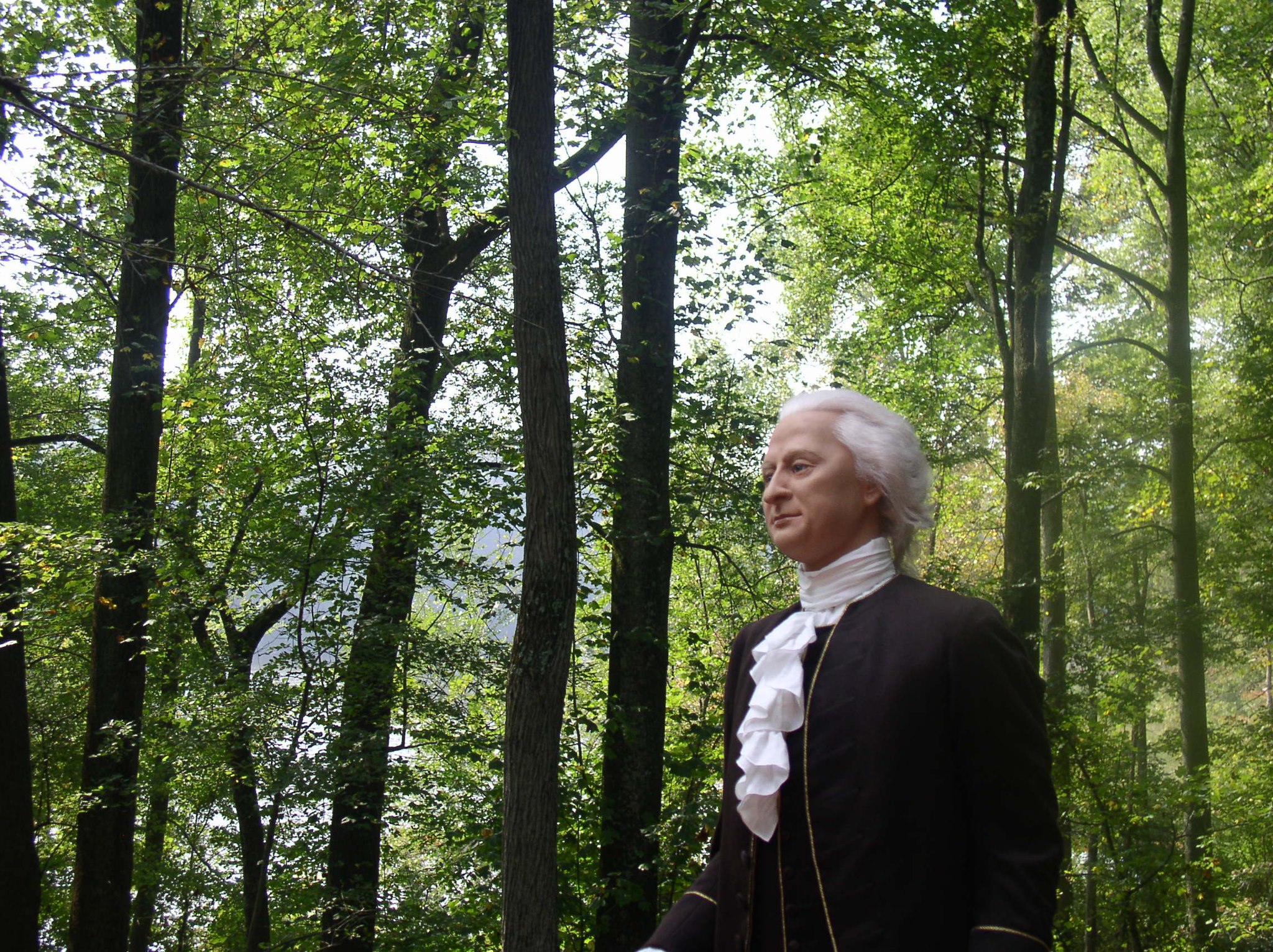
The John Dickinson Plantation is a working 18th century plantation complete with a period farm complex and the beautifully restored home of John Dickinson. One of American’s leading patriots, Dickinson w as called “the Penman of the Revolution” for his eloquent and passionate writings about liberty. The John Dickinson Plantation is supported through the Delaware Division of Historical and Cultural Affairs.
This event is made possible, in part, by a grant from the Delaware Division of the Arts, a state agency dedicated to nurturing and supporting the arts in Delaware, in partnership with the National Endowment for the Arts.
New DDoA Artist Pages Posted
 ~
~
I am happy to share the Delaware Division of the Arts new 2013 Individual Artist Fellowship pages. Take a look at the painters, composers, writers, and musicians selected this year to represent the state’s commitment to supporting and promoting art and artists. I am honored to be among this group of 17 artists selected for 2013.
I had the pleasure of being interviewed (again) for the page by Christopher Yasiejko. Our  conversation focused on my particular discipline, Creative Nonfiction, which is my writing focus this year as I pursue my grant project on writing about how the various places I have lived has influenced me as a person, a citizen, and an artist. I am enthusiastic about this genre which allows a writer to research like a reporter and write like a novelist.

My work sample is in the interview taken from “Getting to Grand Isle,” a piece published in The Arkansas Review in 2012.
Delaware has a fine track record for supporting the arts. As part of the IAF program, en dach of the artists featured in the pages will give a public performance or viewing of their work. I will be presenting in August, with fellow Delaware writer Russell Reece. Our literary reading will be at the John Dickinson Plantation in Dover, on August 24. We will read and share a colonial craft and tour of the plantation. We hope this reading at an historical site will be the start of a literary series set at places important to our state’s history.
Individual Artist Fellowship announcement
I am thrilled to be the recipient of an Individual Artist Fellowship from the Delaware Division of the Arts for 2013. Seventeen artist grants were awarded throughout the state this year. The State of Delaware’s news release is below.
One part of the fellowship year requirements is a public performance of work. My grant project in Literature-Creative Nonfiction will focus on the places I have lived and how each place influenced me as a writer. I look forward to working and sharing this project in 2013.
Seventeen Delaware Artists Receive Fellowship Grants
The Delaware Division of the Arts has announced the Fiscal Year 2013 winners of its Individual Artist Fellowship (IAF) grants. Seventeen individual Delaware artists are being recognized for the high quality of their artwork in the visual arts, literature, music, jazz performance, choreography, and folk arts. Artists were selected from towns throughout the state including Bear, Dover, Harbeson, Lewes, Lincoln, Milford, Milton, Newark, and Wilmington. Their work ranged from photography and sculpture to playwriting and choreography.
The work of 85 applicants was judged by arts professionals from around the country. Through the IAF grants, the artists’ achievements are affirmed, helping provide the recognition and exposure that artists need to successfully promote their work. The artists receive a financial award—$3,000 for the Emerging category and $6,000 for the Established category—allowing them to pursue advanced training, purchase equipment and materials, or fulfill other needs that allow them to advance their careers. The public will have an opportunity to see the varied artwork by these artists as they are required to have a public exhibit or performance showcasing their work in the upcoming year.
Listed below are the Delaware Division of the Arts 2013 Individual Artist Fellows. Contact information for the artists may be obtained by calling Kristin Pleasanton, the Division’s Art and Artist Services Coordinator, at (302) 577-8284 in Wilmington or (302) 736-7436 in Dover.
2013 INDIVIDUAL ARTIST FELLOWS
| Established Professional ($6,000 award) | ||
| Name | Community | Artistic Discipline |
| Linda Blaskey | Lincoln | Literature: Poetry |
| Anne Colwell | Milton | Literature: Fiction |
| Scott Davidson | Wilmington | Jazz: Solo Performance |
| Ann Jenkins | Milford | Folk Art: Visual |
| Ramona Long | Newark | Literature: Creative Nonfiction |
| George Lorio | Dover | Visual Arts: Sculpture |
| Augustine Mercante | Wilmington | Music: Solo Recital |
| Aina Nergaard-Nammack | Lewes | Visual Arts: Painting |
| Karin Snoots | Harbeson | Visual Arts: Painting |
| Emerging Professional ($3,000 award) | ||
| Name | Community | Artistic Discipline |
| Alex Buckner | Wilmington | Choreography |
| Teresa Clifton | Milford | Literature: Fiction |
| Knicoma Frederick | Wilmington | Folk Art: Visual |
| Jerry Gordon | Wilmington | Visual Arts: Painting |
| Andre Jones | Wilmington | Literature: Playwriting |
| Michele McCann | Newark | Folk Art: Music |
| Marjorie Weber | Lewes | Literature: Creative Nonfiction |
| William Wolff | Bear | Visual Arts: Photography |
| Honorable Mentions | ||
| Name | Community | Artistic Discipline |
| Thomas Del Porte | Wilmington | Visual Arts: Painting |
| Dennis Lawson | Newark | Literature: Fiction |
| Georgia Leonhart | Rehoboth Beach | Literature: Creative Nonfiction |
| Robyn Phillips-Pendleton | Newark | Visual Arts: Painting |
| Russell Reece | Bethel | Literature: Fiction |
| Vanessa Simon | Magnolia | Visual Arts: Photography |
| Michele Xiques | Milford | Choreography |
The next deadline for Individual Artist Fellowships applications is August 1, 2013.
The Delaware Division of the Arts is an agency of the State of Delaware. Together with its advisory body, the Delaware State Arts Council, the Division administers grants and programs that support artists and arts organizations, educate the public, increase awareness of the arts, and integrate the arts into all facets of Delaware life. Funding for Division programs is provided by annual appropriations from the Delaware State Legislature, and grants from the National Endowment for the Arts, a federal agency.
Retreat Report
I spent the past few days at the Cape Henlopen Poets & Writers Retreat, a four-day immersion retreat sponsored by the Delaware Division of the Arts. We stayed in the lovely Cape Henlopen State Park, and housed in the Biden Center, a former naval training center now renovated and open for groups and events.
An immersion retreat is one that focuses on the creative expression of your choice. We were all literary artists: 8 poets, 8 prose writers. Continue reading “Retreat Report”
The Hate Stare vs. The Good Citizen
 Three years ago, I sat on a rock on the beach at Cape Henlopen and waited for my muse to show up. Instead, I got a surfer.

Cape Henlopen sits on the southern tip of the Delaware Bay as it juts out into the Atlantic Ocean. Seventeen miles across the Bay is Cape May, New Jersey. There are two lighthouses on the bay side at Cape Henlopen and a World War II watchtower rises over the sand. Cape Henlopen is also a popular state park, for camping, fishing, swimming, and surfing.
I wasn’t there to enjoy any of that beach fun. I was there to write. The Delaware Division of the Arts had sponsored a Poets & Writers Retreat—eight poets and eight prose writers selected and housed at a former World War II military training center revamped and renamed the Biden Environmental Training Center. From Thursday evening to Sunday afternoon, the sixteen participants and two group leaders were to meet for critique sessions. In our down time, we were to hunker down and write. Those were our orders: write. Don’t chit chat in the hallway. Don’t interrupt your fellows’ efforts.
I was honored to be selected. I appreciated the opportunity for three days of studied work and feedback and free, uninterrupted time to write. I had no plans to chit chat or interrupt my peers.
There was just one problem. The ambiance of “You are here to write, so go write, dammit” guaranteed I couldn’t.
I hate the term writer’s block. I’m not sure I believe it exists—or maybe I just refuse to give in to the concept. Stuck, mired, stymied, hesitant, frustrated, stumped, those are all words that describe when a piece of writing grinds. BTDT. Blocked means there is a something in your way—a physical impediment between the writer and the writing. I make a living by writing, writing about writing, and working with writers. The only thing that stands between me and my productivity is the ever ticking clock and whatever outside stuff I allow to intrude. That’s the attitude I live by, 24/7.
When I get stuck, mired, stymied, hesitant, frustrated, or stumped, I don’t stop writing. I tinker. Or write something else. Or go for a walk to clear my head.
Yes, I know I am going to get into trouble for dissing writer’s block, so I’ll add a disclaimer: But that’s just me.
That weekend at Cape Henlopen, I could not produce for two reasons:
-
I stubbornly tried to write a piece that stubbornly wouldn’t come together.
-
I had a bad case of Good Citizen.
I was handed this chunk of free time to write, not fiddle-dee-dee on the beach. The Good Citizen in me commanded me to produce, not…enjoy myself.
The Good Citizen has a guilt complex.
So I stared at my laptop for nearly a day, wasting that precious time and that opportunity, until I told my Good Citizen to take a hike and took myself on one. The wind was brisk so I bundled up. With the watchtower to the north and the lighthouse up ahead, past the rickety beach fence and the rock jetties splitting the water, I pulled up a cold rock and absentmindedly watched a half dozen brave/foolish surfers out on the water while begging my muse to come out to play.
I got nada.
Finally, “Hey there!” a voice said, and I jumped a foot.
I had not noticed him approach from the other side of the rocks. The surfer wore a black wet suit. He had jet black hair and pink cheeks and an adorable smile. He was adorable all over, as a matter of fact, the way a grown man looks adorable when he’s spending a weekend morning surfing in way-too-cold water. Exhilaration radiated from him.
I wanted to punch him in the face.
I’m thinking here! I wanted to cry. You think I’m sitting on a freezing black rock on the edge of the ocean on an unseasonably cold and windy October morning because it’s fun? No, you jackwagon, my butt is a Popsicle because I need to be alone to think. So, Go Away.
He came closer.
Do strangers talk to you? A three year study by someone at Yale University looked into this phenomenon. It’s an interesting study, but I think they forgot the genetic factor. Everywhere she went, my grandmother was hit up by strangers wanting to spill their life stories. Ditto with my mother. Now it’s my turn. There is no avoiding it. It’s a karmic vibe of some kind. Trust me, the vibe says. Talk to me. Tell me everything. I’ll listen…even if you are totally intruding on my personal space and time and interrupting my muse. I’ll listen.
According to the article, one deterrent is a “hate stare.” Do I need to define this? No, I didn’t think so. I would love to have a hate stare—a face I could pull on that says don’t mess with me. Don’t come sit next to me. Don’t tell me your life story.
I have no hate stare. It doesn’t jive with being a Good Citizen.
I thought I’d left my Good Citizen back at the Biden barracks, but the surfer propped his board upright against the rocks and unfastened the loopy thing around his ankle. I sighed and did what my grandmother and my mother would have done.
I listened.
When he found out why I was there, the surfer told me, hey, he wrote poetry too! But then he asked about podcasts and what did I think about the electronic publishing revolution? This was no ordinary adorable surfer. Later, when I Googled him, I discovered he was a hot-shot who’d worked for CNN and various big news outlets and was now at a philanthropic think tank in Washington DC.
But that morning on the beach, he was just someone I wanted to stop from talking to me.
Finally, he did. And when he did, guess what? My jumbled thoughts un-jumbled. My brain felt clear. I practically ran back to my room to start working.
Sometimes, you just need to escape your own head.
Fast forward to now. Over the past three years, I’ve attended a number of retreats. Some sponsored, some DIY. I did an intensive on short stories. I’ve holed up with a friend for a weekend at a hotel that was hosting (at the same time) a quilting marathon and a drag queen convention. I’ve spent two weeks at an artist’s colony.
The number one thing I’ve learned is, if you stare at a blank page long enough, it’s going to start staring back. If you turn to another piece of writing, or take a walk on the beach, you may not be being a Good Citizen, but at least you’re not staring at a blank page.
I still don’t believe in writer’s block…but that’s just me.
As for the surfer, well, I’ve been selected for another Poets & Writers Beach retreat, in September. That gives me a month to work on my hate stare. Or maybe not.
What do you do when the blank page toys with you?
Ramona
 Ramona DeFelice Long