…I become a Writer Who Kills.
Today I join Jim Jackson, E. B. Davis and Pauline Alldred at the Writers Who Kill blog, with my inaugural Friday post, The Writer-Editor Team.
…I become a Writer Who Kills.
Today I join Jim Jackson, E. B. Davis and Pauline Alldred at the Writers Who Kill blog, with my inaugural Friday post, The Writer-Editor Team.
…wherein I put a plug for some truly erroneous, but hilarious, tourist information about the First State.
–
Here’s a clever marketing device for a clever adventure story, M. T. Anderson’s Jasper Dash and the Flame Pits of Delaware. 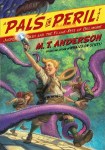
Even more clever is an interactive tourist map.
Beware!
Beginning next week (July 9), I will be joining the Writers Who Kill as the regular Friday blogger. The current writing team is Jim Jackson, E.B. Davis, and Pauline Alldred. I’ll be popping in each week to offer an editor’s perspective.
–
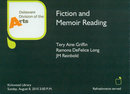
In August, JM Reinbold and I will be guest readers at Tery Aine Griffin’s IAF performance. Tery is a 2010 Delaware Division of the Artist fellowship winner as an Emerging Artist in Fiction. The reading will include fiction and memoir and is sponsored by the DDOA and the Kirkwood Friends of the Library.
….wherein I talk about why dissing your colleagues in print, or in front of an open mic, is not a good thing.
From time to time, I hear authors compare writing a novel to  running a political campaign.
On the surface, the two don’t seem terribly similar. Writing is generally a solo pursuit; running for office is just the opposite. But there are a few similiarities.
First, the ticking clock: a writer has a Deadline; a politician has Election Day. Second, the disruption of family life: a politician goes on the road to stump the electorate; a writer disappears into the basement to pound the keys. Third, if all goes well, they share repetition: both the writer and the politician will have to repeat the entire ordeal in another two (or so) years.
So maybe, with that kind of relentless pressure, it’s okay to be a snarky about your competition. Or is it?
California GOP Senate candidate Carly Fiorina’s “caught on camera moment” is an excellent illustration on how dissing your rival is not so great for a professional, adult, public person’s image. Fiorina herself admitted she opened the door to discussions that were petty and superficial. I think calling anyone’s hairdo “so yesterday” certainly qualifies as that.
 (Also, as an editor, I feel compelled to point out that the phrase “so yesterday” is, well, so yesterday.)
But part of a successful campaign strategy is to criticize your opponent’s work and record, in a public forum. Your rival promised to do something and didn’t? Call them on it. Your rival did a great job two terms ago but was asleep at the wheel for the last one? Buy a TV ad on it. Your rival failed to show up for important votes? Scream it from the podium. After all, that’s politics.
But is it publishing?
The author experience includes being reviewed, critiqued, criticized and rejected. Authors and readers disagree on how much weight a negative review carries, but I can tell you that no author likes it. Nevertheless, it’s part of the gig. You are putting work out for public consumption, and purchase, so an author can expect to be called on it when a book fails to follow through with the promise of its opening, when a story doesn’t hold up to the one that came before it, or when the author seems to be phoning it in.
Authors expect this from reviews and readers. But should they expect it from their fellow authors?
Some time ago, I participated in an online discussion about a novel. It was part of a popular series, much beloved by many readers for many good reasons. But in my opinion, this particular installment had tanked. I said why. I did it respectfully. I explained where I thought the author had made bad choices. Some readers disagreed, and we had a back and forth that was interesting and valuable.
And I would so very much love to take it all back.
Towards the end of the discussion, someone said, we should contact Author X and let them know we are talking about this. And that brought me up short. How would Author X (or I) feel about stumbling upon this discussion, which was held without an invitation to particiate?
I am a reader, and I am certainly entitled to have and express my opinion on books. But I’m also a writer, and I cringe when I’m reading a blog or a list-serve and I see writers bash the work of their colleagues in a non-review format. That part is important.
There are many opportunities to review a published book. There are also study questions and deconstruction exercises that are both fun and educational. There’s a difference between reviews and exercises and a public hashing.
Why is it bad to talk trash about a fellow author, in print, with your fellow writers?
1. All authors make choices. Do you want your choices openly questioned by your colleagues, with no invitation for rebuttal?
2. Whatever your take on an author’s level of talent, talking about undeserved popularity makes a jab at the reading public. Do you want to alienate your own potential audience?
3. Publishing is a big business, but genres are a small world. What happens when you are sitting on a panel next to an author whose book you slammed?
4. What goes around comes around. Do you want to open up your friendly Yahoo group discussion and find that you are lazy, untalented and undeserving of your writing success?
5. It’s bad manners. Notice how I’m not saying anything about Carly Fiorina’s hairdo. 
6. It’s not good for your image. Who looks more like a sore loser–the basher, or the bashee?
I wonder how other writers feel.
Once an author reaches a level of success, is it open season on their work, anywhere and anytime? Or do we embrace Solidarity and the adage, if you can’t say something good, make sure there’s not an open mic around?
Ramona …who is writing this on a very humid day, so my hair is a nightmare, FYI
…wherein what’s happening in real life is worse than anything I have been writing.
It’s been a scary summer in my town–my IRL town—because someone chose to spend the opening week of the warm months abducting and raping women.
In early June, a man with a gun approached a young woman, in broad daylight, in a busy parking lot. Twice. The two incidents were essentially similar: He got into the victim’s car, drove her to secondary location/s, assaulted her, forced her to remove money from an ATM, and then released her with this warning: I’ve got your driver’s license, I know where you live, if you go to the police, I’ll kill your family.
Let me reiterate. This is not fiction. The first incident occurred on June 2, the second on June 5, near where I live. I have parked in the parking lots, probably been to the secondary locations, and perhaps used the ATMs in question. To say this is close to home is frighteningly accurate.
The first assault happened on a Wednesday and, despite the threat, the victim did go to the police. Who, for reasons that have caused the Delaware State Police a whole lotta grief ever since, did not alert the public.
A second abduction and assault occurred four days later, on Saturday. Same MO. Same perp*. The second victim also went to the police. This time, the DSP put out an alert to the public.
Then, as they say, all hell broke loose. That part is not fiction, either.
Since the story broke, the DSP have been handing out composite sketches, posting a safety tip slideshow, offering a safety seminar, and handling many (hopefully useful) tips while working the case.
The DSP have also been busy defending the decision not to immediately alert the public after June 2. The agency head explained in the newspaper that detectives were working the first incident, hoping for a quick resolution, when the second occurred. He pointed out that the release of too much information can hamper an investigation and that detectives were “balancing the responsibility to the public with justice for the victim while maintaining the integrity of the investigation.”
I am pointing out this rationale because, as a writer/editor working in the crime genre, this is where—for me–reality collides with fiction.
A couple of weeks ago, I taught a workshop at the Pennwriters Conference on the Basics of Mystery Writing. My subtitle was Decisions, Decisions. My premise for that workshop is that a crime novel is, basically, a series of bad decisions.
First there is the bad decision by the Bad Guy to commit the crime. It may be a quick, impulsive act; it may be a carefully planned operation; it may be a crime of opportunity. However, or why-ever, the Bad Guy makes the decision to rob/rape/murder/maim, the result is bad for someone. Often several someones. Usually, we hope, by the end of the story, bad for him/her, too.
The second bad decision is made by the Victim. Sometimes it is clearly a mistake: taking back an abusive partner, participating in the crime, foolishly going to a dangerous place. Often, instead of a bad decision, there is simple bad luck: being in the wrong place at the wrong time. Sometimes the only thing a victim does “wrong” is to get out of bed that day.
Third, there are bad decisions by Protagonists. In a cozy mystery, an amateur gets wrapped up in a police investigation for reasons that seem good but of course, aren’t really. After all, what sane layperson investigates a murder or crime? Mayhem is inevitable. A smart amateur sleuth should leave it to the pros, but if that happened—no book.
In a police procedural, the Protagonist cop must do his job. For story purposes, s/he can’t always do it very well. There must be mistakes because even a fictional cop can’t be perfect, because perfect is boring to read. Also, because if our cop hero did the job perfectly, the crime would be solved in chapter 2 and, again, no book.
And then there are the bad decisions made by police in the story, or by the investigating agencies, who seem to work against the Protagonist. At Pennwriters, while illustrating plot points in the classic three act structure, I discussed how, where and why questionable police decisions are used to drive a plot forward.
In short, in order to make a story compelling and exciting, cops have to screw up a little.
What’s important is that bad decisions are made for good and valid reasons. Sure, there are cops in fiction, and IRL, who are lazy, incompetent, stubborn or just plain stupid. But in writing, that’s a cop out. (Sorry. Had to do it.)
What’s more engaging to the reader is to portray something similar to what’s happened in my town this month. State troopers made what had to seem like a solid decision—to withhold information about an ongoing investigation with the belief that the case will be resolved quickly.
In real life, a quick resolution sometimes happens. In fiction, it has to be a bad decision. It has to backfire, because there is, always and inevitably, a second crime that could have been prevented–and is, as such, more interesting to read.
After the bad decision, both in real life and in fiction, the stakes are higher. The perp is alerted that he’s being sought. The public is angry. The victims are frightened anew. The police are under pressure. The clock is ticking.
In fiction, this is all good. These bad decisions by police are a must. Here are a few standards:
– Focusing the investigation on the wrong person.
– Disbelieving or dismissing the word of a witness.
– Missing, or misplacing, evidence.
– Allowing no-no type relationship to disrupt the case.
– Being hampered by politicians’ self-serving interests.
– Distractions and personal problems, such as divorce, debt, disease or drinking.
– Falling wildly and foolishly in love with the primary suspect, or the primary suspect’s girl/boyfriend
– Ignoring the obvious clue that the reader notices 120 pages earlier.
– Missing a personal connection to the crime or criminal
Did I miss any?
In fiction, characters need to make mistakes. Police need to be fallible. It would be nice it this did not apply to real life, but sometimes it does.
Both as a woman and a writer, I have been monitoring the news—and my personal safety—carefully. This week, I tried to enroll in the DSP’s safety seminar. I write “tried to” because I waited overnight to ask a friend to attend with me. The next morning, a press release was posted: the seminar was filled. 300 spots snapped up in less than a day. That should testify to the fear in my city this summer.
So I emailed the PIO contact, asking to be notified if a second seminar will be presented. He responded that I would “absolutely” be alerted. If anyone reading is from the New Castle County area and would like that contact info, email me and I will gladly share.
Stay safe, ladies.
Ramona
*P.S. I know, I know, real police don’t say perps, they say actors, or suspects, or persons of interest. It’s my understanding that, out of public earshot, the preferred term is azzhat. Only, not really azzhat, but this is a family blog, so I’m stuck with the euphemism.
UPDATE: On Monday, June 21, an arrest!
http://www.delawareonline.com/article/20100623/NEWS01/6230336/Delaware-crime-Rape-suspect-arrested
….wherein I explain what the heck it is, and how the heck to write one.
Not long ago, a fellow writer asked me about the benefits of applying for a literary grant. It’s not the same as being published, he claimed, so if you have limited writing time, wouldn’t you be better off focusing on your work, instead of spending valuable writing time filling out a long, complicated grant application?
I agree that writing time is a precious commodity not to be wasted. (Have I mentioned I finally gave in and became a Facebooker this week?) However, the idea that applying for a grant is a waste of time, I do dispute. I’ve posted previously about the value of entering contests, so this is a close cousin to that:
Winning a literary grant is good because:
…..It validates you as an artist.
…..It supports you/your work on a particular project.
…..It offers an opportunity for public performance.
…..It supports the grant system to aid and abet artists.
…..How can I put this? Oh yeah–
As in my prior post, winning is best, but applying is good, too:
….Applying forces you to prepare a polished work sample.
….Applying makes you to update bio and resume information.
….Applying makes you develop a project description.
….Applying gets you to write an artist statement.
….Applying doesn’t cost any of this: 
All that being said, one of the bugaboos I hear from writers who avoid the grant process is that numbers 2, 3 and 4 above are tedious. This is true. Most writers I know hate writing about themselves. On the other hand, you have to put on your big girl (or boy) panties (or boxers) and master the boring stuff in order to give your work the exposure it deserves.
So, lesson #1: How to Write an Artist Statement.
First, let’s define the term. An Artist Statement is a group of “I sentences” that explain your artistic hopes, dreams, ambitions, philosophy, direction, growth, evolution, plus how this grant will patently help you to achieve all of that. More simply, and practically, put, the Artist Statement tells the grant administrators what your hope is for this project, how you will be affected by working on the project, and how the support of the grant will help you to achieve that.
Second, let’s talk about what an Artist Statement is not. It’s not your resume or CV; it’s not a list of publications, awards, honors; it’s not your personal background; it’s not a project description.
Third, let’s figure out the purpose of the Artist Statement. While not all grants are administered in the same way, in general, the grant agency (state division of the arts, or arts council) will employ an out of state judge to read and score the work samples. The Artist Statement is a document the grant agency uses to allow the artist to give voice to how the grant will help their career or work. It is also often used as a PR tool.
Fourth, and finally, how do you write one? Here we go:
An Artist Statement can be from 500-1,000 words, or so. In that space, include some/all of the following:
….What is your philosophy as an artist, in relation to this particular project? For instance, if this is a family memoir, do you believe that art is a means of examining and exploring your personal history? Is it a way to heal, or celebrate? Is this work meant to be a tribute, to set the record straight, to capture for posterity events that have impacted you and yours?
….How will you grow as an artist through this project? Are you trying a new medium? A new voice? Fictionalizing reality? Creating an entirely new world? How is this project different from your prior work?
….What message are you trying to convey?
….How is your work, and this project in particular, a reflection of you? If you are writing about a culture, are you tied to it? Is the project trying to satisfy a curiosity? Trying to recapture or examine something you have lost?
….What is your goal, specifically, for this work? Do you plan to complete a novel? Write X number of short stories?
….Stylistically, what is special about this project? Is this a departure for you? A new venture into an entirely new genre?
That’s a lot to cram into the small box on the grant app.What is comes down to is explaining what you want from this particular project, and how it fits into your goals as an artist. The Artist Statement is your way to make the grant people understand you. It gives you a chance to express your heart.
What’s so great about writing the Artist Statement is that it makes you think about the questions above. In your daily life as a writer, how often do you think, concretely, about your goals as an artist? Do you ever stop to recall just how you chose this medium, and how it has impacted your life?
The Artist Statement makes you examine yourself as an artist. Who are you? What do you want? What are you trying to say?
It’s that simple. Really.
Bonne chance~
Ramona
P.S. As mentioned above, find me on Facebook.
…..
...wherein I join the bandwagon celebrating the 50th Anniversary of Scout, Jem, Atticus and everybody in the tired old town of Maycomb, Alabama.
Nelle Harper Lee was once said she’d like to be the Jane Austen of south Alabama. Not a bad ambition, and not a bad job she’s made of it.
The year 2010 marks the 50th anniversary of the publication of To Kill a Mockingbird. Harper Lee’s only novel won the Pulitzer in 1961, was adapted into an Oscar-winning film and continues to live a long and happy life on high school reading lists.
Equal parts pure joy and terrible pain, this novel resides in the town of Maycomb and all of its residents–not just the iconic Finch family. Harper Lee’s great gift lies in her creation of a town filled with pathos and mystery, of prejudice and wrongs, and the simple ability—or inability—to find empathy for our fellow man.
In Maycomb, everybody struggles: Tom Robinson for justice; Atticus to raise his children right; Jem to leave his boyhood (and not his pants) behind; Scout to keep her temper as the trial grips her town; Boo to be left in peace.
The book holds unforgettable moments (“Miss Jean Louise, stand up. Your father’s passin.”) but also many smaller, equally telling ones, that I love:
Calpurnia, being prideful and polishing Scout’s patent leather shoes with a cold biscuit before taking the children to the First Purchase African M.E. Church.
Mrs. Dubose, cruel and insulting, forcing Jem to read to her every afternoon so she could kick her morphine addiction before she died.
Miss Maudie, whooping it up after her house burned down because the Finch children named their snowman a Morphodite.
Aunt Alexandra, carrying on the ladies’ circle tea, showing Scout the strength of a lady, despite her brother’s announcement that Tom Robinson had died.
And Dill, who has no home, no family, no town, but is adopted by the Finch children at first sight, and gives them the idea to make Boo Radley come out.
The sum total of a story can be judged in how well and completely an author brings to life her characters–all of them. Nelle Harper Lee, a tomboy girl from south Alabama, wrote one single novel, but her creation of Maycomb as a real, unforgettable place, makes her a master storyteller.
In 2007, President George W. Bush awarded Harper Lee the Presidential Medal of Honor.
“To Kill a Mockingbird has influenced the character of our country for the better. It’s been a gift to the entire world. As a model of good writing and humane sensibility, this book will be read and studied forever,” said the President.
Could not have put it better myself. Except to add, Thank you, Harper Lee.
Ramona
…wherein I wonder, to pitch or not to pitch? That is the question.
Last week, driving up to the Pennwriters Conference in Lancaster, I listened to the 10th Anniversary Concert CD of Les Miserables.  It is the perfect length for this drive: CD 1 on the way up, CD 2 on the way home.
I’m partial to Les Mis because Marius was my first literary crush, the novel made me love literature, and I remain enthralled by the battle between Jean Valjean and Inspector Javert.
As someone of French heritage, I am inspired by the musical retelling of revolution. So I arrived inspired at the conference, ready to teach about craft and encourage my fellow writers to persevere against the odds.
Pennwriters puts on a terrific conference. There are courses on craft, marketing, query workshops and agent/editor panels. A full range of options, plus the big kahuna (for some): the pitch session.
The pitch sessions were ten minute meetings between a writer and an agent. Sometimes conferences charge extra for pitch appointments; sometimes not. At ten minutes a pop, an agent can see a lot of writers during a three day conference. During both of my workshops, nervous writers invariably slunk away, trying not to be disruptive, as they left for a scheduled pitch.
For the pitch, the writer memorizes a one-line description of his/her manuscript that includes the genre, the plot and a hook. With luck, the agent will hear that line and say, “Hmm. Tell me more.” So the writer follows up with a longer, also verbal, version.
The pitch session is touted as a writer’s shot to impress an agent and, hopefully, score a request to send a manuscript for consideration. It’s Your Chance. Your Shot. Your Moment. Your Lucky Break.
This is a good thing, right? Agents come to conferences looking for new clients. There must be some value to the pitch session for both sides, and for the conference planners; otherwise, why would anyone do them?
All of this would be great, except for one thing.
Not all writers are great at distilling their work into neat, tidy, spoken, packages. I know this through emails and list-serve posts with writers agonizing over how to get the sentence exactly to form. Added to the stress of this is the fact that it’s verbal. Being an author does not necessarily mean you are a confident public speaker. Add to the agony and the stress the pressure of This Is Your Big Shot, and the result is high anxiety.
My room was across the hall from an agent’s. All weekend, I witnessed anxious writers going in and out of their pitch sessions. Every time I got off the elevator, people were sprawled in the foyer, lined up like the faithful awaiting a papal audience.
 In the hallway, a very serious man was stationed like the gatekeeper to Nirvana in front of the agent’s door. The first time I approached, he looked at my nametag, checked his clipboard and asked if I had an appointment. Confused, I held up my card key and pointed at my door. He apologized for interrogating me and made a sheepish comment about sticking to the schedule, because if someone goes past their 10 minutes, it messes up everyone to follow.
It was kind of funny. At first. At first, when I realized what the line in the foyer was for, I wished people luck. Knock him dead! You can do it! You’ll be great! But by Sunday, people who had been waiting for three days for their 10 minutes didn’t need cheerleading. They needed a case of Jack Daniels. I think I was less nerve-wracked awaiting childbirth—and I had twins.
The angst level was bizarre. And a little disturbing.
Am I alone in thinking the “you have 10 minutes with this exalted person to pitch your book, and it must be done this way or else” is a bit absurd? And, perhaps, a little demeaning? Is this the most effective way for writers to communicate? Would it be so wrong for an author to hand over a piece of paper? “I’m a writer, it’s a book, so here it is in writing.”
But that is only part of the issue. The process had a cattle call feel to it that bugged me more with each passing day. I saw so many nervous, upset people at this conference, where they should be learning, but instead were stressed out over the 10 minutes.
All of the agents and editors said they were open to emails from the attendees. I sat between two editors at lunch, did a session with an agent, and had dinner with another agent. I have several golden opportunities, and I didn’t say a word my work as a writer (I did talk about editing.) I thought it would be boring for them and undignified of me. So we chatted about books and library funding and whether or not we get motion sickness reading on a train. They were all nice people, very accessible and normal and human. Not one of them asked me to kiss his ring. When someone at the table asked about contacting them, they all said to send a query and mention the conference.
As an editor, I see how hard new writers work and how much heart and sweat they put into their stories. But publishing is a business, and writers are professionals. How professional is it to hook up with a guy you’ve never met before, in a hotel room, for an allotted few minutes, while you perform in a prescribed manner—and then be judged, to your face, on your performance?
I wonder if there are writers out there who dread the idea of a pitch, but think this is the only way to capture an agent’s notice. It’s not. It’s one process, and maybe it’s a good one for some people. Many writers are perfectly fine with spouting their book descriptions verbally. For those people, good for you! The pitch session is an ideal vehicle and, by all means, take advantage of that opportunity.
But if you aren’t as comfortable with a verbal pitch; if the thought of memorizing a descriptive sentence of your book makes you break out in a sweat; if you pay hundreds of dollars to attend a conference and worry it will be ruined because you blow your ten minutes, I dare to say this:
Don’t pitch.
Send a standard query. Email a nice follow-up letter thanking the agent/editor for the informative panel discussion, and add a written pitch.
There’s more than one way to write a story, and there is more than one way to make contact with publishing professionals, too. If this is not the best way for you, don’t do it! Just say no. Don’t pitch.
 So, what do you think? Are pitches the best and most effective way to get an agent? Is anyone who passes up a pitch session a fool? Is it okay to go the traditional written route? Am I just a big grumpy pants?
Ramona
…wherein Nancy Martin graciously discusses the special something that separates one piece of work from all the others.
The French (of course) have a phrase to describe the intangible whatever that makes a thing special or appealing or distinctive. To be told you have an air of je ne sais quoi is a lovely compliment. The indefinable but unmistakable allure may be difficult to articulate, but to possess it is a good thing.
I don’t usually take issue with the French in matters of allure and appeal, but for a writer speaking about a novel, je ne sais quoi is not the way to go. If you are writing a query or planning a pitch, clearly understanding what makes your book stand out from every other is a must. Being able to express that with ease and finesse is an art.

Nancy Martin calls that special something the X-Factor. She has graciously agreed to a Q&A on how to banish the je ne sais from a story description.
Ramona: What is your concept of the X-factor?
Nancy: I think an X-factor is some special element that sets one piece of work above the rest. It’s the thing that turns an ordinary story into an extraordinary book. It may not appeal to everyone, but it does have appeal for a specific audience. Yes, the concept is hard to express, but what’s the old definition of pornography? You know it when you see it. A unique setting might be a book’s X-factor. (Donna Leon’s wonderful Venice mysteries. Cara Black’s Paris setting. Alexander McCall Smith’s Africa.) Or a special “world” for the story—such as the world of vampires. Or a terrific story element. (THE HELP by Kathryn Stockett.) Or a truly fresh and exciting writerly voice. (Janet Evanovich.) An often overlooked X-factor is simply beautiful writing. But I’ll be interested in hearing what your readers think might be other categories of X-factors. I bet they recognize it when they see it.
Ramona: Can you give us some examples of X in your work?
Nancy: What set my romances apart from the many that were published every month was that mine were funny. Wit is also prized in murder mysteries, and I think that’s the part of my reputation as a writer that made me appealing to mystery editors. My Blackbird books were set in the world of Philadelphia high society—and that’s what the marketing department focused on. The Blackbirds were also more romantic than most mysteries—a quality that wasn’t around much when the books were first published. All those things might be considered X-factors.
I think every writer needs to think about her best writing skills or her background (do you live in Bermuda?) or her unique line of work (do you tame lions? Perform autopsies?) and translate that into an X-factor. For me, I combined my ability to write in an amusing way with my background in romance to create Roxy Abruzzo—a tough, sexy, smart-mouthed Pittsburgh girl. Roxy became my X-factor—a character like none other in the mystery world right now. She’s compared to Stephanie Plum a lot, but Roxy is very different—much darker than Stephanie, and she really kicks butt.
Ramona: Why is X important, to editors/agents and to readers?
Nancy: Some agents notice read fifty email queries every morning. What a tiresome chore, right? Of course they’re looking for something that makes one query more exciting than the next.
An editor, though, is going to take the X-factor and transform it into a marketing hook. She’ll use it when talking to the art department about the cover art and to the sales department so they can succinctly and effectively explain the book to distributors and booksellers. And booksellers will use the X-factor to sell your book to readers. Reviewers will choose a book to review based upon its X-factor and will no doubt use that component when explaining the story in a review. With all that riding on the X-factor, coming up with such an important element must surely be at the top of the writer’s to-do list.
Q. How does a writer use the X-factor to pitch a story?
Nancy: Well, don’t bury your lead. Skip the long explanation of your plot in favor of: “My book is a story about alien clone paratroopers, who drop into Nazi Germany in 1941.” If the editor isn’t interested in clone stories, she’ll pass. But if you’ve done all the right research and know clones are exactly what your editor is looking for—bingo!
Ramona: How would a writer use X to market/promote book?
Nancy: If you’re an author sitting at a card table in your local Barnes & Noble trying to sell your mystery about, say, knitting, chances are the customers are avoiding you because they’re afraid you’re going to urge them to buy a boring book. So hit ‘em where it makes the most sense. Say, on Mother’s Day weekend: “Does your mom read murder mysteries? Do you think she’d like one about knitting?” (Or raising cobras? NASCAR?) Use the X-factor in the design of your website and all promotional materials you send to booksellers or readers. If you write about knitting, it makes sense to contact stores that sell wool and knitting supplies to do events. Contact knitting list-serves. Use your X-factor any way you can.
Ramona: How much (if at all) does a book’s X-factor tie it to branding?
Nancy: I think it definitely ties in. When I wrote about the Blackbird sisters, I wore pearls and sweaters that matched the book covers. My website featured Main Line mansions and polo ponies. I spoke at elegant lunches and teas. Now that I’m writing about Roxy, I’ve put all my pastel sweaters in a drawer, and I wear black leather. My website features rock & roll, and we’re soon going to run photos of pit bulls that their owners send in. If you can make your X-factor work in many ways—all the better.
Ramona: New writers are often stumped by “What’s your story about?” Advice?
Nancy: You know what? I think less is more. Talk about the high points. If you start rambling about the plot points of your story, though, you’re in the weeds. When I talk about OUR LADY OF IMMACULATE DECEPTION, I don’t talk about missing statues or describe a lot of the secondary characters. I say: Roxy Abruzzo is a tough Pittsburgh girl with sticky fingers and a heart of gold. I might say she’s a fixer for her mobbed-up uncle Carmine. But Roxy’s the thing that either turns readers on or off. She’s the X-factor.
Nancy Martin is the author of nearly fifty popular fiction novels in three genres—romance, historical and mystery. She received the 2009 Romantic Times award for career achievement in mystery writing. Her current release is OUR LADY OF IMMACULATE DECEPTION, a mystery published by St. Martin’s Minotaur. Visit her website: www.NancyMartinMysteries.com
….wherein I wonder about the not-as-famous novels by famous authors and worry if I’m missing out.
I had one of those mornings this week, the kind when you think of a phrase or opening line or a song lyric but you can’t place it. I thought about it and thought about it until it became an annoying mental earworm that, until I identified it, was certain to make me crazy.
The phrase was, “They used to hang men at….”
I was fairly certain it was an opening line because that’s a really depressing song lyric, even for an emo band, or The Cure.
The day it popped into my head, I was away all day, driving around with no Internet access. Of course. I ended up spending most of the day playing, “I’m going to think of this on my own, no cheating,” with myself. A game which promptly ended as soon as I got home and Google became available.

I was right. It’s the opening of Daphne du Maurier’s novel My Cousin Rachel:
.
“They used to hang men at Four Turnings in the old days. Not any more though.”
.
.
I’m embarrassed to admit this, because I consider myself a fan of Dame Daphne’s, so recognizing that opening should have been easy-peasy. (In my defense, I kept thinking of Ambrose Bierce, who had a thing for hangings.)

I’m additionally chagrined because My Cousin Rachel is an excellent novel, but it’s sometimes forgotten behind her much more famous Rebecca. If the phrase that had popped into my head today included the word Manderley, I would not have hesitated for a second in identifying it. But My Cousin Rachel is like a redheaded stepchild in du Maurier’s publishing credits.
It shouldn’t be. The story is a corker, full of du Maurier’s special gift for planting uncertainty in the reader’s mind. For those who haven’t had the pleasure, the novel is about a love triangle between Phillip, his cousin Ambrose and and Ambrose’s wife Rachel. It was written in the gothic style, so it’s chock full of doubt and jealousy, an untimely death and a possible poisoning, a romantic setting on the Cornish coast, and lots of woo-woo atmosphere.
Some new readers might find the dramatic style of the novel rather dated. If it seems so, think of this. In the story, Rachel is a lot older than Phillip, but he falls in love with her and (maybe, maybe not) she reciprocates. If it were marketed today, it might be called a cougar story. (Although I’m not sure how Dame Daphne would feel about that tag. Nor, for that matter, how I feel about that tag.)
Du Maurier was a highly accomplished writer, from a highly accomplished literary family. To make up for my lapse with the Rachel line, let me share that, in addition to her novels, she wrote the short story, The Birds, from which Alfred Hitchcock based his killer crow movie. She penned three plays, the first of which was an adaptation of Rebecca for the stage. Her list of publications is impressive and long, so maybe it’s not so bad that I temporarily forgot the opening of My Cousin Rachel.
Or maybe it is.
I’m wondering now, about other not-quite-as-famous novels that are overshadowed by their more famous siblings. Have you read Moby Dick, but not Billy Budd? Jane Eyre but not Villette? Lolita but not Pale Fire? Catch 22 but not Something Happened?
Others, anyone?
Ramona

