The X Talk

…wherein Nancy Martin graciously discusses the special something that separates one piece of work from all the others.

The French (of course) have a phrase to describe the intangible whatever that makes a thing special or appealing or distinctive. To be told you have an air of je ne sais quoi is a lovely compliment. The indefinable but unmistakable allure may be difficult to articulate, but to possess it is a good thing.

I don’t usually take issue with the French in matters of allure and appeal, but for a writer speaking about a novel, je ne sais quoi is not the way to go. If you are writing a query or planning a pitch, clearly understanding what makes your book stand out from every other is a must. Being able to express that with ease and finesse is an art.

Nancy Martin calls that special something the X-Factor. She has graciously agreed to a Q&A on how to banish the je ne sais from a story description.

Ramona:  What is your concept of the X-factor?

Nancy: I think an X-factor is some special element that sets one piece of work above the rest. It’s the thing that turns an ordinary story into an extraordinary book. It may not appeal to everyone, but it does have appeal for a specific audience. Yes, the concept is hard to express, but what’s the old definition of pornography?  You know it when you see it. A unique setting might be a book’s X-factor.  (Donna Leon’s wonderful Venice mysteries.  Cara Black’s Paris setting. Alexander McCall Smith’s Africa.) Or a special “world” for the story—such as the world of vampires.  Or a terrific story element.  (THE HELP by Kathryn Stockett.) Or a truly fresh and exciting writerly voice. (Janet Evanovich.) An often overlooked X-factor is simply beautiful writing.  But I’ll be interested in hearing what your readers think might be other categories of X-factors. I bet they recognize it when they see it.

Ramona: Can you give us some examples of X in your work?

Nancy: What set my romances apart from the many that were published every month was that mine were funny.  Wit is also prized in murder mysteries, and I think that’s the part of my reputation as a writer that made me appealing to mystery editors.  My Blackbird books were set in the world of Philadelphia high society—and that’s what the marketing department focused on.  The Blackbirds were also more romantic than most mysteries—a quality that wasn’t around much when the books were first published. All those things might be considered X-factors.

I think every writer needs to think about her best writing skills or her background (do you live in Bermuda?) or her unique line of work (do you tame lions? Perform autopsies?) and translate that into an X-factor.  For me, I combined my ability to write in an amusing way with my background in romance to create Roxy Abruzzo—a tough, sexy, smart-mouthed Pittsburgh girl.  Roxy became my X-factor—a character like none other in the mystery world right now. She’s compared to Stephanie Plum a lot, but Roxy is very different—much darker than Stephanie, and she really kicks butt.

Ramona: Why is X important, to editors/agents and to readers?

Nancy: Some agents notice read  fifty email queries every morning.  What a tiresome chore, right?  Of course they’re looking for something that makes one query more exciting than the next.

An editor, though, is going to take the X-factor and transform it into a marketing hook.  She’ll use it when talking to the art department about the cover art and to the sales department so they can succinctly and effectively explain the book to distributors and booksellers. And booksellers will use the X-factor to sell your book to readers.  Reviewers will choose a book to review based upon its X-factor and will no doubt use that component when explaining the story in a review. With all that riding on the X-factor, coming up with such an important element must surely be at the top of the writer’s to-do list.

Q. How does a writer use the X-factor to pitch a story?

Nancy: Well, don’t bury your lead.  Skip the long explanation of your plot in favor of: “My book is a story about alien clone paratroopers, who drop into Nazi Germany in 1941.”  If the editor isn’t interested in clone stories, she’ll pass.  But if you’ve done all the right research and know clones are exactly what your editor is looking for—bingo!

Ramona: How would a writer use X to market/promote book?

Nancy: If you’re an author sitting at a card table in  your local Barnes & Noble trying to sell your mystery  about, say, knitting, chances are the customers are avoiding you because they’re afraid you’re going to urge them to buy a boring book.  So hit ‘em where it makes the most sense. Say, on Mother’s Day weekend:  “Does your mom read murder mysteries?  Do you think she’d like one about knitting?” (Or raising cobras? NASCAR?)  Use the X-factor in the design of your website and all promotional materials you send to booksellers or readers.  If you write about knitting, it makes sense to contact stores that sell wool and knitting supplies to do events.  Contact knitting list-serves.  Use your X-factor any way you can.

Ramona: How much (if at all) does a book’s X-factor tie it to branding?

Nancy: I think it definitely ties in.  When I wrote about the Blackbird sisters, I wore pearls and sweaters that matched the book covers.  My website featured Main Line mansions and polo ponies. I spoke at elegant lunches and teas. Now that I’m writing about Roxy, I’ve put all my pastel sweaters in a drawer, and I wear black leather.  My website features rock & roll, and we’re soon going to run photos of pit bulls that their owners send in. If you can make your X-factor work in many ways—all the better.

Ramona: New writers are often stumped by “What’s your story about?”  Advice?

Nancy: You know what?  I think less is more.  Talk about the high points. If you start rambling about the plot points of your story, though, you’re in the weeds.  When I talk about OUR LADY OF IMMACULATE DECEPTION, I don’t talk about missing statues or describe a lot of the secondary characters. I say: Roxy Abruzzo is a tough Pittsburgh girl with sticky fingers and a heart of gold. I might say she’s a fixer for her mobbed-up uncle Carmine. But Roxy’s the thing that either turns readers on or off. She’s the X-factor.

Nancy Martin is the author of nearly fifty popular fiction novels in three genres—romance, historical and mystery.  She received the 2009 Romantic Times award for career achievement in mystery writing.  Her current release is OUR LADY OF IMMACULATE DECEPTION, a mystery published by St. Martin’s Minotaur. Visit her website: www.NancyMartinMysteries.com

Hung Up

….wherein I wonder about the not-as-famous novels by famous authors and worry if I’m missing out.

I had one of those mornings this week, the kind when you think of a phrase or opening line or a song lyric but you can’t place it. I thought about it and thought about it until it became an annoying mental earworm that, until I identified it, was certain to make me crazy.

The phrase was, “They used to hang men at….”

I was fairly certain it was an opening line because that’s a really depressing song lyric, even for an emo band, or The Cure.

The day it popped into my head, I was away all day, driving around with no Internet access. Of course. I ended up spending most of the day playing, “I’m going to think of this on my own, no cheating,” with myself. A game which promptly ended as soon as I got home and Google became available.

I was right. It’s the opening of Daphne du Maurier’s novel My Cousin Rachel:

.

“They used to hang men at Four Turnings in the old days. Not any more though.”

.

.

I’m embarrassed to admit this, because I consider myself a fan of Dame Daphne’s, so recognizing that opening should have been easy-peasy. (In my defense, I kept thinking of Ambrose Bierce, who had a thing for hangings.)

I’m additionally chagrined because My Cousin Rachel is an excellent novel, but it’s sometimes forgotten behind her much more famous Rebecca. If the phrase that had popped into my head today included the word Manderley, I would not have hesitated for a second in identifying it. But My Cousin Rachel is like a redheaded stepchild in du Maurier’s publishing credits.

It shouldn’t be. The story is a corker, full of du Maurier’s special gift for planting uncertainty in the reader’s mind. For those who haven’t had the pleasure, the novel is about a love triangle between Phillip, his cousin Ambrose and and Ambrose’s wife Rachel. It was written in the gothic style, so it’s chock full of doubt and jealousy, an untimely death and a possible poisoning, a romantic setting on the Cornish coast, and lots of woo-woo atmosphere.

Some new readers might find the dramatic style of the novel rather dated. If it seems so, think of this. In the story, Rachel is a lot older than Phillip, but he falls in love with her and (maybe, maybe not) she reciprocates. If it were marketed today, it might be called a cougar story. (Although I’m not sure how Dame Daphne would feel about that tag. Nor, for that matter, how I feel about that tag.)

Du Maurier was a highly accomplished writer, from a highly accomplished literary family. To make up for my lapse with the Rachel line, let me share that, in addition to her novels,  she wrote the short story, The Birds, from which Alfred Hitchcock based his killer crow movie. She penned three plays, the first of which was an adaptation of Rebecca for the stage. Her list of publications is impressive and long, so maybe it’s not so bad that I temporarily forgot the opening of My Cousin Rachel.

Or maybe it is.

I’m wondering now, about other not-quite-as-famous novels that are overshadowed by their more famous siblings. Have you read Moby Dick, but not Billy Budd? Jane Eyre but not Villette?  Lolita but not Pale Fire? Catch 22 but not Something Happened?

Others, anyone?

Ramona


Ever Changing Hats

wherein I explore the various ways a reader/writer/editor reads, while still attempting to enjoy a story.

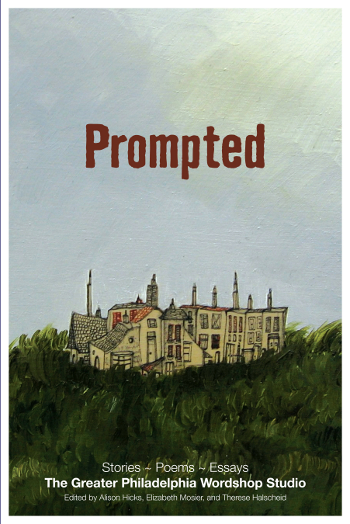
Yesterday I attended a terrific workshop, “Writing for Young Adults,” taught by Elizabeth Mosier and sponsored by the Delaware Literary Connection. Libby teaches writing at Bryn Mawr College and is the author of My Life as a Girl and a contributor to the soon to be released, Prompted, an anthology that explores the human condition via poetry, personal essays, and fiction. Prompted was put together by Philadelphia Stories magazine, in partnership with the Greater Philadelphia Wordshop Studio, and will be out on May 22.

In speaking about the anthology experience, Libby made a comment that stuck with me. She contrasted how she reads as an editor to how she reads as a teacher. She said that while reading as an editor she had to look for problems in the piece, whereas as an instructor, she reads for potential within a piece.

I quickly wrote down this comment because it so clearly states my own feelings. How I read a manuscript I critique as an editor is different from how I read as a writer, which is different from how I read as a reader. I’ve heard many writers talk about this. I think of it as different reading hats.

Wearing my Editor Hat, I read for potential, as Libby said. I look for what is working in a story, what I think the author is trying to say or show, as well as for what needs work. I also look for what the author may have unconsciously missed—elements of theme that may be overlooked or underplayed; missed opportunities that would allow a character to reveal more; intriguing narrative questions that may be understated or missed altogether.

As an editor, I call in all three readers—editor, writer and reader. The editor in me tells the writer in the author how to best reach the reader in me. It’s a little mind-bending to read on paper like this, but it works perfectly well in practice.

When I’m reading as a writer, I look at things differently. Under my Writer Hat, I generally read work in one of my working genres. In my case, that’s usually literary short stories or mysteries. While I read to enjoy the story, I’m also mentally deconstructing the plot and analyzing the characters from a writerly point of view. I read with an internal ticker-tape parade of questions: “Ooh, how did the author come up with that method of murder?” “Why did the author choose to tell me this background instead of putting it into a scene?” “Hmm. Is what this character just said supported by what this character does in the story?” “Whoa! Where heck did that come from?”

Reading as a writer means I’m trying to put myself in author’s head. It’s fun but sometimes frustrating, because I can’t always figure out why the author did this, that or the other. Before I was a writer, I never questioned why something happened in a story. I accepted the course of events as I would expert testimony in a trial—irrefutable. Now that I write, I know that there is nothing irrefutable in an author’s decisions. Knowing this makes me work harder to get things right in my own stories, to shore up why and how characters act with background and traits that make what they do make sense. I don’t want another writer, or reader, or anyone, to be reading one of my stories and say, “Whoa! Where did that come from?” unless I actually intended there to be a big surprise.

Finally, I read as a reader. Or, maybe more accurately, as a fan. The Reader Hat is the best to wear. This is the best kind of reading, to just pick up the book and get lost in a story. No pressure to change, no desire to question. Just read. This can only happen, I believe, if a writer first reads the story as a writer, and then an editor reads the story as an editor, and together they create a work for the reader. Editor-writer-read. It’s a process. They’re a team. Hopefully a winning one.

Do other people read different stories in different ways? Does your internal editor kick in, or your internal writer interrupt to question the author? Does your internal reader tell everyone else to shut up and just let her read already!?!

Tell me about it.

Ramona


Save the Sentences

…wherein I pay tribute–and give advice on how to brutally edit–the backbone, glue and worker bee of stories–the sentence.

Everybody loves a great opening line:

“Last night I dreamt I went to Manderly again.”

“Mr and Mrs Dursley, of number four Privet Drive, were proud to say that they were perfectly normal, thank you very much.”

“Dorothy lived in the midst of the great Kansas prairies, with Uncle Henry, who was a farmer, and Aunt Em, who was the farmer’s wife.”

“Mother died today.”

Great first lines are important, and any writer who nails one is already ten steps ahead of the pack. But what comes after a terrific first sentence are many, many other sentences. Not all sentences can be as memorable as those I’ve mentioned above, but every sentence has a job to do in a story. It can be descriptive or declarative; convey an emotion or present a tease; describe a setting or destroy a universe. Whatever its function, sentences are the vehicles that tell the story. Sometimes they are Hummers–big and ostentatious and almost unwieldy–and sometimes they are like my beloved, ancient Mazda–nothing fancy, but absolutely reliable when it comes to getting me where I need to go.

Is this news? No, of course not. If you are a writer and you aren’t aware that stories are composed of sentences then…wow. I don’t even know how to complete that sentence.

So why am I blogging about sentences? Because while sentences are a good thing, there is that old bugaboo known as too much of a good thing. Sometimes it’s called overwriting, sometimes rambling, sometimes shooting the breeze, but whatever it is, a lot of writers suffer from a condition I like to call, in honor of the “too many notes”scene in Amadeus, Too Many Sentences Syndrome, heretofore known as TMSS.

Today I’m going to address a particular type of TMSS. I’ve been reading a lot of action-oriented manuscripts lately, and I’m seeing a common problem.

Let’s say you have a character who enters a dark room. You want to convey that the room is dark, so you write,

“Annabelle entered the room. It was dark. Pitch black. She couldn’t see her hand in front of her face. Her eyes tried to adjust to the inky darkness, but she couldn’t see a thing, because the room was  as black as night.”

Don’t laugh. Those are not quotes, but they could be. Here’s another example:

“David ran, as fast as his legs could carry him, towards the sound of screaming. He pumped his arms and lifted his feet, pounding on the ground. Clouds of dust rose in his wake. He ran so fast, his heart hammered. He panted hard, sweat rolling down his back, as he got closer and closer and the woman’s screams got louder and louder….”

What do these two collections of sentences have in common, other than being examples of TMSS?

They are stalling.

In both cases, a character is about to enter an action scene that seems to involve danger. The woman enters the dark room, the man is running towards the screaming. But while both characters are moving, it is taking FOREVER to get to the action. In the first case,the author keeps throwing in descriptions of the dark, delaying what’s in the dark, or what’s going to be illuminated once the lights flip on. In the second case, the author describes the man and scene very physically as he runs towards the woman in apparent trouble. In each instance, the author stalls the action by throwing in too many sentences between the character and the action. The author adds sentence after sentence to delay what’s about to happen.

Why? Why do authors stall?

Because writing action is hard. Overly describing a scene or giving a character an inane task or overtelling anything just before the action kicks in lets the author ease into a difficult and intense bit of writing. I see this a lot in manuscripts that are, eventually, full of action, but by the time the character reaches the screaming woman or flips on the light switch and sees Norman Bates’ mother in the rocking chair, some of the tension is destroyed, never to be returned.

How do you know if you suffer from TMSS? Examine your sentences and consider these question:

Does this sentence do a particular job to move the story forward?

Does it have a function that is not performed by the sentence before it, or the one after it?

Does it say something new or different, or is it simply repeating something else, in a different arrangement of words?

When I edit a story, this is what I do: examine it sentence by sentence. If each one doesn’t meet the above criteria, I kill it. If I can remove a sentence and the paragraph still makes sense and sounds pleasing, it’s a goner. No lazy, layabout, blowhard, repetitive, stalling sentences allowed.

Killing off non-functioning sentences will remove the clutter in your writing, and will get your reader to the action faster.

So, try it. Read your WIP sentence by sentence by sentence. Now! No stalling!

Ramona


You’re So Meh

wherein I discuss secrets characters keep, and also ask,  if you’re going to give up a long-held secret, can you please let it be a good one?

There was a little bit of a brouhaha in the music world this week, when some news outlets reported the identity of a mystery man.

The mystery man’s claim to fame? He was vain.

So vain, in fact, that Carly Simon wrote a song about him.

If you don’t know the background on this musical mystery, it’s this: Carly had a falling out with some vain dude, and she got payback by writing a song about his vanity.This has always been confusing to me. If she wanted to bug Mr. Vanity, wouldn’t a more successful approach have been to ignore him, rather than write the song and refuse to ID His Royal Vainness for 38 years? Didn’t that just give him more attention, and fueled his already overflowing vanity?

Of course, if she did that we would not have the song, which is an excellent one.  How many songs include “gavotte” in the lyrics? So I will back off on criticizing Carly’s expose’ on vanity, and just enjoy the music.

So, for all these years, speculation has been swirling around, and this week, some of that ended. Maybe. Supposedly, in a new version of the song on her new album, Carly finally reveals Vain Guy by…are you ready?..whispering his name in a song.

Backwards.

Wow. I wonder where she got that idea?


To the surprise of many (looking at you guys, Warren and Mick) the name she whispers is David.  Speculation is that David is David Geffen, and she was peeved at him because he promoted Joni Mitchell’s music more than hers. David’s people are denying this. Why…I’m not sure.

Why am I not sure? Because, after 38 years and about half of the news article, I quit caring after I read the name.

That’s the problem with secrets. Once they’re told, they’re just not any fun anymore.

I’ve been thinking about this because I’m working on a short story that revolves around a secret, but one of those “Do I want to know or not?” type of secrets. My story is about a troubled couple. Halfway through the story, the wife starts doing a new sexual thingy in bed. She doesn’t tell her partner how (or why or when or where) she learned this new sexual thingy, and he doesn’t ask. Maybe he doesn’t want to know. Maybe he thinks she learned it off the Internet, a la Leonard in The Big Bang Theory. I don’t know what he thinks because he’s not my Point Of View Character, but it’s obvious that he doesn’t ask because he really enjoys the new sexual thingy, and he doesn’t want to screw it up. As it were.

I’m not sure if he ever finds out, because I’m still writing the story. The sudden appearance of a new sexual thingy in a relationship is the kind of secret someone might want to  keep forever. Or it might be the kind that someone throws in the face of her lover, in a moment of anger. Or one that her lover, in a fit of jealousy, might demand an answer to, at long last. There may be other options. Whatever happens, my story is going to ultimately be about what this secret does to this couple.

Which brings me back to Carly and *whisper* Divad. After all these years, why’d she give up the secret? That, to me, is a lot more interesting than the identity of the vain man ever has been.

Which brings me to this. Was this what Carly planned all along? To wait until the opportune time to give up the guy, at a time that would make some buzz about her new album, in a Beatlesque manner that would draw attention to her?

So, really, it was all about her, the whole time?

Pretty sneaky, that Carly Simon.

While we’re on the topic, here are some secrets I think were well kept until, of course, they weren’t.

1. What really happened to Fox Mulder’s sister. It’s a good secret because I still don’t know, and I watched every episode of the show, including the one where the Lone Gunmen were blown up. (Oops. Hope I didn’t spoil that for anyone.)

2. Mrs. Rochester in the attic.  Poor Mr. R. Saddled with a mad wife, and he had to dress up like a gypsy, in the same book.

3. The identity of the Headless Horseman in Sleepy Hollow. The ending of the story points to Brom Bones, but it’s really

4. How, exactly, does one gavotte? That one is still a mystery to me.

How about you? Do your characters hold any deep dark secrets? If so, is telling more compelling than keeping quiet?

Ramona


Quoth the Raven: A Toast to the Toaster

wherein a half-century plus of tradition and tribute comes to an apparent end at the gravesite of Edgar Allan Poe.


Last Tuesday, January 29, was the birthday of Edgar Allan Poe. He’d have been 201. Try to picture all those candles.

But candles have not been the tribute of choice of one Poe devotee. For more than sixty years, a mysterious visitor dubbed the Poe Toaster appeared at the gravesite of the master of the macabre. On January 19, in the early morning hours, the Toaster paid his tribute. He wore a black cloak. He left behind three roses and a half-bottle of cognac. Every year, since 1949, the same traditional display. That’s a lot of flowers and booze, but who is more deserving of both the toast and the mystery than Poe?

If you live in the Mid-Atlantic region and read a newspaper, you’ll know that speculation about the Toaster has run rampant the past few years. It’s like Deep Throat—some people surely know his identity, but those people aren’t talking. I hope they don’t. I don’t want to know. If the Toaster wanted public recognition, he’d have sought it. He didn’t, so I respect that and hope the mystery of his identity will remain honored.

But that’s not to say the Poe Toaster does not deserve credit. Sixty years of doing anything consistently, particularly something that requires you to prowl around Baltimore in the wee hours in January, deserves some kudos.

So here’s to you, Poe Toaster. If you are to appear again nevermore, a grateful salut for your devotion.


Sidebar:

The Toaster may have retired, but Poe continues to enthrall writers, both with his work and his mystique. I wrote the above post in my public library. When I was finished, I was curious about how many Poe works were included in the county collection. The monitor nearly blew up when I did a general search on Poe, so I limit searched and limit searched and limit searched until I came up with a list of fiction works about Poe. That’s right—only fiction written about Poe. Here are a few of the titles. If anyone has more or would like to recommend, please do so.   A Poe Reading List is a good resource for the next midnight dreary.

The Pale Blue Eye – Louis Bayard

Entombed – Linda Fairstein

Not Quite Dead – John MacLachlan Gray

The Murder of Edgar Allan Poe – George Hatvary

In a Strange City – Laura Lippman

The Lighthouse at the End of the World – Stephen Marlowe

Poe & Fanny – John May

The Poe Shadow – Matthew Pearl

The Professor’s Wives Club – Joanne Rendell

For Edgar – Sheldon Rusch

The Mask of Red Death – Harold Schechter

Nevermore – Harold Schechter

The Facts in the Case of E. A. Poe – Andrew Sinclair

An Unpardonable Crime – Andrew Taylor

It’s All Material

….wherein I have to weigh my news addiction against my duty as a good citizen, and could I get a screenplay out of it?

A few months ago, I was called to jury duty. After an opening lecture about free parking (which was not, repeat, NOT, guaranteed to all prospective jurors, because there are not, repeat NOT, enough gratis spots in the garage) it was announced that our pool was for a criminal trial that would last eight weeks. After the audible gasp died down, a roll call was taken. It wasn’t to check attendance. It was to answer this question: Yes or no, could you devote eight weeks of your life to serve on a jury?

There were over one and fifty hundred people in the room. Less than twenty people said yes.

I was one of the yes-ers.

Think of the writing material! Short story vignettes, at least twelve of them. I could keep a journal, the bones for an epistolary novel.

Or….scenes from Twelve Angry Men began playing in my mind. I’ve never written a screenplay, but who doesn’t love a good courtroom drama?

A couple of hours later, I’d finished casting my international jury duty movie starring Gabriel Gael Garcia, Daniel Craig, Hugh Jackman, Hugh Grant, Olivier Martinez, Rodrigo Santoro, Jon Hamm and George Clooney. To avoid the title Twelve Handsome Men, I added Sandra Bullock as the Foreperson. (What?  She’s having a very hot year.)

The judge would be played by Meryl Streep, of course.

Suddenly, the yes-ers were called out –and instructed to go home. We were to report back tomorrow, to this particular floor, to this particular hallway. Then the bailiff handed out parking validations, no questions asked. I felt like I’d been handed a Golden Ticket by Willy Wonka.

That night, I thought about the type of trial that lasts eight weeks. There were no messy murders in recent memory, so I figured something complex and corporate. CEOs with hearts of stone. An evil computer geek trying to take over the world. Sure, that’s been done to death, but it’s still a thrill to witness computer geeks get their comeuppance for being so much smarter than the rest of us.

I added Jim Parsons to the cast, as the defendant/bad guy.

The next morning, a bigger bailiff, wearing a sidearm, sent us to a particular set of benches, in a small area beyond the elevators. When all the yes-ers had reported, the bailiff said we could use a particular restroom now, but we had to come straight back. No wandering around the courthouse. Then he stood in front of us like a human Jersey barrier.

Finally, we were led into a courtroom. Someone who had brought in a laptop was scolded. Someone who’d forgotten to leave his cell phone in his car sheepishly offered it up to be  confiscated. We turned over our parking stubs. When the bailiff gathered only 12 tickets for 20 people, he questioned the non-ticket holders. Some had taken the bus. For a second, I wondered if he was going to validate the bus driver.

People in suits began filing in. Some smiled, very pointedly, at us. Others very pointedly pointed their backs at us. Soon we were told to All Rise, and the judge came in, and it was explained why we were being treated so particularly.

We were in the jury pool for a capital murder trial.

I went into brain freeze. I gather this is a fairly typical reaction because the judge assured us that everything she was about to say would be given to us to read, in writing, a little later.

I learned later (through Google) that the crime had occurred several years ago, but it had taken almost four years to locate the victims, hone in on a suspect, and build the case.

The judge read the name of the defendant. She read the charges. She read the name of the victims. She read the names of attorneys attached to the case—the prosecutors (the smilers) and the defendant’s legal representation (the ignorers). She read a list of witnesses, experts and cops who would testify.

The list was very long. The part of me that was not in shock realized that my cast would have to be much bigger. Lots of extras and unknowns.

Then she started reading questions we would have to answer in voir dire, and I threw out thoughts of movie making.

Could we look at crime scene images? Did we know anyone addicted to drugs? Were there alcoholics in our families? Had we ever been a victim of domestic violence? Lost property to arson? Been kidnapped? Filed for a protection from abuse order? Smoked crack? Could we go to locations where the crimes had occurred? Could we look at autopsy photos of the abused corpses? Could we consider recommending the death penalty if a verdict of guilty was determined?

Could we refrain from reading a newspaper, searching the Internet or watching television news for the duration of the trial?

Say…WHAT?

That brought me up short. Not the other, far more gruesome questions. I know my stance on those. As difficult as it could be, I knew that, if selected, I would give real and serious consideration. I would pay attention and try to do a good job.

But eight weeks of avoiding news?

I read the newspaper every morning. (My husband is an editor, true, but still, I am a newspaper reader.) I also Google everything. And everyone. If I’ve met you, chances are, I’ve Googled you.

This was cause for major personal introspection. And honesty.  Home at night, could I fight the temptation to cruise the ‘net and maybe meander across a story about my trial? Could I truly go eight weeks without…peeking?

The only way, for me, would be a total media blackout.

I had lots of time to consider. I pulled the second to highest number in the pool, meaning I’d be the second to last person interviewed. I was there for the duration.

Late in the afternoon, the remaining potentials were gathered in a room. We didn’t talk about the case, but several people talked about serving. One young woman said it would be great to spend eight weeks away from her jerk of a boss. Another man quietly said he’d been laid off for months, and the ten dollars a day jurors would be paid, for eight weeks, would add up to how much? Several older men were chomping at the bit to serve.

Me? I was still questioning my willpower.

And then I pictured Judge Meryl. If Judge Meryl said I couldn’t read the paper or Google, I wouldn’t do it.

In the end, to use some fancy legal jargon, it became moot. The person before me was chosen as the 4th alternate. We were thanked, presented a certificate that freed us from jury duty for two years, and sent home.

Part of me felt ripped off. I never got to say, in a court of law, that I’d be willing to sacrifice my news addition as my civic duty.

So, could you do it? Eight weeks without peeking?

And, if I wrote that into a screenplay, could media withdrawal work as a secondary storyline?

Ramona

MAAF Update


Mid Atlantic Arts Foundation Launches New Registry of Fellowship Artists – November 25, 2009


The MAAF is pleased to announce the launch of a new, on-line registry of artist fellowship winners from Delaware, District of Columbia, Maryland, New Jersey, Pennsylvania, U.S. Virgin Islands, Virginia, and West Virginia. The service, which is free to both artists and public users, features artist profiles, work samples across all disciplines, online exhibitions, and a technical assistance section.

As a grantee from both Delaware and Pennsylvania, I get a page. Yay! Here it is:

http://registry.midatlanticarts.org/portfolio.cfm?id=126


DDOA Introduces Artist Pages

The Delaware Division of the Arts unveiled its new artist pages today. Take a look!

Introduction to all Fellowship Artists:

http://www.artsdel.org/information/iafrecipients/default.shtml

My Page:

http://www.artsdel.org/information/iafrecipients/long.shtml

Congratulations to the DDOA–this looks fantastic!

Hello world!

Bonjour and Hello!

Please wander around, poke and prod, leave a message, come back again soon.

Ramona