 Special thanks to the Delaware Arts Info blog for the review of Sunday’s literary reading.
Uncategorized
You Are Invited
Next weekend, I will be joining Delaware Division of the Arts Individual Artist Fellowship Winner, Tery Aine Griffin, for a public reading. Tery has graciously invited me and my writing friend and Ink Slingers co-editor, JM Reinbold, to share our work with a public presentation.
 I will be reading from a memoir piece called Grand Isle, which reflects on childhood summers along the ever-changing Louisiana coastline.
My two fellow readers will be sharing works of fiction.
The reading will be at the Kirkwood Library in Wilmington, Delaware, 3:00 to 5:00 p.m. on Sunday, August 8. It is sponsored and supported by the Delaware Division of the Arts, and the Kirkwood Library Friends.
For those interested, following the reading, there will be cookies.
How Many Pages Did You Write Today?
All Aboard the Story Train
My Friday post at Writers Who Kill, revisiting an effective writing lesson taught in Fourth Grade Language Arts.
Midsummer Madness
…wherein Delaware poets go wild on a Saturday night.
From the fine people at the Delaware Literary Connection:
“Midsummer Madness,” a reading at the Over Coffee Cafe in Hockessin, DE on Saturday, July 17, 2010 from 5-7 p.m. The featured readers for the evening will be JoAnn Balingit, Delaware’s Poet Laureate; Wendy Ingersoll, whose new poetry book, Grace Only Follows, was recently published by March Street Press, and Fran MacMillian, Co-Publisher of Broken Turtle Books and one of Delaware’s finest street poets.
An open mic will follow (readings limited to 5 minutes per person).
Today’s the Day
…I become a Writer Who Kills.
Today I join Jim Jackson, E. B. Davis and Pauline Alldred at the Writers Who Kill blog, with my inaugural Friday post, The Writer-Editor Team.
Deepest Darkest Delaware
…wherein I put a plug for some truly erroneous, but hilarious, tourist information about the First State.
–
Here’s a clever marketing device for a clever adventure story, M. T. Anderson’s Jasper Dash and the Flame Pits of Delaware. 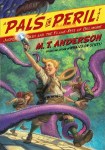
Even more clever is an interactive tourist map.
Beware!
Two Little Announcements
Beginning next week (July 9), I will be joining the Writers Who Kill as the regular Friday blogger. The current writing team is Jim Jackson, E.B. Davis, and Pauline Alldred. I’ll be popping in each week to offer an editor’s perspective.
–
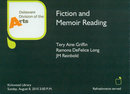
In August, JM Reinbold and I will be guest readers at Tery Aine Griffin’s IAF performance. Tery is a 2010 Delaware Division of the Artist fellowship winner as an Emerging Artist in Fiction. The reading will include fiction and memoir and is sponsored by the DDOA and the Kirkwood Friends of the Library.
Talking Trash
….wherein I talk about why dissing your colleagues in print, or in front of an open mic, is not a good thing.
From time to time, I hear authors compare writing a novel to  running a political campaign.
On the surface, the two don’t seem terribly similar. Writing is generally a solo pursuit; running for office is just the opposite. But there are a few similiarities.
First, the ticking clock: a writer has a Deadline; a politician has Election Day. Second, the disruption of family life: a politician goes on the road to stump the electorate; a writer disappears into the basement to pound the keys. Third, if all goes well, they share repetition: both the writer and the politician will have to repeat the entire ordeal in another two (or so) years.
So maybe, with that kind of relentless pressure, it’s okay to be a snarky about your competition. Or is it?
California GOP Senate candidate Carly Fiorina’s “caught on camera moment” is an excellent illustration on how dissing your rival is not so great for a professional, adult, public person’s image. Fiorina herself admitted she opened the door to discussions that were petty and superficial. I think calling anyone’s hairdo “so yesterday” certainly qualifies as that.
 (Also, as an editor, I feel compelled to point out that the phrase “so yesterday” is, well, so yesterday.)
But part of a successful campaign strategy is to criticize your opponent’s work and record, in a public forum. Your rival promised to do something and didn’t? Call them on it. Your rival did a great job two terms ago but was asleep at the wheel for the last one? Buy a TV ad on it. Your rival failed to show up for important votes? Scream it from the podium. After all, that’s politics.
But is it publishing?
The author experience includes being reviewed, critiqued, criticized and rejected. Authors and readers disagree on how much weight a negative review carries, but I can tell you that no author likes it. Nevertheless, it’s part of the gig. You are putting work out for public consumption, and purchase, so an author can expect to be called on it when a book fails to follow through with the promise of its opening, when a story doesn’t hold up to the one that came before it, or when the author seems to be phoning it in.
Authors expect this from reviews and readers. But should they expect it from their fellow authors?
Some time ago, I participated in an online discussion about a novel. It was part of a popular series, much beloved by many readers for many good reasons. But in my opinion, this particular installment had tanked. I said why. I did it respectfully. I explained where I thought the author had made bad choices. Some readers disagreed, and we had a back and forth that was interesting and valuable.
And I would so very much love to take it all back.
Towards the end of the discussion, someone said, we should contact Author X and let them know we are talking about this. And that brought me up short. How would Author X (or I) feel about stumbling upon this discussion, which was held without an invitation to particiate?
I am a reader, and I am certainly entitled to have and express my opinion on books. But I’m also a writer, and I cringe when I’m reading a blog or a list-serve and I see writers bash the work of their colleagues in a non-review format. That part is important.
There are many opportunities to review a published book. There are also study questions and deconstruction exercises that are both fun and educational. There’s a difference between reviews and exercises and a public hashing.
Why is it bad to talk trash about a fellow author, in print, with your fellow writers?
1. All authors make choices. Do you want your choices openly questioned by your colleagues, with no invitation for rebuttal?
2. Whatever your take on an author’s level of talent, talking about undeserved popularity makes a jab at the reading public. Do you want to alienate your own potential audience?
3. Publishing is a big business, but genres are a small world. What happens when you are sitting on a panel next to an author whose book you slammed?
4. What goes around comes around. Do you want to open up your friendly Yahoo group discussion and find that you are lazy, untalented and undeserving of your writing success?
5. It’s bad manners. Notice how I’m not saying anything about Carly Fiorina’s hairdo. 
6. It’s not good for your image. Who looks more like a sore loser–the basher, or the bashee?
I wonder how other writers feel.
Once an author reaches a level of success, is it open season on their work, anywhere and anytime? Or do we embrace Solidarity and the adage, if you can’t say something good, make sure there’s not an open mic around?
Ramona …who is writing this on a very humid day, so my hair is a nightmare, FYI
Pitch Mania
…wherein I wonder, to pitch or not to pitch? That is the question.
Last week, driving up to the Pennwriters Conference in Lancaster, I listened to the 10th Anniversary Concert CD of Les Miserables.  It is the perfect length for this drive: CD 1 on the way up, CD 2 on the way home.
I’m partial to Les Mis because Marius was my first literary crush, the novel made me love literature, and I remain enthralled by the battle between Jean Valjean and Inspector Javert.
As someone of French heritage, I am inspired by the musical retelling of revolution. So I arrived inspired at the conference, ready to teach about craft and encourage my fellow writers to persevere against the odds.
Pennwriters puts on a terrific conference. There are courses on craft, marketing, query workshops and agent/editor panels. A full range of options, plus the big kahuna (for some): the pitch session.
The pitch sessions were ten minute meetings between a writer and an agent. Sometimes conferences charge extra for pitch appointments; sometimes not. At ten minutes a pop, an agent can see a lot of writers during a three day conference. During both of my workshops, nervous writers invariably slunk away, trying not to be disruptive, as they left for a scheduled pitch.
For the pitch, the writer memorizes a one-line description of his/her manuscript that includes the genre, the plot and a hook. With luck, the agent will hear that line and say, “Hmm. Tell me more.” So the writer follows up with a longer, also verbal, version.
The pitch session is touted as a writer’s shot to impress an agent and, hopefully, score a request to send a manuscript for consideration. It’s Your Chance. Your Shot. Your Moment. Your Lucky Break.
This is a good thing, right? Agents come to conferences looking for new clients. There must be some value to the pitch session for both sides, and for the conference planners; otherwise, why would anyone do them?
All of this would be great, except for one thing.
Not all writers are great at distilling their work into neat, tidy, spoken, packages. I know this through emails and list-serve posts with writers agonizing over how to get the sentence exactly to form. Added to the stress of this is the fact that it’s verbal. Being an author does not necessarily mean you are a confident public speaker. Add to the agony and the stress the pressure of This Is Your Big Shot, and the result is high anxiety.
My room was across the hall from an agent’s. All weekend, I witnessed anxious writers going in and out of their pitch sessions. Every time I got off the elevator, people were sprawled in the foyer, lined up like the faithful awaiting a papal audience.
 In the hallway, a very serious man was stationed like the gatekeeper to Nirvana in front of the agent’s door. The first time I approached, he looked at my nametag, checked his clipboard and asked if I had an appointment. Confused, I held up my card key and pointed at my door. He apologized for interrogating me and made a sheepish comment about sticking to the schedule, because if someone goes past their 10 minutes, it messes up everyone to follow.
It was kind of funny. At first. At first, when I realized what the line in the foyer was for, I wished people luck. Knock him dead! You can do it! You’ll be great! But by Sunday, people who had been waiting for three days for their 10 minutes didn’t need cheerleading. They needed a case of Jack Daniels. I think I was less nerve-wracked awaiting childbirth—and I had twins.
The angst level was bizarre. And a little disturbing.
Am I alone in thinking the “you have 10 minutes with this exalted person to pitch your book, and it must be done this way or else” is a bit absurd? And, perhaps, a little demeaning? Is this the most effective way for writers to communicate? Would it be so wrong for an author to hand over a piece of paper? “I’m a writer, it’s a book, so here it is in writing.”
But that is only part of the issue. The process had a cattle call feel to it that bugged me more with each passing day. I saw so many nervous, upset people at this conference, where they should be learning, but instead were stressed out over the 10 minutes.
All of the agents and editors said they were open to emails from the attendees. I sat between two editors at lunch, did a session with an agent, and had dinner with another agent. I have several golden opportunities, and I didn’t say a word my work as a writer (I did talk about editing.) I thought it would be boring for them and undignified of me. So we chatted about books and library funding and whether or not we get motion sickness reading on a train. They were all nice people, very accessible and normal and human. Not one of them asked me to kiss his ring. When someone at the table asked about contacting them, they all said to send a query and mention the conference.
As an editor, I see how hard new writers work and how much heart and sweat they put into their stories. But publishing is a business, and writers are professionals. How professional is it to hook up with a guy you’ve never met before, in a hotel room, for an allotted few minutes, while you perform in a prescribed manner—and then be judged, to your face, on your performance?
I wonder if there are writers out there who dread the idea of a pitch, but think this is the only way to capture an agent’s notice. It’s not. It’s one process, and maybe it’s a good one for some people. Many writers are perfectly fine with spouting their book descriptions verbally. For those people, good for you! The pitch session is an ideal vehicle and, by all means, take advantage of that opportunity.
But if you aren’t as comfortable with a verbal pitch; if the thought of memorizing a descriptive sentence of your book makes you break out in a sweat; if you pay hundreds of dollars to attend a conference and worry it will be ruined because you blow your ten minutes, I dare to say this:
Don’t pitch.
Send a standard query. Email a nice follow-up letter thanking the agent/editor for the informative panel discussion, and add a written pitch.
There’s more than one way to write a story, and there is more than one way to make contact with publishing professionals, too. If this is not the best way for you, don’t do it! Just say no. Don’t pitch.
 So, what do you think? Are pitches the best and most effective way to get an agent? Is anyone who passes up a pitch session a fool? Is it okay to go the traditional written route? Am I just a big grumpy pants?
Ramona
 Ramona DeFelice Long