A Feast of Bi…er, Riches

In keeping with last week’s theme of brouhahas, I’d like to resurrect one that is a few months old, between two opponents who seem unlikely to rumble.

I’m talking, of course, about Martha Stewart versus Rachael Ray.

In an interview with Nightline, Martha said Rachael’s cooking and cookbooks were “not good enough for me.” Martha said that she strived to create books that were important, that she was a teacher and Rachael was more of an entertainer.

She also called Rachael “bubbly.”

Rachael Ray may be bubbly, and entertaining, but with this incident, she proved she is no dummy. She acknowledged that Martha’s skills were far beyond hers and, given the choice, she’d rather eat at Martha’s house than at her own.

Martha reacted to the  high-roadedness of this by apologizing. Then Rachael was invited on  Martha’s show, and Martha reciprocated by appearing on Rachael’s show, and what could have been the beginning of a beautiful feud burst like a big balloon of politeness. Not sincerity, necessarily, but ultimately, Martha and Rachael baked a pie together and settled their differences like ladies.

Feuds can be interesting. In the literary world, there was Hemingway’s rivalry with Fitzgerald. Henry James was envious of the popular success of his friend, Edith Wharton, as was Evelyn Waugh of Nancy Mitford, as was Wilkie Collins of Charles Dickens. Truman Capote was the inspiration for a character in Harper Lee’s one brilliant novel—and he may be the reason she only wrote one novel. Edgar Allan Poe once accused Henry Wadsworth Longfellow-!!!–of plagiarism.

The peak (or maybe the nadir) of literary infighting might be the row between Gore Vidal and William F. Buckley, Jr. which hit the low point when Vidal called Buckley a crypto-Nazi and Buckley called Vidal a queer and threatened to sock him in the face. Instead of baking a pie together, they sued each other for libel. They did not settle their differences like ladies.

Last week, I wrote that a war about words was important. As Vidal-Buckley proved, a war of words, maybe not so much. But one thing Rachael Ray said did stick with me: “That doesn’t mean what I do isn’t important, too.”

I was spurred to this post by Edward Docx’s article on genre versus literary fiction. And this rebuttal from Salon by Laura Miller.

If you read these, both make some good points. Not new points, but good points. What I don’t get is the point of making these points.

Am I the only one who thinks the literary versus genre brouhaha is tiresome? There are many reasons why writers bash one another, not the least of which are money and ego. Maybe a genuine concern for art has a place, too, but I’m not confident about that one.

What I wonder is this: Why do (some) writers think they have the right to tell readers what they should be reading?

When my twin sons were sixteen months old, I was trapped in a country house during one of the worst winters in recent Western Pennsylvania history. I decided to read War & Peace. I read it because I was sure my brain would die at any minute and I wanted to revive it. Years later, when those same sons were teenagers and I was sure my brain would explode at any minute, I read Beverly Cleary’s Henry Huggins books to remind myself that sometimes stupid boys are just stupid boys. Different times of my life, different literary needs.

It’s just like food. Sometimes you crave a thirty-minute meal and sometimes only four-course fine dining will satisfy you. Is either wrong?

I write literary short stories. I have heard, and been annoyed by, writers who use the phrase “hoity-toity” when describing literary fiction. I am also writing a genre mystery. I have heard, and been annoyed by, writers who use the phrase “mindless tripe” when describing genre fiction.

Writers are advised to write the kind of book they want to read. Readers deserve the same respect. If I don’t like a certain type of book, I don’t read it, but I’m not going to stop my neighbor from reading it. A public put down of readers’ choices is a form of censorship.

If at the times of my life I described above, someone would have tried to take away what I wanted to read, I’ve have hit them over the head with War & Peace and smashed them in the balls with Henry Huggins.

To go back to the food metaphor, we all have to eat. There’s plenty of room at the literary table for all sorts of dishes. Some may be healthier than others, but my personal physician advises me that a well-rounded diet will keep me fit and happy. Plus, eating the same thing over and over, just like going round and round pointlessly on a topic, just gets boring.


So what do you think?  Do authors complaining about the work of other authors make you change your reading choices?


A Good Narrator is Hard to Find*

“An honest man is always a child.”

This quote is attributed to the Greek philosopher Socrates, who also is credited with saying, “I know that I know nothing.” We are going to conveniently ignore that second quote because a) to put it in the vernacular: He’s Socrates; if he knows nothing, dude, where does that leave the rest of us?;  and b) the first quote fits the topic of my last post: Why do readers trust a child narrator?

There’s another saying which can’t be attributed to anyone in particular, and that is that children are honest. Children tell the truth. Children don’t lie. Okay, that’s three sayings, but they claim the same thing and, pardon my French, all three are horse merde.


Children lie all the time, and they are not even good at it. A child will swear he did not give the dog his vegetables–while Rover is rolling a Brussels sprout across the floor. A child will open his eyes wide and promise he did not steal his sister’s Easter candy, while his mouth is smeared with the mangled remains of Little Sister’s chocolate bunny.

Children lie—except when they are the narrators of a book.

Last post, I shared a short list of books narrated by young characters. Most of them were Southern, reflecting my personal reading tastes. As you can see from the comments, non-Southern child narrators are popular, too. I’ve been Google-searching “child narrators” and reading about their appeal. The consensus is this: stories narrated by children are popular because readers relate to them, since everyone has been a child; and readers trust a child narrator, for the same reason. It’s a given that while real-life children will lie in their teeth about certain things, they are pure and innocent when telling stories.

Let’s work with that. What makes a good narrator? What qualities should a writer inject into the character given the task of telling the story?

This is a big topic, so I’m going to strip it down to some basics. I’ll even use an acronym. What does a writer need to GIVE a narrator to make him/her work?

GUIDANCE – The narrator is the guide of the story. He takes the reader by the hand, pulls them in, strings them along, pushes them forward, dangles them over the cliff, denouements them at the end. An author decides what kind of guide the narrator will be: Is this a solo gig? Or will there be several different narrator making a team effort? If so, how do they work with one another? Is this guide going to be straightforward and unbiased—the man behind the curtain who directs the action but never addresses the reader? Or, is this a personal journey that will allow the guide to address the reader more intimately? Is the guide going to jump around in time and space, starting with “I’m in this place and what follows is how I got here” as the impetus to share the story that is, in fact, already over? Deciding how the story will be told in terms of structure, who will tell it and in which point of view are primary decisions for GUIDANCE.

INTEGRITY – Narrators don’t have to tell the truth. They can tell the truth as they see it, as an unbiased witness to the events of the story. They can tell the truth as they perceive it, which means interpreting events to support a personal truth. They can also lie, to support their own personal agendas. Just because the narrator is telling the story doesn’t mean they are telling the true or whole story. It’s up to the reader to comprehend what the narrator is really saying. This is the fun of reading. All those words on the page—they say one thing, but they may mean another, or more, or less. So what does this have to do with INTEGRITY? Simply put, a narrator can purposefully lie to or deceive the reader, but they will not purposefully lie to or deceive themselves. Narrators can be deluded, or unreliable, or mistaken, but they don’t mislead themselves. Hence, a narrator is always true to the truth as they know it. For example, when Scout Finch tells us that Dill arrives in Maycomb in a blaze of glory, she’s telling the truth as she sees it. The reader perceives that Dill gets shuffled around from relative to relative, but Scout relays his train rides as a glamorous experience. Does this erode her integrity as a narrator? No. She is telling what she knows to be the truth. It’s up to the reader to see beyond her years and understand more.

VOICE – Narrative voice is more than language and sound and semantics; it is how the narrator delivers the story to the reader’s ear. It is the most esoteric part of GIVE, and so the most complicated. Not only does the narrator say what they say, how they say it says a great deal about them. A person from the South speaks differently than a person from the Midwest. A middle-age man who graduated from Princeton won’t speak the same narrative language as an elderly, unemployed woman who grew up on a chicken farm in Waco, Texas, or a young drug-addled runaway from Seattle. A narrator’s voice reflects both their past and current life situations. But that is only one aspect of VOICE. Another is tone. Is the narrator looking at the story through the lens of humor, even when the events are not necessarily funny? Is the narrator long-winded? Does s/he like to employ meandering sentences and long descriptions of scenery, or does s/he keep things spare? These are authorial decisions that are sometimes made before there is even a story. How many times do you read that an author heard the VOICE before they heard the story?  If this happens to you, consider yourself lucky–and listen to the voice.

EMPATHY – Not long ago, I read a novel narrated by a guy I hated. He whined. He lied. He was disgustingly narcissistic. He made excuses for destroying the lives around him. He was despicable in every sense of the word—and he was not even the criminal in the story!  He was also completely fascinating and, though I was appalled by it, he made me understand why he felt as he did. It didn’t make me hate him any less, but it did make me admire the writer for achieving that. EMPATHY means that the narrator makes a connection with the reader. It doesn’t mean the reader approves of or understands the narrator; it means the reader is engaged by the narrator’s story. Isn’t that the ultimate goal of a story? To connect with a reader? Creating EMPATHY is achieved by writing a narrator who is complete and full as a character, first, and then who performs his/her job of storytelling, second.

GIVE: GUIDANCE, INTEGRITY, VOICE, EMPATHY. These are the qualities I consider when I choose a narrator.

What are yours? What do you give your narrators? Tell me about it.

Ramona

*Not really, but I thought it was catchy, so thanks to Flannery O’Connor. Talk about a great narrator. *shivers*

An Ode to Emilie

I just went on a two-week vacation, and I did not pack a single book.

That’s not to say I didn’t read. I read every day. I didn’t need to bring any books because I borrowed ones from my two hostesses—my mother and my sister.

At my sister’s house, I read Kathryn Stockett’s very excellent Southern novel, The Help. Anyone who has not yet read this—you are missing out. Run to the store or library and pick up a copy. Now. My sister and I spent hours discussing this novel.

At my mother’s house, I read from her collection of Emilie Loring romance novels. Someday, my mother’s collection of Emilie Loring romance novels will become my collection of Emilie Loring romance novels because I called dibs on them for when she (my mother, not Emilie Loring) dies. My mother owns a copy of every single Emilie Loring romance novel, with the exception of With This Ring. Until this visit, I did not realize that she was missing With This Ring, so guess what I’ll be hunting for all over the Internet come holiday time?

Minus With This Ring, my mother owns all fifty-plus novels, even the ones written after Emilie Loring’s death. (Don’t tell my mom. She doesn’t know that Emilie herself did not write those last twenty books from beyond the grave. Anybody who reveals to her that they were ghost written, using partial manuscripts or rough drafts found after Emilie Loring passed, is going to suffer my wrath.)

Emilie Loring died a long time ago (1951, at the age of 87), but her work lives on. It lived on a lot two weeks ago because my mother and I had long discussions about the books. Each day, I held out the copy that I planned to read. The books were sometimes held together with a rubber band, the pages brittle and yellow, the sticker price of 40 cents still intact. One glimpse of the book cover, and my mother promptly told me the setting, the plot, who betrayed the hero, a description of the spunky best friend, and what the heroine wore the night she and the hero, inevitably, realized they were madly in love.

Did the spoilers stop me from reading the book? Of course not. I’ve read them all multiple times. I have not familiarized myself with the details to the degree that my mother has, but I’m still young. Someday, when the collection of Emilie Loring romance novels is mine, I will memorize which raven-haired beauty wore a gold sheath to what ball, and which broad-shouldered ex-college football player roommate is really a government agent gone bad.

The books were formulaic and predictable, which is probably why it was easy to ghost write the last twenty without even her biggest fans (my mother and me) suspecting. (Confession: I found out about ten minutes ago, when I researched the year of her death. Damn you, Wikipedia.)

While at home, I read one Emilie Loring romance novel in bed at night and one during my parents’ afternoon nap, which lasts exactly two hours and is exactly enough time to read an Emilie Loring romance novel, especially if you have already read every single one multiple times.

This time, however, I didn’t just read the novels. I studied them. Why are they as addictive as crack? What makes these novels, which are almost laughably dated, still so engaging?

I’ll tell you why. Emilie Loring mastered world building. In an Emilie Loring romance novel, she presents two major characters who are finely drawn, even though the reader knows from the get-go that neither the hero nor the heroine will ever say bad words, have premarital sex, act against the government, be rude to the help, smoke pot or kick a puppy. The men in the stories were gallant and honest; the women were brave and well-mannered. Despite the necessary misunderstandings and miscommunications, the characters always treated one another with respect. Isn’t that what real love between two real people should be like?

That glossy innocence aside, the characters lived in a real city, at a specific time, with situations that were relevant to the time and place. She was excellent at description, so each Emilie Loring romance novel reads like a mini time capsule of American history.

I didn’t recognize her talent at world building when I was a young girl reading my mother’s books. I only knew that I enjoyed the stories, that I got “lost” in it from page one onward. No matter how many times I read an Emilie Loring romance novel, I was transported to the time and place with her characters.

That’s good writing.

Here is a final tidbit about Emilie Loring and her romance novels. She didn’t start her writing career until she was fifty years old. I did not know this until about ten minutes ago. (I guess I should take back the damn you, Wikipedia.) This makes me admire and love Emilie Loring, and her romance novels, all the more.

Is there a writer who has earned your unconditional love? A book you’ve discussed with your sister for hours?  Stories that you shared with your mother that, when she goes or has gone, will always remind you of her?

Tell me about it.

Ramona


And then…what?

RamonaGravitar

There are 57 varieties of how to outline, and how to avoid outlining. Most of the writers who complain about outlining resent the loss of freedom, or fear they will lose the fun of characters evolving straight from the writer’s fingers into the story. These are valid arguments, but what does an anti-outliner do when they really do need to outline?

You can try this exercise. I call it the “And Then” Exercise.

Step 1: Summarize in one paragraph the first 100 pages of your story. Include the inciting incident or whatever sets the story in motion; the protagonist’s relationship to that incident; what the protagonist has done (thus far) in reaction to the incident.

Step 2: Write a sentence describing what will start off the next big plot point of the story.

Step 3: Begin writing a series of “And then….” sentences to describe what will happen next.  By that I mean, literally, write the words “And then.___________” and tell what the protagonist does or what action happens, step by step.

You can “and then” your way to the end of the book, or just to the end of the next act. The purpose of the “and then” is very simple. It will provide the next step for the story. And the step after that. And the step after that.

Here’s an example. (Spoiler alert!)

Step 1 (summary): A shy young woman works as a companion to a rich American woman. On vacation, she meets a wealthy Englishman named Maxim de Winter. After a whirlwind romance, she marries him—against the advice of her employer, who warns her that she can never replace Maxim’s ravishing first wife, the tragically killed Rebecca. When the bride arrives at her husband’s home, Manderley, the warning rings true.  The new Mrs. de Winter is awkward and unsure. Her feelings are compounded by Manderley’s domineering housekeeper, Mrs. Danvers, who remains obsessively devoted to Rebecca. From the moment the de Winters arrive at Manderley, Mrs. Danvers undermines the new bride’s attempts to be a proper wife to Maxim and a confident mistress of Manderley.

Step 2 (upcoming action): Manderley hosts an annual costume ball that, this year, will also serve to introduce the new Mrs. de Winter to society.

Step 3: The “And Then” sentences:

And then Mrs. Danvers convinces Mrs. d-W  to wear a ball gown that is a replica of one in a painting in the house.

And then, at the ball, Mrs. d-W is humiliated when she discovers that Rebecca wore the same dress to last year’s ball.

And then there is a storm that further disrupts the ball.

And then Mrs. Danvers manipulates Mrs. d-W into contemplating suicide by convincing her that Maxim regrets marrying her because he will always love  Rebecca.

And then, because of the storm, Rebecca’s sunken boat and her body are discovered.

And then Maxim tells her that Rebecca was evil, vile and unfaithful and they hated one another.

And then he confesses that he shot Rebecca because she told him she was pregnant by her cousin.

And then the boat is raised and it is discovered that it was purposefully sunk.

And then there is an inquest.

And then Rebecca’s cousin tries to blackmail Maxim because he knows Maxim killed Rebecca.

And then the new Mrs. d-W tells Maxim she will love him despite what he has done or what the inquest finds.

And then Dr. Baker testifies that Rebecca was not pregnant but actually had cancer.

And then the inquest rules that Rebecca committed suicide, because she knew she was dying.

And then Maxim has a premonition about Manderley and insists on driving home through the night.

And then the de Winters arrive in time to see the estate destroyed, by fire, by Mrs. Danvers.

And then the de Winters leave England and are content in a quiet life together.

In this example, the “and then” system covers the major plot points only. You can get into as much, or little, detail as you wish. The purpose is to keep the forward motion of the story going by setting the basics down on paper. With the next few, or all, steps recorded, there’s no reason to sit on the 100 Page Wall and wonder, what do you do now? It’s right there in front of you.

So, write that 100 page summary. And then….

Ramona


Writing a Novel in Three Acts

…wherein I milk the classic story structure concept for a blog post.

A writing acquaintance (heretofore known as WA) contacted me this week, in a panic because although she’s written a couple of novels, she’s been requested to write a short story. As she put it, a 90,000 word story is a snap; an 8,000 word story is an insurmountable task that kept her pacing her office two nights running.

A mutual friend told her to read my “Evie” post, describing my story-in-a-day writing approach. WA wanted me to tell her how to do that, because she’d love to get this puppy out of her life in a day. Luckily, she laughed when she asked. As an experienced writer, she understands that everyone has his/her own approach to story building. A snap to one is the other’s insurmountable task.

But I wanted to help. When WA called, I’d just finished working on a blog for Writers Who Kill which discussed the classic three act structure. It struck me that the three parts of that–Set-up, Conflict, Resolution–applied to the writing process as well as to drama itself.

So, let’s have a little fun:

WRITING A NOVEL IN THREE ACTS

ACT I: The Set-Up, aka The Heady Rush

Players: A Writer and an Idea

Opening Action: Writer gets an Idea, maybe out of the blue, maybe from a news story, maybe from a passing tidbit offered by the gossipy old lady who lives on the corner. Wherever Idea comes from, it lands in Writer’s brain and begins to grow characters, scenes, plot points, voice.

Once this growth develop a buzz as persistent as those Vuvuzela thingees at the World Cup games, Writer has no choice. She must embrace Idea and start writing it out.

As often happens when writing out a sparkling new Idea,  Writer’s words just fly. There’s a catchy opening line, a little bit of build up, and then something quick and funny—or evil and dangerous—happens. A body (probably a relative) drops, or is discovered, or goes missing. Characters appear and start talking, and their individual speaking styles help to define what they look like, or vice versa. The setting plays its role by offering ambiance or interesting hiding places.  A possible lover appears. Someone nasty (probably a relative) drops a line that’s loaded with hints of secrets from the past.

Writer types. Things fall into place with astounding ease. The pages seem to write themselves. Writer feels almost high—this is so easy! This puppy is going to write itself!

A few internal warnings play in the back of her head. Is this too much back story? Am I introducing too many characters, too early on? But Writer heeds and ignores these warnings at the same time. She’s not going to tinker and make it perfect now; she can do that later, in editing. The goal now is to keep a forward momentum, to reach that plot point that is elemental in plotting: the Vow. Her main character has to marry herself to the story, to decide that she will do whatever it is Idea needs her to do, no matter the cost, danger, embarrassment or inconvenience to her and hers.

Writer reaches this point at about 100 pages, and it happens. The character makes the Vow. Yippee! The character is committed to hanging in for the rest of the story.

Writer sits back and takes a breath. Whew!

Then the heady rush fades. She re-reads the pages she wrote in record time, reviews the set-up and the characters and all the outcomes and possibilities that Idea may provide.

And Writer thinks, “Oh crap. What do I do now?”

Because it isn’t just the character who’s made the Vow to stick it out until the end of the story, despite the cost, danger, embarrassment or inconvenience. Writer has taken the Vow, too.

Congratulations, Writer. You’ve just completed Act I of Writing a Novel in Three Acts.

Tune in next week for Act II, which stars Note Cards, Outline, Research and The Dark Night of the Soul.

Ramona

Scarier than Fiction

…wherein what’s happening in real life is worse than anything I have been writing.

It’s been a scary summer in my town–my IRL town—because someone chose to spend the opening week of the warm months abducting and raping women.

In early June, a man with a gun approached a young woman, in broad daylight, in a busy parking lot. Twice. The two incidents were essentially similar: He got into the victim’s car, drove her to secondary location/s,  assaulted her, forced her to remove money from an ATM, and then released her with this warning: I’ve got your driver’s license, I know where you live, if you go to the police, I’ll kill your family.

Let me reiterate. This is not fiction. The first incident occurred on June 2, the second on June 5, near where I live. I have parked in the parking lots, probably been to the secondary locations, and perhaps used the ATMs in question. To say this is close to home is frighteningly accurate.

The first assault happened on a Wednesday and, despite the threat, the victim did go to the police. Who, for reasons that have caused  the Delaware State Police a whole lotta grief ever since, did not alert the public.

A second abduction and assault occurred four days later, on Saturday. Same MO. Same perp*. The second victim also went to the police. This time, the DSP put out an alert to the public.

Then, as they say, all hell broke loose. That part is not fiction, either.

Since the story broke, the DSP have been handing out composite sketches, posting a safety tip slideshow, offering a safety seminar, and handling many (hopefully useful) tips while working the case.

The DSP have also been busy defending the decision not to immediately alert the public after June 2. The agency head explained in the newspaper that detectives were working the first incident, hoping for a quick resolution, when the second occurred. He pointed out that the release of too much information can hamper an investigation and that detectives were “balancing the responsibility to the public with justice for the victim while maintaining the integrity of the investigation.”

I am pointing out this rationale because, as a writer/editor working in the crime genre, this is where—for me–reality collides with fiction.

A couple of weeks ago, I taught a workshop at the Pennwriters Conference on the Basics of Mystery Writing. My subtitle was Decisions, Decisions. My premise for that workshop is that a crime novel is, basically, a series of bad decisions.

First there is the bad decision by the Bad Guy to commit the crime. It may be a quick, impulsive act; it may be a carefully planned operation; it may be a crime of opportunity. However, or why-ever, the Bad Guy makes the decision to rob/rape/murder/maim, the result is bad for someone. Often several someones. Usually, we hope, by the end of the story, bad for him/her, too.

The second bad decision is made by the Victim. Sometimes it is clearly a mistake: taking back an abusive partner, participating in the crime, foolishly going to a dangerous place. Often, instead of a bad decision, there is simple bad luck: being in the wrong place at the wrong time. Sometimes the only thing a victim does “wrong” is to get out of bed that day.

Third, there are bad decisions by Protagonists. In a cozy mystery, an amateur gets wrapped up in a police investigation for reasons that seem good but of course, aren’t really. After all, what sane layperson investigates a murder or crime? Mayhem is inevitable. A smart amateur sleuth should leave it to the pros, but if that happened—no book.

In a police procedural, the Protagonist cop must do his job. For story purposes, s/he can’t always do it very well. There must be mistakes because even a fictional cop can’t be perfect, because perfect is boring to read. Also, because if our cop hero did the job perfectly, the crime would be solved in chapter 2 and, again, no book.

And then there are the bad decisions made by police in the story, or by the investigating agencies, who seem to work against the Protagonist. At Pennwriters, while illustrating plot points in the classic three act structure, I discussed how, where and why questionable police decisions are used to drive a plot forward.

In short, in order to make a story compelling and exciting, cops have to screw up a little.

What’s important is that bad decisions are made for good and valid reasons. Sure, there are cops in fiction, and IRL, who are lazy, incompetent, stubborn or just plain stupid. But in writing, that’s a cop out. (Sorry. Had to do it.)

What’s more engaging to the reader is to portray something similar to what’s happened in my town this month. State troopers  made what had to seem like a solid decision—to withhold information about an ongoing investigation with the belief that the case will be resolved quickly.

In real life, a quick resolution sometimes happens. In fiction, it has to be a bad decision. It has to backfire, because there is, always and inevitably, a second crime that could have been prevented–and is, as such, more interesting to read.

After the bad decision, both in real life and in fiction, the stakes are higher. The perp is alerted that he’s being sought. The public is  angry. The victims are frightened anew. The police are under pressure. The clock is ticking.

In fiction, this is all good. These bad decisions by police are a must. Here are a few standards:

– Focusing the investigation on the wrong person.

– Disbelieving or dismissing the word of a witness.

– Missing, or misplacing, evidence.

– Allowing no-no type relationship to disrupt the case.

– Being hampered by politicians’ self-serving interests.

– Distractions and personal problems, such as divorce, debt, disease or drinking.

– Falling wildly and foolishly in love with the primary suspect, or the primary suspect’s girl/boyfriend

– Ignoring the obvious clue that the reader notices 120 pages earlier.

– Missing a personal connection to the crime or criminal

Did I miss any?

In fiction, characters need to make mistakes. Police need to be fallible. It would be nice it this did not apply to real life, but sometimes it does.

Both as a woman and a writer, I have been monitoring the news—and my personal safety—carefully. This week, I tried to enroll in the DSP’s safety seminar. I write “tried to” because I waited overnight to ask a friend to attend with me. The next morning, a press release was posted: the seminar was filled. 300 spots snapped up in less than a day. That should testify to the fear in my city this summer.

So I emailed the PIO contact, asking to be notified if a second seminar will be presented. He responded that I would “absolutely” be alerted. If anyone reading is from the New Castle County area and would like that contact info, email me and I will gladly share.

Stay safe, ladies.

Ramona

*P.S. I know, I know, real police don’t say perps, they say actors, or suspects, or persons of interest. It’s my understanding that, out of public earshot, the preferred term is azzhat. Only, not really azzhat, but this is a family blog, so I’m stuck with the euphemism.

UPDATE: On Monday, June 21, an arrest!

http://www.delawareonline.com/article/20100623/NEWS01/6230336/Delaware-crime-Rape-suspect-arrested

To Honor A Mockingbird

...wherein I join the bandwagon celebrating the 50th Anniversary of Scout, Jem, Atticus and everybody in the tired old town of Maycomb, Alabama.


Nelle Harper Lee was once said she’d like to be the Jane Austen of south Alabama. Not a bad ambition, and not a bad job she’s made of it.

The year 2010 marks the 50th anniversary of the publication of To Kill a Mockingbird. Harper Lee’s only novel won the Pulitzer in 1961, was adapted into an Oscar-winning film and continues to live a long and happy life on high school reading lists.

Equal parts pure joy and terrible pain, this novel resides in the town of Maycomb and all of its residents–not just the iconic Finch family. Harper Lee’s great gift lies in her creation of a town filled with pathos and mystery, of prejudice and wrongs, and the simple ability—or inability—to find empathy for  our fellow man.

In Maycomb, everybody struggles: Tom Robinson for  justice;  Atticus to raise his children right; Jem to leave his boyhood (and not his pants) behind; Scout to keep her temper as the trial grips her town; Boo to be left in peace.

The book holds unforgettable moments (“Miss Jean Louise, stand up. Your father’s passin.”) but also many smaller, equally telling ones, that I love:

Calpurnia, being prideful and polishing Scout’s patent leather shoes with a cold biscuit before taking the children to the First Purchase African M.E. Church.

Mrs. Dubose, cruel and insulting, forcing Jem to read to her every afternoon so she could kick her morphine addiction before she died.

Miss Maudie, whooping it up after her house burned down because the Finch children named their snowman a Morphodite.

Aunt Alexandra, carrying on the ladies’ circle tea, showing Scout the strength of a lady, despite her brother’s announcement that Tom Robinson had died.

And Dill, who has no home, no family, no town, but is adopted by the Finch children at first sight, and gives them the idea to make Boo Radley come out.

The sum total of a story can be judged in how well and completely an author brings to life her characters–all of them. Nelle Harper Lee, a tomboy girl from south Alabama, wrote one single novel, but her creation of Maycomb as a real, unforgettable place, makes her a master storyteller.

In 2007, President George W. Bush awarded Harper Lee the Presidential Medal of Honor.

To Kill a Mockingbird has influenced the character of our country for the better. It’s been a gift to the entire world. As a model of good writing and humane sensibility, this book will be read and studied forever,” said the President.

Could not have put it better myself. Except to add, Thank you, Harper Lee.

Ramona

The X Talk

…wherein Nancy Martin graciously discusses the special something that separates one piece of work from all the others.

The French (of course) have a phrase to describe the intangible whatever that makes a thing special or appealing or distinctive. To be told you have an air of je ne sais quoi is a lovely compliment. The indefinable but unmistakable allure may be difficult to articulate, but to possess it is a good thing.

I don’t usually take issue with the French in matters of allure and appeal, but for a writer speaking about a novel, je ne sais quoi is not the way to go. If you are writing a query or planning a pitch, clearly understanding what makes your book stand out from every other is a must. Being able to express that with ease and finesse is an art.

Nancy Martin calls that special something the X-Factor. She has graciously agreed to a Q&A on how to banish the je ne sais from a story description.

Ramona:  What is your concept of the X-factor?

Nancy: I think an X-factor is some special element that sets one piece of work above the rest. It’s the thing that turns an ordinary story into an extraordinary book. It may not appeal to everyone, but it does have appeal for a specific audience. Yes, the concept is hard to express, but what’s the old definition of pornography?  You know it when you see it. A unique setting might be a book’s X-factor.  (Donna Leon’s wonderful Venice mysteries.  Cara Black’s Paris setting. Alexander McCall Smith’s Africa.) Or a special “world” for the story—such as the world of vampires.  Or a terrific story element.  (THE HELP by Kathryn Stockett.) Or a truly fresh and exciting writerly voice. (Janet Evanovich.) An often overlooked X-factor is simply beautiful writing.  But I’ll be interested in hearing what your readers think might be other categories of X-factors. I bet they recognize it when they see it.

Ramona: Can you give us some examples of X in your work?

Nancy: What set my romances apart from the many that were published every month was that mine were funny.  Wit is also prized in murder mysteries, and I think that’s the part of my reputation as a writer that made me appealing to mystery editors.  My Blackbird books were set in the world of Philadelphia high society—and that’s what the marketing department focused on.  The Blackbirds were also more romantic than most mysteries—a quality that wasn’t around much when the books were first published. All those things might be considered X-factors.

I think every writer needs to think about her best writing skills or her background (do you live in Bermuda?) or her unique line of work (do you tame lions? Perform autopsies?) and translate that into an X-factor.  For me, I combined my ability to write in an amusing way with my background in romance to create Roxy Abruzzo—a tough, sexy, smart-mouthed Pittsburgh girl.  Roxy became my X-factor—a character like none other in the mystery world right now. She’s compared to Stephanie Plum a lot, but Roxy is very different—much darker than Stephanie, and she really kicks butt.

Ramona: Why is X important, to editors/agents and to readers?

Nancy: Some agents notice read  fifty email queries every morning.  What a tiresome chore, right?  Of course they’re looking for something that makes one query more exciting than the next.

An editor, though, is going to take the X-factor and transform it into a marketing hook.  She’ll use it when talking to the art department about the cover art and to the sales department so they can succinctly and effectively explain the book to distributors and booksellers. And booksellers will use the X-factor to sell your book to readers.  Reviewers will choose a book to review based upon its X-factor and will no doubt use that component when explaining the story in a review. With all that riding on the X-factor, coming up with such an important element must surely be at the top of the writer’s to-do list.

Q. How does a writer use the X-factor to pitch a story?

Nancy: Well, don’t bury your lead.  Skip the long explanation of your plot in favor of: “My book is a story about alien clone paratroopers, who drop into Nazi Germany in 1941.”  If the editor isn’t interested in clone stories, she’ll pass.  But if you’ve done all the right research and know clones are exactly what your editor is looking for—bingo!

Ramona: How would a writer use X to market/promote book?

Nancy: If you’re an author sitting at a card table in  your local Barnes & Noble trying to sell your mystery  about, say, knitting, chances are the customers are avoiding you because they’re afraid you’re going to urge them to buy a boring book.  So hit ‘em where it makes the most sense. Say, on Mother’s Day weekend:  “Does your mom read murder mysteries?  Do you think she’d like one about knitting?” (Or raising cobras? NASCAR?)  Use the X-factor in the design of your website and all promotional materials you send to booksellers or readers.  If you write about knitting, it makes sense to contact stores that sell wool and knitting supplies to do events.  Contact knitting list-serves.  Use your X-factor any way you can.

Ramona: How much (if at all) does a book’s X-factor tie it to branding?

Nancy: I think it definitely ties in.  When I wrote about the Blackbird sisters, I wore pearls and sweaters that matched the book covers.  My website featured Main Line mansions and polo ponies. I spoke at elegant lunches and teas. Now that I’m writing about Roxy, I’ve put all my pastel sweaters in a drawer, and I wear black leather.  My website features rock & roll, and we’re soon going to run photos of pit bulls that their owners send in. If you can make your X-factor work in many ways—all the better.

Ramona: New writers are often stumped by “What’s your story about?”  Advice?

Nancy: You know what?  I think less is more.  Talk about the high points. If you start rambling about the plot points of your story, though, you’re in the weeds.  When I talk about OUR LADY OF IMMACULATE DECEPTION, I don’t talk about missing statues or describe a lot of the secondary characters. I say: Roxy Abruzzo is a tough Pittsburgh girl with sticky fingers and a heart of gold. I might say she’s a fixer for her mobbed-up uncle Carmine. But Roxy’s the thing that either turns readers on or off. She’s the X-factor.

Nancy Martin is the author of nearly fifty popular fiction novels in three genres—romance, historical and mystery.  She received the 2009 Romantic Times award for career achievement in mystery writing.  Her current release is OUR LADY OF IMMACULATE DECEPTION, a mystery published by St. Martin’s Minotaur. Visit her website: www.NancyMartinMysteries.com

Ever Changing Hats

wherein I explore the various ways a reader/writer/editor reads, while still attempting to enjoy a story.

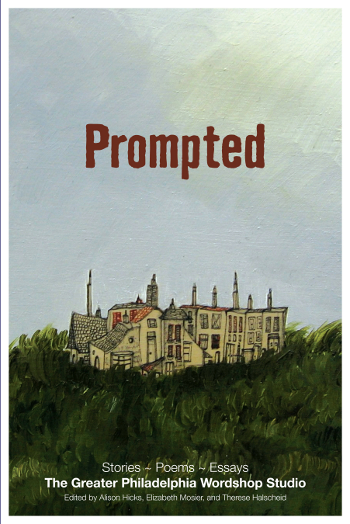
Yesterday I attended a terrific workshop, “Writing for Young Adults,” taught by Elizabeth Mosier and sponsored by the Delaware Literary Connection. Libby teaches writing at Bryn Mawr College and is the author of My Life as a Girl and a contributor to the soon to be released, Prompted, an anthology that explores the human condition via poetry, personal essays, and fiction. Prompted was put together by Philadelphia Stories magazine, in partnership with the Greater Philadelphia Wordshop Studio, and will be out on May 22.

In speaking about the anthology experience, Libby made a comment that stuck with me. She contrasted how she reads as an editor to how she reads as a teacher. She said that while reading as an editor she had to look for problems in the piece, whereas as an instructor, she reads for potential within a piece.

I quickly wrote down this comment because it so clearly states my own feelings. How I read a manuscript I critique as an editor is different from how I read as a writer, which is different from how I read as a reader. I’ve heard many writers talk about this. I think of it as different reading hats.

Wearing my Editor Hat, I read for potential, as Libby said. I look for what is working in a story, what I think the author is trying to say or show, as well as for what needs work. I also look for what the author may have unconsciously missed—elements of theme that may be overlooked or underplayed; missed opportunities that would allow a character to reveal more; intriguing narrative questions that may be understated or missed altogether.

As an editor, I call in all three readers—editor, writer and reader. The editor in me tells the writer in the author how to best reach the reader in me. It’s a little mind-bending to read on paper like this, but it works perfectly well in practice.

When I’m reading as a writer, I look at things differently. Under my Writer Hat, I generally read work in one of my working genres. In my case, that’s usually literary short stories or mysteries. While I read to enjoy the story, I’m also mentally deconstructing the plot and analyzing the characters from a writerly point of view. I read with an internal ticker-tape parade of questions: “Ooh, how did the author come up with that method of murder?” “Why did the author choose to tell me this background instead of putting it into a scene?” “Hmm. Is what this character just said supported by what this character does in the story?” “Whoa! Where heck did that come from?”

Reading as a writer means I’m trying to put myself in author’s head. It’s fun but sometimes frustrating, because I can’t always figure out why the author did this, that or the other. Before I was a writer, I never questioned why something happened in a story. I accepted the course of events as I would expert testimony in a trial—irrefutable. Now that I write, I know that there is nothing irrefutable in an author’s decisions. Knowing this makes me work harder to get things right in my own stories, to shore up why and how characters act with background and traits that make what they do make sense. I don’t want another writer, or reader, or anyone, to be reading one of my stories and say, “Whoa! Where did that come from?” unless I actually intended there to be a big surprise.

Finally, I read as a reader. Or, maybe more accurately, as a fan. The Reader Hat is the best to wear. This is the best kind of reading, to just pick up the book and get lost in a story. No pressure to change, no desire to question. Just read. This can only happen, I believe, if a writer first reads the story as a writer, and then an editor reads the story as an editor, and together they create a work for the reader. Editor-writer-read. It’s a process. They’re a team. Hopefully a winning one.

Do other people read different stories in different ways? Does your internal editor kick in, or your internal writer interrupt to question the author? Does your internal reader tell everyone else to shut up and just let her read already!?!

Tell me about it.

Ramona


The Sick Wife

….wherein I wonder about the various, and maybe convenient, illnesses the poor spouses of cops develop in mystery novels, and how it’s all the fault of Benjamin Bratt.

After 16 years on the job, S. Epatha Merkerson is leaving Law & Order. I hadn’t watched L&O in a while but after hearing that announcement, I tuned in. I lucked into an episode with a guest appearance by Benjamin Bratt. Lt. Anita Van Buren and Detective Rey Curtis, together again. It was like a Law & Order, Old Home Week spinoff.

But it was not a happy reunion. Anita, I learned, is retiring because she has cancer. And she and  Rey reconnected at the funeral of Debra, Rey’s wife.

I remember when Debra was diagnosed with MS. It was a Big Deal. Back in the day, L&O didn’t truck with personal info about the cop and lawyer characters.  We saw the cops on the street and the lawyers in the courtroom. Double-divorced Lenny sometimes quipped a one liner about marriage if the body in the opening scene happened to be an unfortunate husband, and he sometimes snarked about Mike Logan’s revolving door love life. That pretty much covered the warm and fuzzy stuff. There was law and there was order and that’s all that could be crammed into a one hour time slot.

Until Rey Curtis came along. Suddenly, woven into the weekly dead body story was Rey’s personal life. His strict Catholic upbringing. His three little children. His afternoon tryst that nearly wrecked his marriage. Debra’s illness. The pressure of home life impacting him at work.

Suddenly, it was Law & Order & Family Problems.

I don’t personally know any police wives, but I’m sure it’s a tough gig. Constant worry. Crazy schedule. In mystery novels, it’s not any better. In fact, it might be worse than reality. I haven’t done a formal study on this so I can’t quote fun stuff like percentages, but as a reader, I’ve encountered an amazingly high number of sick cop wives. Wives with MS, debilitating arthritis, post-partum depression, bipolar disorder, to name a few. I’m not making light of these illnesses; just the opposite. In real life, the wives of cops become ill just like anyone else. What’s different, and what I’m wondering about, is how and why the Sick Wife is used as a plot device.

Consider this. You may recognize it from a cozy or two out there. Our protagonist repeatedly  hooks up with the same detective because she keeps stumbling over bodies and he, usually much to his early annoyance, has to work the case with her. They keep getting thrown together. They kinda hate each other and kinda like each other. If they’re both single, all’s fair and then we have the plot device called the Cop Boyfriend. Which is another blog.

But what if the cop is married?

As readers, we might want some romantic tension in the story, but we don’t want our cozy characters to be cheaters, do we? I mean, our nice protagonist really shouldn’t be looking at a married guy, and he shouldn’t be looking back. But, if they are both honorable and true, well that’s no good, because there’s no conflict. We want conflict. But we want to continue to respect them. But we want them to get together. But…

Wait! What if there are extenuating circumstances. Such as, what if the cop’s wife is sick? He can’t leave her, because of that “in sickness and in health” thing, plus deserting a Sick Wife is scummy. But maybe her illness makes her unable to…you know…or maybe their marriage is over emotionally but he can’t leave…and he really wants the protagonist and she really wants him, but they must stay apart because they both refuse to dishonor the Sick Wife.

So now we have longing longing longing and angst angst angst and unrequited lust(or maybe requited, which they both feel terrible about, but come on, it’s been ages because his wife is Sick). And before where there were barriers to their ability to stay nice people while falling in love, they can be in love and be totally conflicted about it. Which is what we want. Yay! Conflict! And all it took was a deadly disease as a plot device.

Or, is that callous? Okay, how about this:

How about a Sick Wife who populates a story to show vulnerability in a traditionally stoic character? Think of the cop who is tough, strong, brave and true, but when his wife gets sick, it takes him out at the knees. He shows up on the job every day, as he has the last X number of years, but now he’s got his wife’s doctors’ appointments, and his kids need him home at night, and so maybe he’s distracted or loses his temper or makes a little mistake or misses a clue here and there. Which is all terrible to wish upon a good cop, but hey, look how it drives the plot forward. And we get a glimpse of the human being behind the gun. He may be stone cold on the job, but we see him touched and worried over someone he loves.

And, again, is that callous? Is giving a character who is usually offscreen a terrible illness to muddy the waters a little too convenient? Sure, in real life, cops’ wives get sick, but is it a fair plot device?

What do you think? Have you written a Sick Wife? Do you care? Are you old school Law & Order where you want your cops to leave their personal issues back home where they belong? Or are you the post-Rey Curtis type, who wants to see how trouble at home impacts the detective on the job?

Tell me about it.

Ramona