40 Days of Book Praise, Day 11

RamonaGravitarFor 40 days, I am choosing a book from my personal book shelves. It will be a book that is insightful, intriguing, or illuminating about women. I will write why I think this book is a positive one and worth a read. This isn’t advertising for me or to promote any of my friends. It’s simply praise for good books.

Day 11, The Pursuit of Love & Love in a Cold Climate by Nancy Mitford

pursuit of love

The English country gentry are a delight as entertainment, as testified by the millions who enjoy the upstairs/downstairs antics at Downton Abbey. Long before the fictional Crawleys were a Masterpiece hit, their heir-to-the-estate problems were embodied by the real-life Mitfords. These six sisters made the bickerings of Ladies Mary, Edith, and Sybil look like holding hands and singing Kumbaya. The Mitford girls were Nancy (a novelist); Jessica (a communist): Debo (a duchess); Diana (a fascist); Pamela (a chicken breeder); and Unity (who befriended Hitler and then shot herself the day England declared war on Germany). There was one Mitford son, Thomas. Like many other promising young heirs of his generation, Tom was killed in the Second World War.

Nancy, the oldest, used her family’s eccentricities and charms as fodder for her stories. Her most well-known creation are Lord & Lady Radlett and their wild and crazy family. Despite their differing beliefs, the Mitford sisters had a few things in common–loyalty to England, irrational affection for dogs, and an idealized view of love–and the made-up Radlett girls reflected those feelings. These two short novels are often published together because both detail the primary pursuit of the Radlett daughters—to meet a suitable man and bind with him into a bearable marriage. This was, at that time, no less of a challenge than it is in 2015. The two heroines, Linda Radlett and her cousin Polly Hampton, may be beautiful and privileged, but they are no less dreamy-eyed, terrified, and unlucky about love as their more modern counterparts.

Why is The Pursuit of Love & Love in a Cold Climate a good read for women? First, Nancy Mitford was a brilliant comic writer. The stories poke affectionate fun at the affectations of lords and ladies, but it’s also honest in admiring certain elements of their world. When war comes, each person on the estate is expected to do their bit to save England. When rationing comes, they endure together. When scandal comes—and oh boy, does it—they hold up their heads because, after all, they are the Crawleys. I mean, the Mitfords. I mean, the Radletts. Whatever the name, they are a family and, with Nancy Mitford’s witty and clever pen, the girls’ pursuit of suitable husbands are heartfelt. Who, after all—titled or untitled—does not want to be happy in love?

40 Days of Book Praise, Day 7

RamonaGravitarFor 40 days, I am choosing a book from my personal book shelves. It will be a book that is insightful, intriguing, or illuminating about women. I will write why I think this book is a positive one and worth a read. This isn’t advertising for me or to promote any of my friends. It’s simply praise for good books.

Day 7, The Brimstone Wedding by Barbara Vine (Ruth Rendell)

brimstone wedding

Genevieve Warner lives in the English village where she has always lived. She’s wed to a solid man she’s known since childhood, and she works as an aide in an upscale nursing home called Middleton Hall. For fun, she watches old movies with a girlfriend or stops by the pub run by her mum. It’s a pleasant if uneventful life, and though Jenny is fascinated by superstitions, she is a good girl who thinks nothing exciting will ever happen to her. Two things change that: A married man named Ned rents the village’s one big country house, and a woman named Stella moves into the nursing home. Stella is dying of cancer but she is ladylike and well-to-do, and she takes a shine to Jenny. Ned takes a shine to Jenny as well. The story shows how a pleasant life becomes one so full of complications, secrets, and deceit, it could the plot of a vintage film of its own. Jenny is desperate for a confidante. She tells Stella her secret. It is a wise choice. Stella, it turns out, was once great friends with a minor movie star–and the movie star’s husband. Stella, it turns out, still owns a small hidden cottage outside the village where two married lovers might rendezvous. Stella, it turns out, knows more about complications, secrets, and deceit than her elegant demeanor suggests.

Why is The Brimstone Wedding a good read for women? Barbara Vine is the pen name Ruth Rendell uses for her novels of psychological suspense, and this one includes twists but also unexpected honesty about a touchy subject. Jenny’s evolution from placid wife to passionate lover is presented without judgement, but the story Stella reveals about herself is a cautionary tale about illicit love. Because Rendell/Vine is a masterful storyteller, the story goes into places only a brave and sure writer would take it.

40 Days of Book Praise, Day 6

RamonaGravitarFor 40 days, I am choosing a book from my personal book shelves. It will be a book that is insightful, intriguing, or illuminating about women. I will write why I think this book is a positive one and worth a read. This isn’t advertising for me or to promote any of my friends. It’s simply praise for good books.

Day 6, Year of Wonders: A Novel of the Plague by Geraldine Brooks

Year of Wonders

In 1665, in a small mining village in Derbyshire, England, a traveling tailor arrives from London to make clothes for the people in town. The tailor seeks lodging from Anna Frith, a housemaid and widow with two sons. It seems the tailor and Anna might fall in love, but a bolt of cloth the tailor ordered from London arrives. It is damp—and it carries bubonic plague. The tailor falls ill. Before he dies, he instructs Anna to burn the bolt, but the people in town won’t hear of it. The cloth is dry, and perfectly good now, and they’ve paid in advance for their outfits. And so the clothes made by the ill tailor from the bolt of infected cloth make their way into the village. Soon, there are more deaths, rumors of witchcraft, a spate of vigilantism, and calls to flee to survive. The village’s visionary young rector, however, offers a different plan: take a plague oath to remain in the village to avoid spreading the disease. This voluntary quarantine will be their trial, an ordeal to purify their souls in the same way the men of the town purify ore into lead and provide their livelihood.

Why is Year of Wonders a good read for women? This historical novel is narrated by Anna a year after the plague has run through the village. Her questions about God and Nature and her observations on guilt, faith, superstition, and forgiveness are woven into a beautifully crafted narrative. The book examines what people do under the strain of self-preservation and asks how a community that disintegrates from both outside and inside can be reborn. Although fiction, Year of Wonders is based on a true story of the Black Death and told by a gifted storyteller.


40 Days of Book Praise, Day 5

RamonaGravitarFor 40 days, I am choosing a book from my personal book shelves. It will be a book that is insightful, intriguing, or illuminating about women. I will write why I think this book is a positive one and worth a read. This isn’t advertising for me or to promote any of my friends. It’s simply praise for good books.

Day 5, Small Steps: The Year I Got Polio by Peg Kehret

small steps

The first chapter of this memoir by acclaimed children’s author Peg Kehret ends with a chilling sentence: “When I woke up, I was paralyzed.”

The story begins on a Friday morning at school, in  1949. Twelve-year-old Peg is so eager to attend the Homecoming parade that afternoon, she tries to ignore the odd twitch in her leg during choir class. With terrifying speed, the twitch becomes her leg collapsing, which becomes her sent home with a high fever, which becomes her knees unresponsive to a rubber mallet, which becomes a spinal tap, which becomes a diagnosis: polio. The most terrifying thing of all? These moments happened in a little more than one day.

Over the next year, Peg would be hospitalized and isolated from her family. Her personal belongings were burned—even a favorite teddy bear and her copy of Anne of Green Gables. She suffered high fevers, muscle spasms, and painful rehab sessions; she spent time in an iron lung and, later, a wheelchair. She roomed with other girls stricken during the polio epidemic of the 1940-50s. Some of those girls would die. Some would never walk again. Peg lived. She walked. She fulfilled her childhood dream of being a writer, publishing dozens adventure and animal rescue stories for children, and continues to write. She wrote this memoir so others would understand what it was like to be a normal seventh-grader one morning, and paralyzed and fighting for your life by the next night.

Why is Small Steps: The Year I Got Polio a good read for women? A survivor story is a good read for everyone, and there is humor and many poignant young girl moments. This book also addresses powerlessness–in this case, a child at the mercy of a disease and under the rule of adults–and it is certainly timely. Peg Kehret’s courage in sharing her first-person account of a terrifying time in history benefits all of us who take good health and scientific advancements for granted.


40 Days of Book Praise, Day 4

RamonaGravitarFor 40 days, I am choosing a book from my personal book shelves. It will be a book that is insightful, intriguing, or illuminating about women. I will write why I think this book is a positive one and worth a read. This isn’t advertising for me or to promote any of my friends. It’s simply praise for good books.

Day 4, The Jane Austen Book Club by Karen Joy Fowler

janeaustenbookclub

Once a month, a group of five women and one man meet to discuss one of Her Majesty’s novels. The story takes places over six months – March to August, one month for each of Jane Austen’s six published works – while each member studies the assigned book and prepares for the discussion.

The members of the club include a free-spirited leader who is its creator and binding force; a woman shell-shocked by her husband’s desertion; the shell-shocked mother’s daredevil daughter; a frustrated high school English teacher; a single and perfectly satisfied about that dog breeder; and a geeky man who reads science fiction but whose sisters loved Jane Austen.

Why is The Jane Austen Book Club a good read for women? As in real life, and as in Jane Austen’s novels, people don’t live in a vacuum, and life presents challenges and obstacles. We need friends to get through those times. Some of the JABC five-female-and-one-male members are friends when the story begins, but they are all friends when it ends. The group sees one another through a separation, a death, miscommunications, romance gone wrong, romance gone right, some wonderful meals, and a growing appreciation for books you might not ever read if something or someone didn’t push you toward them.

Plus, for lagniappe, there are discussions of Jane Austen’s novels!

As Inspired By….

If May Sarton were alive today, I bet she’d have a blog.

May Sarton—poet, novelist, journal keeper extraordinaire—published numerous works over her long career. I’ve read many of her novels  and enjoyed her volumes of poetry, but May’s lasting legacy to the writing world lies in the dozen journals she published.

In those journals, May Sarton addressed both the craft of writing and the challenges of a writer’s life. She wrote about a writer’s need for solitude. She wrote about her garden, her cat, her house by the sea. She confessed her worries about growing older, her heartbreak when her long-time partner began to suffer from dementia, her own recovery from a stroke. When a book review was disappointing, she wrote of its sharp bite. She shared stories of the students who visited her and the obligation she felt to answer when a letter came asking for advice. She expressed frustration when her writing life took up more of her time than her writing, but also joy in realizing that those demands came from people who appreciated her art.

Writers are often inspired by the memoirs or advice of other writers. I am grateful that May Sarton graciously shared so much of herself. Despite many reads, each time I open and read her observations, I always find some new insight.

Thank you, May Sarton. If you were indeed alive and blogging, I would follow you.

I have long wanted to express the above sentiments. A few weeks ago, after a comment on  How Many Pages Did You Write Today? about the impact a particular writing book had on the writer, I decided to do my May Sarton blog. To honor her  generosity, I’ve invited some writing friends to share their thoughts on books that inspired them.  

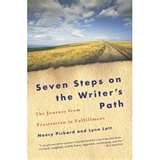
~ ~from JULIE LONG, on Seven Steps on the Writer’s Path by Nancy Pickard and Lynn Lott:

I’ve read some great books on the craft of writing, but the book that has impacted me the most is one on the psychology of writing. Seven Steps on the Writer’s Path: The Journey from Frustration to Fulfillment by Nancy Pickard and Lynn Lott. It came to me at a time when I didn’t think I was on a writing path at all, when I thought life and self-sabotage had detoured me horribly off-course (again). The book revealed that I was actually on one of the seven steps and showed me how I could continue the journey.

(Julie blogs more about it here…http://julielongwrites.com/2011/02/a-funny-thing-happened-on-the-way-to-those-revisions/)

~ ~ from BARBARA ROSS, on Stephen King’s On Writing.

When Ramona asked me to write about why I love Stephen King’s On Writing, I found I had trouble articulating it. So I pulled the book off the shelf–and was immediately sucked back into it. I could have re-read the whole thing. That’s how compelling it is. The book is divided into three sections; the story of how King was formed as a writer, guidance on how to write, and a final portion, written as he recovered from his catastrophic injuries after being hit on a country road by a van, called “On Life.”

On Writing is highly entertaining, but King takes himself, his craft and the reader seriously. We all need to imagine a writing life, and he helped me immensely in imagining mine.

(Barb shares a Maine connection with Stephen King. She can be found hanging out at the Maine Crime Writers blog.)
~ ~ from GENIE PARRISH, on “Write Like Hemingway” by R. Andrew Wilson, PhD

Despite the title, this is not actually a book on how to write exactly like Hemingway, but rather on how to learn from him and write better. A quote from Papa might be: “Keep them people, people, people, and don’t let them get to be symbols.” To this, Wilson adds: “Should the writer find a character too perfectly fitting into some artistic ideal, he should remember all the contradictions of human personality.” He gives exercises, as most “how to write” books do, but then adds “What’s the Point?” in which he explains exactly why the exercise can help you develop your skills. As Wilson says in his introduction, “Let us see what Papa has to teach us.” He leaves it to the reader/writer to decide what she wishes to learn.

(Genie is participating in her own adventure this summer, traveling across the South to hear veterans’ stories: http://www.swrnn.com/2011/07/31/lake-elsinore-four-women-journey-across-america-to-hear-veterans-stories/)

~ ~ from HOLLY GAULT, on Anne Lamott’s Operating Instructions:

Most writers choose Lamott’s Bird by Bird as her influential writing book and it is wonderful. I probably remember most her constantly running inner radio station, KFKD, and how she has to pull the plug on the radio. To me, Operating Instructions is where Lamott put all her self to work, heart and soul. She writes of recovery from drugs and alcohol, the birth and early years of her son, and the wrenching death of her best friend.

Anne Lamott writes honesty. She slices open her chest so we can see what makes her heart beat. She turns on those bright lights of the OR so we see every crevice and wrinkle, the weirdities and absurdities of her life. She then sews it all up and we can all breathe easier.

(Find out more about the multi-talented Holly at HOLLYGRAPHIC ARTS.com)

~ ~ from KATHY WALLER, on Julia Cameron’s The Artist’s Way

A dozen years ago, experiencing burnout on both personal and professional fronts, I consulted a therapist. He said, “Write.” But with two degrees in English, I had no idea how to begin, and several dozen books about writing didn’t show me. Then I happened upon Julia Cameron’s The Artist’s Way, and stepped into a new world. Instead of learning how to write, I would open myself to my own creativity. I embarked on Cameron’s twelve-week program, did morning pages, artist dates, became reacquainted with myself, my dreams, my strength, my faith. In the process, I changed. I became a writer.

(Kathy blogs at the aptly named to write is to write is to write.)

Have you been inspired by a writing book, a memoir, a journal? Tell us about it.

Ramona

The Sucks Scale

wherein I fondly reminisce about old times with teenagers and how they judge a book.

In my writing world last week, someone posted an urgent request for help–he’d been asked to speak to a group of teenagers. Eek!

Teenagers are scary and misunderstood creatures. But they are also opinionated, vocal, honest and sincere.

I had the pleasure (yes, pleasure) of helping to run a high school book club for a couple of years. The group met at lunch, at the library, which meant I had to bring food.  Carrying a couple of fresh pizzas through the halls of a large public high school was an adventure in and of itself, but that’s another blog.

The biggest challenge faced by our group was getting multiple copies of books to read. Getting the students to read was no problem at all. Many teenagers do not read, it is true; but many do. Those who do are happy to share their opinions. Really happy. Uber happy. Like, SOOOOO happy.

I often wished we could have had authors sit in on our meetings, because how the teens regarded teen characters was so enlightening. In general, they cut other kids NO slack. If a character whined, they were told to shut up. If a girl was vain or stuck up, they wanted her to die. If a boy was cute and nice, the girls swooned. If there was a hint of romance, the boys didn’t read past page 4. If an adult was dishonest, they were outraged. If a younger sibling was annoying, the meeting could easily break into chaos, as each member wanted to share their own annoying little sister story.

The meetings were raw and honest–and a terrific learning experience. The readers were not interested in fair criticism, in helping the author, or in comparing this book to any other. They were interested in vocalizing their honest opinion, and in being heard. I was lucky enough to be in the room to listen.

Here’s how teenagers judge a book, from bad to good.

“This book totally sucks.”

“This book sucks.”

“This book didn’t suck all that much.”

“I liked it.”

I once tried to ban the word “suck” from our meetings. At which point, it eroded into complete silence.

Ah….good times.

Ramona