40 Days of Book Praise, Day 21

RamonaGravitarFor 40 days, I am choosing a book from my personal book shelves. It will be a book that is insightful, intriguing, or illuminating about women. I will write why I think this book is a positive one and worth a read. This isn’t advertising for me or to promote any of my friends. It’s simply praise for good books.

Day 21, Here If You Need Me by Kate Braestrup

here if you  need me

A six year old girl wanders away from her family while on a picnic near a pond in Maine. When she can’t be quickly found, her frantic parents called the Maine Warden Service. When the search team can’t quickly find the girl, they call their chaplain, Reverend Kate Braestrup, who leaves her own children at home to comfort the little girl’s terrified parents. She tells them she believes their child will be found alive, because that is what the lieutenant in charge of the search told her. She shares this professional assessment with one breath, but in another, internally, she prays to Jesus that it will come true. It does.

This memoir about grief and rebirth is not about a lost little girl who was found alive, although search and rescue is a prominent storyline. This is a true story about the wife of a Maine State Trooper who sees her husband off to work one morning, and never sees him alive again. “Drew” was a father, husband, son, police officer, an “an unusual specimen of state trooper because he had an earring, wrote poetry, and ate whole grains.” He also had plans for a future he would never see. After retiring from the state police, Drew wanted to become a minister. After his death, Kate struggles through the searing pain of loss and honors her husband’s memory by taking up that dream herself. On her first day at seminary, she tells the professor she is there in Drew’s place, but it is not true. What’s true, as she tells herself, is that He is here. I carry him.

Why is Here If You Need Me a good read for women? Grief is a foreign land, and faith is a test not all people can pass. Kate Braestrup’s memoir shares instances of ministering to people while a search-and-rescue team walk, fly, or boat through the ponds and forests of Maine–anecdotes that make good memoir on their own. She kept her faith, despite heartbreak, loneliness, and anger.  Kate loved her husband. She had a good marriage. It’s not easy being a young widow with four children. It’s not easy finding a missing child alive in the woods when your husband died in the front seat of his patrol car. The latter, however, led to the former, and Kate followed the path, first in the footsteps of Drew, and then in her own. Carrying Drew’s dream inside, Kate searched and found her calling.

40 Days of Book Praise, Day 20

RamonaGravitarFor 40 days, I am choosing a book from my personal book shelves. It will be a book that is insightful, intriguing, or illuminating about women. I will write why I think this book is a positive one and worth a read. This isn’t advertising for me or to promote any of my friends. It’s simply praise for good books.

Day 20, The Awakening and Selected Stories, by Kate Chopin

Kate Chopin lg

Kate Chopin’s original title for the story of Edna Pontellier was A Solitary Soul, and why it was changed—and by whom—is a little mystery for Chopin scholars. Both titles reflect Edna’s emotional state in this story of a woman who realizes her comfortable life feels like a stranger’s. It begins with the Pontellier family vacationing on a real Louisiana barrier island called Grand Isle (where, I should divulge, I spend many of my own childhood summers.) It is late in the 19th century, and Edna’s husband Leonce is a successful businessman who, like many men of his time and social standing, escaped the city for a cooler, healthier summer home. Leonce is fond of their two children and indulgent of his wife, but Edna is vaguely unhappy and dissatisfied. She is twenty-eight when she “wakes up” and realizes she is unsure of who she is and what she wants, that she has been defined as daughter, then wife, then mother, but who is Edna herself? She does not know.

During this summer on Grand Isle, she becomes enamored with a younger, idealistic family friend named Robert Lebrun. Here, the story could have evolved into a simple love triangle between a husband, wife, and lover, but Robert is honorable. Edna suspects he is in love with her, but he does not pursue her; instead, he abruptly leaves the island for business in Mexico. She is crushed. Summer ends, and the Pontelliers return to New Orleans, but Edna cannot return to her life as dutiful wife and mother. She eschews the social life she previously seemed to enjoy, to the point that Leonce notices and takes her to a doctor. They are advised that she suffers from a malady of motherhood—what today might be called depression—and is to be left alone until she somehow repairs herself. She will, the doctor assures Leonce, eventually return to normal. But Leonce must leave for an extended business trip, and so Edna has the opportunity to at last be on her own. She moves to a small bungalow, pursues new friends and interest in art and music, and has a brief affair that awakens her sexually. And then Robert returns from Mexico.

The Awakening is a short novel, written in a lovely and sometimes languid tone, with artful use of the unique language and culture in French Louisiana. Chopin describes Edna’s appearance and clothing in detail, both for color and as symbols of her changing psyche.  Often bound with the novel are some of Chopin’s short stories. In her short work, Chopin reveals herself as a master at the simple, often surprising, plot. She introduces characters, problems, places in quick order, and writes with cleverness and craftiness. Some are so short, they are like a whiff and then are gone, and the reader is left impressed with how much occurred in so few words. To appreciate Kate Chopin as an artist, read both the novel and the stories.

Why is The Awakening a good read for women? Kate Chopin was largely forgotten from the time she published (1890s) until a revival of interest during the feminist movement of the 1970s. Now her work is read in women’s studies programs and she is appreciated for bravely writing a story about motherhood and marriage; about illicit love and sexuality; and a woman’s desire to find fulfilment unrelated to domesticity. Like Emma Bovary and Anna Karenina, Edna Pontellier is a tragic and complex character who seeks happiness, identity, and purpose. Edna Pontellier is intricate and puzzling, and Kate Chopin’s exploration reveals her solitary soul.

40 Days of Book Praise, Day 19

RamonaGravitarFor 40 days, I am choosing a book from my personal book shelves. It will be a book that is insightful, intriguing, or illuminating about women. I will write why I think this book is a positive one and worth a read. This isn’t advertising for me or to promote any of my friends. It’s simply praise for good books.

Day 19, Best Kept Secret by Amy Hatvany

best kept secret

Cadence drinks. She drinks too much, and once she drank at a mommy meeting and then blew through a stop sign in her own neighborhood, while her young son Charley slept peacefully in the back seat of the car. This scared her, but not enough, apparently, because on another day, Candace drinks so much, she can’t get off the sofa to answer the door when her ex-husband comes by. When she finally rouses from her alcohol haze, Charley is gone. His father packed up Charley’s belongings and took him away from Cadence for the child’s own protection. Cadence’s secret is a secret no more.

This story is written from Cadence’s point of view, and she makes it clear that she never wanted to be this person who drinks to the point where her life is no longer within her control. Only a few years ago, she had a marriage and a career as a journalist and was a responsible, sober parent. She had a beautiful baby she loved very much. Then her marriage broke up and though she still loved her baby very much, she now had money worries, and trouble getting to sleep. She found it helped to have a glass of wine before bedtime. To help her sleep. Then two glasses, and then one during the day…. There’s a moment in the story when Cadence sees a doctor and tries to explain her progression from a glass of wine to help her sleep to someone who would get so drunk, she passes out in front of her own child. She can’t pinpoint the moment when her desire for a drink became a need. She can’t say for sure when she became hooked and out of control—became a drunk, an addict, an alcoholic—but she can say for sure she never wanted to be a mother who lost her child because she drank too much. Reading Cadence’s story, I believe her. I also believe that the only thing harder than not drinking, for Cadence, is to continue to exist without her son. This story is about Cadence’s struggle to regain what she has lost.

Why is Best Kept Secret a good read for women? The path to sobriety is not a pretty one, but this is a heartfelt and artfully written story about a person with a problem. Alcoholism and drug addiction are not strangers who live on some foreign street. Cadence feels like a real person and her situation, though extreme, didn’t start out as extreme. She didn’t become an alcoholic in a day, and she didn’t recover in a day, but she never stopped loving her son and she never stopped being a valuable person. The book’s success is in convincing the reader—and Cadence herself—of both of those.


40 Days of Book Praise, Day 18

RamonaGravitarFor 40 days, I am choosing a book from my personal book shelves. It will be a book that is insightful, intriguing, or illuminating about women. I will write why I think this book is a positive one and worth a read. This isn’t advertising for me or to promote any of my friends. It’s simply praise for good books.

Day 18, The Handmaid’s Tale by Margaret Atwood

handmaid's tale

The biggest difficulty in choosing a Margaret Atwood novel to review is selecting which one, as her body of work is brilliant, insightful, and daring. The Handmaid’s Tale, though published in 1985, is still as timely as it was thirty years ago. The novel is dark and dystopian. Its title is a bold tribute to Chaucer, but it is a modern speculative novel about politics, theocracy, the subjugation of women, and the struggle for agency in a frightening new world.

The story is told by Offred, a concubine in a place called the Republic of Gilead. In the not so distant past, this republic was the United States of America. A coup by an ultra-conservative group called the Sons of Jacob kills the President and most of Congress and suspends the US Constitution. The country is reformed into a repressive, militarized, Old Testament-based regime which creates new social classes powered by men. The new rulers strip women of their rights, power, and property, beginning with their finances. Most women are not allowed to read. They are, however, allowed to procreate—if they are able. Many in Gilead are sterile, a result of rampant pollution and STDs. Women who can bear children belong to a select group called handmaids. The handmaids and the men they are assigned to are only supposed to have sex during “the Ceremony.” Wives are present at and participate in the Ceremony, which may be creepy good fun for the men, but is just creepy for the reader and the handmaid.

Offred is the concubine of a high-ranking official known as The Commander. The Commander takes a shine to her and has illicit, non-Ceremonial sex with her. He brings her forbidden items such as makeup and magazines. The Commander’s wife, a former televangelist named Serena Joy, suspects the hanky-panky with the handmaiden, so she makes a plan. She sets Offred up with Nick, the Commander’s chauffeur, who may or may not be loyal to the Republic of Gilead, as he may or may not be part of a resistance group called the Eyes of God. Offred doesn’t know. She is a pawn in a society that espouses many upstanding principles but lives out none of them. She decides to trust Nick.

Why is The Handmaid’s Tale a good read for women? Before the coup, Offred was married, with a job and a life. Fascists stripped her and her countrywomen of all rights, but allowed them to contribute in the one way considered valuable in this new world: to serve and service men. Reading this book would be a serious offense in the Republic of Gilead, which is reason enough to read it.

40 Days of Book Praise, Day 17

RamonaGravitarFor 40 days, I am choosing a book from my personal book shelves. It will be a book that is insightful, intriguing, or illuminating about women. I will write why I think this book is a positive one and worth a read. This isn’t advertising for me or to promote any of my friends. It’s simply praise for good books.

Day 17, 13 Ways of Looking at the Novel by Jane Smiley

13 ways

What is a novel? According to Pulitzer Prize-winning novelist Jane Smiley, a novel is – simply – a “lengthy written prose narrative with a protagonist.” In this book, which itself is a bit lengthy, she uses thirteen approaches to deconstruct novels. In the first 12 chapters, she explains how novels were created; shows its place in history; examines its creators; picks apart its psyche; and so on. She also offers two chapters of writerly advice and encouragement for the inspired fools (my term) who choose to write a novel of their own. This may sound like dry chapters from a ponderous tome, but they are not. As with her many novels, Smiley writes here with warmth and insight. She loves novels. She sees their warts and weaknesses, but she is keen to point out what works and to share the delight of storytelling. I read the first 12 chapters one at a time, like lessons, and made notes to myself on the pages. It was the first time since school that I felt compelled to take a highlighter to a book on my personal bookshelf. The points Smiley makes on theme, authenticity, and memorable characters are worth bright yellow markings.

All of the above is only half of the book. The #13 in the ways to look at a novel is a report on reading 100 novels. She selected from classics to modern works, “dead white men” to authors of more varied cultures, and wrote a critical essay. For each novel, she explained why it was unique and worth reading. She discussed themes, subtext, structure, and flaws. Her discussions are longer and much deeper than the snippets I have written here, but as with the first twelve chapters, I read an essay a day—admittedly, skipping a few reviews that did not interest me– and thought about Smiley’s thoughts for a while. I came away with a richer understanding of, and appreciation for, the work many of my friends do every day.

Why is 13 Ways of Looking at the Novel a good read for women? Jane Smiley’s body of work is not focused toward either gender, and her 100 books include books by male and female authors. Reading this will make you a better writer, and a more informed reader. Its length may be daunting, but it was enjoyable to read in bits and pieces. It took me a year to read the entire book, because I wanted to think about each essay before reading the next one. That makes this a book to savor over time, and appreciate the work put into it by an insightful modern author–who happens to be a woman.

40 Days of Book Praise, Day 16

RamonaGravitarFor 40 days, I am choosing a book from my personal book shelves. It will be a book that is insightful, intriguing, or illuminating about women. I will write why I think this book is a positive one and worth a read. This isn’t advertising for me or to promote any of my friends. It’s simply praise for good books.

Day 16, Shattered by Debra Puglisi Sharp and Marjorie Preston

debra puglisi

On a Sunday afternoon in April, a man high on drugs drove around looking for a woman. He saw one—a dark-haired woman planting roses in her yard. The man decided he wanted this woman, so he went around to the back door of her house and snuck in. The woman’s husband was inside, so the man shot him. When the woman came in, the man hit her on the head, raped her, put her in the trunk of his car, and drove her to his house. He kept her there, tied up and terrified, and assaulted her repeatedly for five days. When he left the house to go to work, he left the radio on to drown out her yells for help. It was from the radio that the woman found out her husband was dead.

Violent acts against women happen every day in America, most often to strangers, but sometimes to people we know. I did not know Debra Puglisi, though at the time of her abduction, her house was less than five miles from mine. I remember my shock when the local TV station ran a news ticker that she had been found—alive. For the five days she was missing, she was presumed dead by many, so the news seemed miraculous. The book she wrote to describe her ordeal reveals that it was not a miracle, but a determination to live and see her children again, that gave her the courage to fight out of the ropes on her wrists, find a phone, and call 911 to save herself. What may be miraculous is that she found the inner strength to write in graphic detail about what happened in those five days, but also about the turmoil and pain in the weeks, months, years to follow as she readjusted her life. Now, a large portion of it is devoted to other survivors.

Why is Shattered a good read for women? This is not fiction, so an easy happy ending is not possible, but a story about regaining peace and power after a life-altering event is of great value. This is a real, honest, and raw account of being assaulted and held against your will, but also about the humiliations and anger of recovering. It is, ultimately and more than anything, a survival story.  Debra was reunited with her children. She resumed her work as a nurse. She remarried. She speaks to survivors. She helps law enforcement understand crime from the victim’s side. She testified against the man who murdered her husband and tore apart her life, and her book continues that testimony. I have many friends who write crime stories, fiction and nonfiction. There is no workshop, how-to book, or other writing aid that will give you a victim’s perspective like Debra Puglisi Sharp’s story can.

40 Days of Book Praise, Day 15

For 40 days, I am choosing a book from my personal book shelves. It will be a book that is insightful, intriguing, or illuminating about women. I will write why I think this book is a positive one and worth a read. This isn’t advertising for me or to promote any of my friends. It’s simply praise for good books.

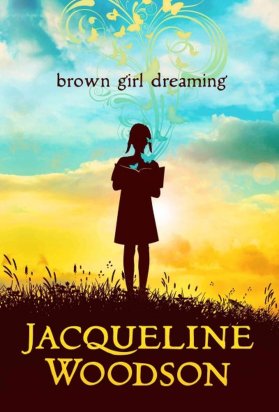
Day 15, Brown Girl Dreaming by Jacqueline Woodson

browngirldreaming

When Jacqueline was a year old, her mother moved from Ohio to her own parents’ home in South Carolina. This was a bold move for an African American woman with three children in 1963, but despite the turmoil of the times, young Jacqueline grew up loving the place that had made her mother homesick. When Jacqueline was older, her mother took a job in New York City, and Jacqueline had to readjust and learn to love a new place—which she did. Brown Girl Dreaming is a memoir delivered in verse. It’s told through incidents and memories that contrast slow, community-oriented South Carolina to the fast-moving diversity of Brooklyn through the eyes of an adolescent. Like many children, Jacqueline follows a parent who moves her family for economic security; her personal growth involves learning to be a city mouse but also appreciating her country mouse side. Layered into her family story are bigger events of the time, as she observes and ponders moments children and adults would recognize from the Civil Rights Movement. Each poem describes in sharp, poignant, evocative language a step in this writer’s journey to understand her world and find her true self in a sometimes hostile, sometimes encouraging, time of change.

Why is Brown Girl Dreaming a good read for women? The book is personal, warm, and optimistic—a reflection, I suspect, of the author herself. It is a highly honored book for young readers—recipient of the National Book Award and a Newbury Honor Book medal. It is simply a stunningly lovely work of art. The author chose a unique storytelling style—poetry as memoir—and delivers the verse in bright colors and vivid images. Woodson has been quoted as writing “as an adolescent for adolescents” but the book is layered and deep, and any reader, adult or child, will get lost in the world of her writing.

40 Days of Book Praise, Day 14

RamonaGravitarFor 40 days, I am choosing a book from my personal book shelves. It will be a book that is insightful, intriguing, or illuminating about women. I will write why I think this book is a positive one and worth a read. This isn’t advertising for me or to promote any of my friends. It’s simply praise for good books.

Day 14, Crazy in Love by Luanne Rice

crazy in love

This is one of Luanne Rice’s earlier books, but it’s the first of her many novels I read, so Crazy in Love makes this list though newer work has followed. This is a story about obsessive love, but not in the creepy stalker “don’t go in the basement, you fool” kind of way. It’s more of a “love can make you crazy if you think your marriage must—or even can—be perfect” kind of way. Georgie Symonds lives in a small family compound on the Connecticut shore with her husband, Nick; her sister and family; her mother; and her grandmother. Nick works on Wall Street and flies back and forth by seaplane because Georgie wants to spend every night together. Her fears are not so much about infidelity as loss of intimacy, but her drive for more intimacy is what is driving Nick to separate from her. But the state of Georgie’s marriage is only half of the story. Her mother is a retired TV “weather girl,” a trailblazer in her time, but now she’s trapped alone and caring for her own mother, Georgie’s grandmother Pem, who suffers from Alzheimer’s. Mom tries to keep the more unpleasant parts of that a secret, but eventually that takes its toll, and the care of Pem becomes a concern for them all. There are four generations of women on this small place by the water, and their dependencies and ordinary conflicts make this book readable and real, and never more so than when an unexpected tragedy hits.

Why is Crazy in Love a good read for women? The daughter-mother-grandmother dynamic is a starter. Georgie is a complex character who gets in her own way with her unrealistic need for perfection and her crazy love for Nick. But through Mom the weather girl’s observations and a secondary storyline with Georgie winning a grant focusing on human behavior, there’s a quirky science sideline that adds depth to the story. I wanted everyone in this family to be happy, even if that happiness was less than perfect.

40 Days of Book Praise, Day 13

RamonaGravitarFor 40 days, I am choosing a book from my personal book shelves. It will be a book that is insightful, intriguing, or illuminating about women. I will write why I think this book is a positive one and worth a read. This isn’t advertising for me or to promote any of my friends. It’s simply praise for good books.

Day 13, Ellen Foster by Kaye Gibbons

ellen-foster

Ellen, the narrator of this novel set somewhere in the South, is innocent but wise, ignorant but smart, and always hopeful that her lot will get better, because it sure as heck can’t get worse. All Ellen wants is a family. She is 11 when her mother dies from a weak—or maybe wearied—heart. Ellen is not safe with her mean, drunken father. Her bitter and paranoid grandmother uses Ellen as free labor and an emotional punching bag. One aunt can’t keep her. Another aunt could keep her but won’t because that would mean taking a minute’s attention away from her own spoiled daughter. Ellen’s friend Starletta and her parents are kind and welcoming, but in this place and era, Ellen can’t move in with a black family. Ellen’s well-meaning hippie teacher takes her in but it’s temporary. Finally, at church, Ellen notices a kind-looking woman and her well-behaved children. She is told they are a foster family. Misunderstanding, Ellen decides this Mrs. Foster should be her new mother and the Fosters should be her new family. She sets out to make that happen.

Why is Ellen Foster a good read for women? Female characters dominate this story, and the portraits are not all flattering, but Ellen’s message is about determinedly seeking what you want despite overwhelming obstacles. In Ellen Foster, Kaye Gibbons created a child narrator as memorable and effective as Scout Finch or Bone Boatwright. Ellen tells her story through the perspective of a powerless child who doesn’t understand how powerful adults can allow the wrongs of the world to happen. Reading this book will leave you wondering the same thing.

40 Days of Book Praise, Day 12

RamonaGravitarFor 40 days, I am choosing a book from my personal book shelves. It will be a book that is insightful, intriguing, or illuminating about women. I will write why I think this book is a positive one and worth a read. This isn’t advertising for me or to promote any of my friends. It’s simply praise for good books.

Day 12, No Ordinary Time by Doris Kearns Goodwin

No ordinary time

I am stretching the boundaries of good books for women with this massive work covering “Franklin & Eleanor Roosevelt: The Home Front in World War II” but it would impossible—for me—to write a list of positive anythings about women and leave out Eleanor Roosevelt. The second very good reason is that this book is the work of author, historian, and political analyst Doris Kearns Goodwin, herself a national treasure.

This ambitious but accessible work of historical nonfiction is as much an account of the machinations of the White House during trying years of war as it is an examination of a complex marriage. One chapter opens with a reporter asking Eleanor how the president thinks. Eleanor’s response was, “The President never thinks. He decides.” It’s a great quip, but imagine being married to that guy. Famous figures come and go. There are amusing anecdotes. Intimacy and distance are equal partners for the President and First Lady, but their mission for the good of the country never wavers. The toll of the war on the country, the weight of leadership of those in power, the weariness of the assistants, helpmates, wives, and friends are portrayed in detail that is sharp and fascinating. Goodwin writes in a steady but touching style that makes complicated meetings and moments seem vital and relevant in their historical context. Its size may be off-putting but it is never ponderous or dull. This book won the Pulitzer Prize and is a must-read for anyone interested in learning how a war and a presidency shaped the United States into modern America.

Why is No Ordinary Time a good read for women? Eleanor Roosevelt. Need I say more?