40 Days of Book Praise, Day 31

RamonaGravitarFor 40 days, I am choosing a book from my personal book shelves. It will be a book that is insightful, intriguing, or illuminating about women. I will write why I think this book is a positive one and worth a read. This isn’t advertising for me or to promote any of my friends. It’s simply praise for good books.

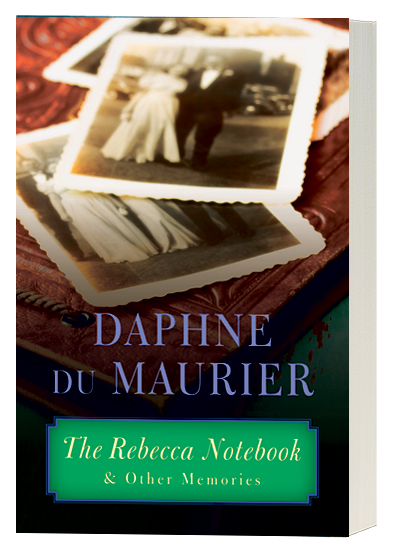
Day 31, The Rebecca Notebook and Other Memories by Daphne du Maurier
notebook

Rebecca, My Cousin Rachel, Jamaica Inn, The Birds, The Infernal World of Branwell Bronte – Daphne du Maurier’s body of work is a testament to the prolific, hard-working, risk-taking author who wrote across the genres of suspense and romance, short stories and novels, and memoir and biography. Her novel Rebecca catapulted her career and reputation into fame, and like all stories, Rebecca had an origin. This collection of the three “Rebecca notebooks” plus 15 early short stories, plus 10 memoir pieces, plus 3 poems, is an overview of du Maurier’s creative risk-taking. In addition, each section includes an introduction with du Maurier’s retrospective views on writing each type. The pieces are varied and surprising, a peek into a mind that must have been brimming with story ideas and creative energy all all all the time.

The hook for the collection are the three “Rebecca notebooks” which include du Maurier’s original outline for the novel; the original epilogue; and a story that reveals how she discovered a home in the woodlands of Cornwall that became the inspiration for Manderley. In the introduction, she explains why she did not give the narrator of Rebecca a name. This section of the collection is short. The bulk of it is devoted to her short stories and memoir pieces, each with an introduction written by du Maurier with thoughts on her writing process and tidbits about her personal life.

Why is The Rebecca Notebook a good read for women? This collection was put together forty years after the publication of Rebecca, which enjoyed worldwide acclaim and changed du Maurier’s life. In this book, she shares what that was like while showing the original plans for the story. It feels like a shared secret, as if a writer in your critique group passed out a storyboard for a new idea. This is a glimpse into a creative mind and artist who knew what she did well but still seemed surprised when it worked out. It’s a gem for any writer and admirer.

40 Days of Book Praise, Day 30

RamonaGravitarFor 40 days, I am choosing a book from my personal book shelves. It will be a book that is insightful, intriguing, or illuminating about women. I will write why I think this book is a positive one and worth a read. This isn’t advertising for me or to promote any of my friends. It’s simply praise for good books.

Day 30, Catherine, Called Birdy by Karen Cushman

catherine called birdy

In 1290 in England, a young lady of a good family had one purpose: to marry well. “Well” meant finding a suitor whose name, means, and property were advantageous to the young lady’s family; compatibility or love were secondary concerns, if they were concerns at all. An arranged marriage is fate of the spirited and inquisitive Catherine, the only daughter of a minor nobleman, who is nicknamed Birdy because she collects and cages birds. At fourteen, Catherine is being prepared for betrothal by her father, a rough and loud country knight whose choices of mates horrify his willful daughter. His final choice is the most horrible of all: an old, crude, unschooled man Catherine calls Shaggy Beard. The thought of marrying this beast is repellent to Birdy and she steadfastly refuses, to the frustration of her father and amusement of her annoying older brother. She dreams of someone younger, a man who is pleasing and clean—and can read. Birdy, though alive centuries ago, wants what every woman wants in a compatible mate.

The pending banns hang over Catherine’s daily existence. Her domestic education is managed by her loving but conventional mother, now pregnant herself, but Catherine finds the tasks of managing a household achingly dull. Over the year of the book, she shares adventures as well as the mundane–the arrival of a performing troupe and the rescue of a bear; her mother’s prolonged labor and near death; the daily ritual of killing fleas. She gets some spiritual relief with the arrival of George, her favorite uncle, returned home from the Crusades. George is her ideal, but George is poor and hence limited in his choices. He loves Catherine’s childhood friend, but makes a beneficial match of his own to a wealthy but peculiar older woman. Though George’s new wife is sweet despite her strange behavior, the idealistic Catherine is confused. Are all marriages disappointments?

Why is Catherine, Called Birdy a good read for women? The book, awarded the Newbery Medal for excellence in writing for children, is presented in the epistolary style, so Catherine’s diary entries come from her pen to the reader’s heart. In modern terms, it could be said that Karen Cushman’s young heroine is seeking agency—the capacity a human being has for making choices. Agency was not awarded to the young daughters of minor English noblemen in the Middle Ages, and so Catherine’s wish for independence is dependent on the men who control her. The idea that this intelligent girl, so observant and eager to learn about the world, would be doomed to marry an old man with dreadful manners, little compassion, and no need for learning, is a chilling prospect. Catherine is smart enough to find a possible way out, but that requires luck–and help from unexpected sources.

40 Days of Book Praise, Day 29

RamonaGravitarFor 40 days, I am choosing a book from my personal book shelves. It will be a book that is insightful, intriguing, or illuminating about women. I will write why I think this book is a positive one and worth a read. This isn’t advertising for me or to promote any of my friends. It’s simply praise for good books.

Day 29, Olive Kitteridge by Elizabeth Strout

olive kitteridge

It is difficult to be around Olive Kitteridge, a retired 7th grade math teacher from a small coastal town in Maine, but more than that, it is difficult to be Olive Kitteridge. Olive is blunt, abrasive, cynical, and sometimes unkind; she is married to a man, the town pharmacist, who is very kind; and she has a son who tells her point blank that she hurts people with her sharpness. It would be easy to write off Olive as a wretched old witch, but Olive also volunteers at places like the Red Cross and a local museum, and she has flashes of insight and empathy even as she tells a friend how much she enjoys grousing about her miseries. Olive is not easy to dismiss though she is dismissive of others. Why is she this way? What makes a person with a solid marriage, a meaningful job, in a safe town, become bitter and so willing to spread her misery?

Oliver Kitteridge is told in short stories. While Olive is a participant in each of the thirteen stories, she’s not the lead in every one. Her presence, however, is the glue of the collection. She’s an enigma because she is not simple to define or understand. Reading about her attendance at a local funeral, a run-in with an anorexic young woman, a hospital visit that becomes traumatic, a tense visit between mother and daughter-in-law, all portray life in a small town where everyone knows everyone’s business. . Olive Kitteridge observes her fellow humans, and their large and small problems, with a sometimes unforgiving eye, but her brutal honesty also means she must acknowledge the promise within each person to touch and love his fellow man.

Why is Olive Kitteridge a good read for women? Elizabeth Strout won the Pulitzer Prize for this collection, which places the reader solidly in this town, among these townspeople. Olive is a woman of a certain age, to use a cliché, but she represents flaws and disappointments every person experiences. She is not good at handling her problems or holding her tongue, but that makes her human, so these stories reveal a person who is real and who seeks happiness even if she’s not sure how.

40 Days of Book Praise, Day 28

RamonaGravitarFor 40 days, I am choosing a book from my personal book shelves. It will be a book that is insightful, intriguing, or illuminating about women. I will write why I think this book is a positive one and worth a read. This isn’t advertising for me or to promote any of my friends. It’s simply praise for good books.

Day 28, Black Water by Joyce Carol Oates

black water

An idealistic young woman named Kelly attends her best friend’s 4th of July party on a place called Grayling Island. Also attending the party is “The Senator,” a big, powerful, boozy politician currently separated from his wife. Kelly is thrilled to meet The Senator. She knows all about him—she follows his political work and even wrote her Senior thesis on him. Pretty, and a little shy, Kelly is surprised and flattered when The Senator flirts with her. He invites her on a walk on the beach, kisses her, and asks her to ditch the party for dinner at his hotel. Kelly is not a particularly worldly young woman, but even she knows what he means by “dinner.” It is out of character for her to go off with a man she just met, but The Senator is her hero–and who knows what such a connection could mean to her future? As Kelly packs an overnight bag, her friend warns her not to go. She is afraid Kelly will regret it.

Regret puts it mildly. All of the above happens before this novella begins. The live action of the story happens in The Senator’s car, which is slowly sinking in a murky pond. The Senator took a back road and, driving drunk and too fast, plowed through the guard rail of a wooden bridge. The car landed passenger side down and Kelly, strapped in her seat, is badly injured. The Senator is not. He opens his door and, using Kelly’s body for support, pushes himself up and out to safety. Kelly grasps at his leg so he won’t leave her and is left holding his shoe. She continues to hold onto his shoe, certain The Senator will return to rescue her. Hurt and delirious, she reviews her brief young life as the black water slowly rises around her. Eventually Kelly realizes The Senator is not coming back. Her hero has abandoned her.

Why is Black Water a good read for women? Writers are often asked where they get their ideas for stories. This one is a no-brainer. Joyce Carol Oates may have changed the names, but The Senator is Edward Kennedy and Black Water is a fictional account of Mary Jo Kopechne’s drowning at Chappaquiddick. Published in 1993, twenty-three years after the Chappaquiddick incident, the book gives the victim a voice that is hard to forget. There are lessons to be learned when an idealistic young person looks up to an older and experienced one, when esteem is misplaced and influence is misused. As her friend warned, Kelly’s impulsive act is regrettable in the extreme. Her mistake was to confuse experience with wisdom, charm with character, and power with courage. Her time alone in the car, as she comes to understand that her hopeful future is now impossible, is heartbreaking and haunting.

40 Days of Book Praise, Day 27

RamonaGravitarFor 40 days, I am choosing a book from my personal book shelves. It will be a book that is insightful, intriguing, or illuminating about women. I will write why I think this book is a positive one and worth a read. This isn’t advertising for me or to promote any of my friends. It’s simply praise for good books.

Day 27, I Capture the Castle by Dodie Smith

Capture Castle

The head of the Montmain family is a celebrated author who, back in the good times, leased a beautiful and isolated English castle that would inspire his writing. At the castle, James Montmain’s second wife Topaz could paint and commune with nature, his three young children could run wild and free, and he could write a second novel as ambitious and astounding as his first. That was the plan ten years ago, but the reality of the Montmain family as this novel begins is that James has had a decade-long bout of crippling writer’s block; Topaz is secretly selling furniture to buy food; his oldest daughter, beautiful Rose, desperately seeks an eligible man so she can marry and escape; young son Thomas is virtually unschooled; and middle daughter Cassandra, who wants to be a writer too, fills notebook after notebook of an intelligent seventeen-year-old’s worries, angst, and fantasies about her future. The castle is crumbling, literally and figuratively, around this eccentric family in a precarious life of what used to be called genteel poverty.

The novel takes place in the 1930s, over six months that change the fortunes of the Montmains. Cassandra narrates those months as she grows from child to young woman. As the child, she views the castle in its former romantic state, in the same way that she views their loyal friend and neighbor Stephen. As a young woman, she sees the castle as a prison and realizes that Stephen is in love with her, but she does not feel the same. The change of fortune comes through new landlords, the Cottons, a wealthy American family with two handsome and eligible sons. The polite and pragmatic Cotton lads are charmed by the exotic Montmain clan, and it’s not long before they both fall in love with Rose. Rose thinks the elder son, Simon, is the better catch, so she accepts his proposal, only to realize she’s falling in love with the younger son, Neil. Cassandra has fallen in love with Simon herself, but it is Rose who can save the Montmains by marrying well, even if that means marrying without love. Can Cassandra do the same, with her honorable and good Stephen?

Why is I Capture the Castle a good read for women? The author of this novel is Dodie Smith, best known for writing the children’s classic The Hundred and One Dalmatians. Cassandra is sensitive and insightful, but she is also very young, and her world view is limited by the isolation of her upbringing. Despite the struggle to meet the most basic needs of good food and proper clothing, and the tension and turbulence once the Cottons arrive, she remains focused on what she feels is her destiny—to be a writer. She gets no help from James, who has been only pretending to write for all these years, so she must struggle to “capture her castle” on her own. She does it through her painful and poignant experience with first love as she learns the meaning of loyalty and betrayal.

40 Days of Book Praise, Day 26

RamonaGravitarFor 40 days, I am choosing a book from my personal book shelves. It will be a book that is insightful, intriguing, or illuminating about women. I will write why I think this book is a positive one and worth a read. This isn’t advertising for me or to promote any of my friends. It’s simply praise for good books.

Day 26, The Orchid Thief by Susan Orlean

orchid-thief-med

The Ghost Orchid is a leafless epiphyte—a plant that lives attached to another plant. It is not a parasite that sucks life from its host but, rather, gets the sustaining nutrients it requires through the air and rain and bits of debris that happen upon its dangling mass of roots. The Ghost Orchid is a luminous white, and is found in the swamps of Florida—when it can be found at all. It is rare and therefore valuable, and therefore vulnerable to collectors, thieves, and poachers. The story of one such quirky poacher—brilliant, passionate, protective, and toothless—so obsessed with the endangered Ghost Orchid that he tried to steal it so he could clone it, is the subject of this nonfiction work by journalist Susan Orlean. John Laroche is a fascinating character, such an odd duck that he sometimes seems more character than the real person he is, but the  elusive plant, and the obsession it draws, is the star of the story.

The Orchid Thief the book grew from a feature piece Orlean wrote for the New Yorker after Laroche’s arrest for poaching wild orchids from the Fakahatchee preserve, an “aggressively inhospitable place” that might give a person nightmares or might enthrall them with its wild and dangerous beauty. Laroche’s case was bizarre from the start. He was a professional horticulturist, running a nursery near Miami, on the tribal reservation of the Seminole Tribe of Florida . He loved orchids and would never harm them—this is as clear as swamp waters are murky. What’s also clear is that his love was obsession, and that he was, and is, not alone in his desire to see and capture the elusive Ghost Orchid.

Why is The Ghost Orchid a good read for women? This is very much a truth is stranger than fiction story, and it is utterly fascinating. It equally portrays the author’s journey as the subject’s. To write this book, Susan Orlean joined the orchid hunters and willingly entered a swamp full of cottonmouths and diamondbacks; sinkholes, bugs, snapping turtles, and poisonous plants; and soul-sucking wet hot humidity. That might tell you she was passionate about this story, or it might tell you she got caught up in their fanaticism. Either way, this is a story full of dogged determination and wrong-headedness, but also a devotion to a rare and beautiful creation. The subjects of this story are epiphytes themselves, living off the Ghost Orchid.

40 Days of Book Praise, Day 25

RamonaGravitarFor 40 days, I am choosing a book from my personal book shelves. It will be a book that is insightful, intriguing, or illuminating about women. I will write why I think this book is a positive one and worth a read. This isn’t advertising for me or to promote any of my friends. It’s simply praise for good books.

Day 25, An Episode of Sparrows by Rumer Godden

AnEpisodeOfSparrows

The Garden Committee is in a tizzy. Someone has been stealing buckets of dirt from the private garden on the public square. Miss Angela Chesney, forceful and sure, is certain the culprits are the wild children of working-class Catford Street. Her gentle and frail sister Olivia, who never questions, questions this: Why are children not allowed to play in the garden? Olivia’s heart condition forces her to observe life in post-World War II London from the windows of the home she shares with Angela. She sees the children running on the streets and thinks of them as sparrows, common and free, and though she is never hungry or cold or needy as they are, she envies them.

What Olivia does not see, at first, is Lovejoy Mason, whose ironic name reveals little about her almost-orphaned situation. What is an almost orphan? It’s a sensitive child of a faux glamorous, faux actress mother who deposits her with a kind couple struggling to run a fancy restaurant in a failing neighborhood. Lovejoy is proud and prideful, and her desperate search for acceptance and beauty makes her try to grow a garden in a bombed out church. To do this she needs dirt—”good, garden earth.” To get it, she enlists the aid of Tip Malone, the biggest, baddest boy in the gang of boys Miss Angela Chesney is sure is stealing from her—I mean, the public square’s—garden. Tip is unwillingly and inexplicably enthralled by Lovejoy, and she uses the tough boy’s soft spot to goad him into helping her with the garden building scheme.

Why is An Episode of Sparrows a good read for women? Rumer Godden was a gifted and prolific author whose stories crossed over from works for adults to young adults to children. She wrote terrific characters who came to life in both exotic and common places, and often addressed themes of social inequality and the powerlessness of children and women. In this book, she uses a neighborhood to intertwine people who would never have a thing to do with one another if given a choice, but must do so because of proximity. Tip and Lovejoy’s odd friendship brings out the best and worst in both of them, and Olivia’s frailty allows her to help more people than anyone expects. Everyone is struggling, but in the very English way of the times, they are all struggling together. The “good, garden earth” that is so rare and precious in this city is what both tears them apart, and brings them together.

40 Days of Book Praise, Day 24

RamonaGravitarFor 40 days, I am choosing a book from my personal book shelves. It will be a book that is insightful, intriguing, or illuminating about women. I will write why I think this book is a positive one and worth a read. This isn’t advertising for me or to promote any of my friends. It’s simply praise for good books.

Day 24, Helen of Troy by Margaret George

helen-of-troy

What is beauty without love? What is marriage without passion? What is battle without a prize? These are questions a reader might ask after reading this account of and by Helen of Troy, whose perfect face launched a thousand ships—a thousand battle ships, that is, heading from Sparta to Troy to separate her from her lover, Paris, and return her home.

This ambitious retelling of the Helen of Troy tale is long (600 pages) and populated with familiar names from Greek mythology: Paris, Aeneas, Priam, Ajax, Agamemnon, Odysseus, Achilles, Menelaus. It includes classic scenes from literature: the whisking of Helen onto a ship to escape from Sparta; the trick of the Trojan horse; the tribute to the incorruptible warrior Hector. But this novel is not a lesson from a school book, and it is not a fairy tale with no connection to reality. If not for the famous names, and the presence of gods and goddesses, Helen’s plight could be stripped down to a commonplace family drama: The foolish younger brother of a well-to-do family runs off with a married woman, and her outraged husband follows and demands her return to him and their child. In this telling, that simplification makes this a story of woman torn by her choices and a destiny she cannot control. Helen is full of pathos. From birth, her beauty was so great, she herself called it terrifying. She is protected from view—even mirrors—as a child, and then bartered off to marriage with a powerful but emotionally distant man. She meets his opposite—Paris—because they have been set up by vengeful gods and goddesses. They are powerless not to fall in love. Nevertheless, they do and it is real to them. Helen’s sincerity is evident, and so is her growing horror at what their love means for Troy and Sparta.

Why is Helen of Troy a good read for women? The Helen story is big and sprawling, and the body count from the Trojan War is high. As with all stories of war, it leads to the inevitable question: Was it worth it? This is the cautionary question anyone—man or woman—might ask before trading a comfortable, placid marriage for a passionate affair of the heart. Helen’s helplessness at her own fate, her inability to control neither her love nor her despair at what it wrought, makes her beauty a curse and her story a compelling read.

40 Days of Book Praise, Day 23

RamonaGravitarFor 40 days, I am choosing a book from my personal book shelves. It will be a book that is insightful, intriguing, or illuminating about women. I will write why I think this book is a positive one and worth a read. This isn’t advertising for me or to promote any of my friends. It’s simply praise for good books.

Day 23, Or Give Me Death by Ann Rinaldi

or give me death

Who first said, “Give me liberty, or give me death?” Was it statesman and patriot Patrick Henry, in a speech delivered to the Virginia Congress that galvanized support for the American Revolution? Or were those words first spoken by his wife Sarah, pleading to be released from the dry-cellar, where she was put when her bouts of madness became uncontrollable?

This is one of many questions posed in this haunting and illuminating story of Patrick Henry’s family. Narrated by the eldest daughter, Patsy, it tells of her mother’s decline through a veil of fear, love, and helplessness. Sarah Shelton was sixteen when she married Patrick Henry. Years of financial uncertainty wore her down, but it was the birth of her sixth child that hastened the deterioration of Sarah’s mental health. Now Patsy, herself sixteen, must always be on alert because Sarah nearly drowned her baby, and when Patrick left home to attend the House of Burgesses, Sarah told her children he was dead. Sarah is tormented by dreams and visions and egged on by a superstitious servant who thinks Sarah’s “possession” can be prayed away if she is locked in the cellar. This seems a cruelty to Patsy, who is betrothed to a young man—MyJohn—and wishes she could leave home to begin her own marriage. But how can she, when Mama might harm herself or one of the children? As the support for freedom from England grows, Patrick Henry’s home life is equally torn. He and Patsy tour the new “lunatic asylum” in Williamsburg, and come away bonded in one vow: they will never put Sarah Henry in that horrible place. And so they turn the cellar into a place for her, and make it as comfortable as possible, while Patsy realizes with dread that her mother’s madness may be the hereditary kind.

Why is Or Give Me Death a good read for women? Historically, women have been at the mercy of their husbands’ wishes and control, and never more so than when a wife suffered from mental illness. Patrick Henry, though a visionary for a young new country, was a husband of his times. Patsy wonders why her Pa, who is so forward thinking in politics, can be so stern and controlling when it comes to “a wife’s place in the scheme of things?” Can his belief that a wife must never be displeased with, opposed to, or angry at her husband be contributing to Sarah’s madness? Patsy is no more enlightened than her father, but together they must figure out a way to keep their family’s burden from destroying them all. Ann Rinaldi has made a career of making history come alive for young readers. This is one of her best.

40 Days of Book Praise, Day 22

RamonaGravitarFor 40 days, I am choosing a book from my personal book shelves. It will be a book that is insightful, intriguing, or illuminating about women. I will write why I think this book is a positive one and worth a read. This isn’t advertising for me or to promote any of my friends. It’s simply praise for good books.

Day 22, Turn of Mind by Alice LaPlante

turn of mind


Someone has murdered Dr. Jennifer White’s best friend and neighbor Amanda. It is a terrible crime with an unusual element—the killer surgically removed four of Amanda’s fingers. Suspicion naturally falls on Jennifer, who is a retired orthopedic surgeon known to have a close but touchy relationship with the victim. The police are frustrated by Jennifer’s lack of cooperation—not because she’s guilty or she lawyered up, but because Jennifer has Alzheimer’s. Some days, she tries her best to answer questions and assist the police in solving her friend’s murder. Other days, she slips away from her caretaker to have coffee with Amanda because she’s forgotten Amanda is dead.

This could have been a standard thriller that rolled out a story of friends who were not always very nice to one another; a professional woman whose cognitive decline is frustrating and ironic; a mother who puts up with her adult children’s childish bickering; a widow pushed and pulled by family on finances; a well-to-do woman dependent on a caretaker who is poor, patient, kind, and sometimes badly treated by her employer’s children. This book includes all of those plus a murder that can’t be solved, despite the police’s efforts that are in turn sympathetic and bullying toward Jennifer. What elevates this book is the point of view. It is told by Jennifer, an unreliable narrator if there ever was one, who reports events as best she can in the fragments of what she remembers, sees, and understands. Or, thinks she understands. Try as she does, Jennifer can’t make her memory work, so like the police, she doesn’t know whether or not she herself is the murderer.

Why is Turn of Mind a good read for women? Make no mistake, this literary thriller is a whodunit with a twist, and giving a narrator Alzheimer’s to muck up the investigation could simply be regarded as a plot device to add intrigue and interest. This is true but the book goes deeper than that. Because this story is relayed through Jennifer herself, it makes the reader work a little harder to see and understand the subtext in the narrative. It also takes the reader into the heart and mind of a woman who is vulnerable on several levels. Can she trust her children? Can she trust her live-in caretaker? Can she trust her friends? Can she trust her doctors? Every day is a different day with new challenges, completely apart from the loss of her friend and the suspicions of the police. This book will allow you to spend a little time on the inside of a mind slipping away from a once vibrant and valuable person.