For Today, Something Different

On my honeymoon, my new groom and I went to dinner at a quaint tavern on Cape Cod. It was a stormy night, and adding to the ambiance was the roaring fire that barely drowned out the pounding rain. Not that we noticed the fire or the rain. We were on our honeymoon. All we noticed—at first—was each other.

We started with warm brown bread, clam chowder and white wine. When our chowders arrived, we noticed the people at the next table–an older couple, good-looking, well dressed, obviously married a long while. We noticed them because, as we took the first taste of soup, they began to fight.

The woman stopped our waitress to order a fresh gin and tonic. The husband said, “Don’t you think you’ve had enough?” He said it quietly, but we heard it. We heard her answer, too. That was louder. “No, I don’t think I’ve had enough. Not even close.”

It was almost amusing, two old married people in a little a spat on Cape Cod, where everyone seemed so image conscious and proper and uptight. I remember smiling across the table, and my new husband raising his eyebrows.

Our amusement didn’t last long. She had a second drink and then a third. He kept asking her to slow down. His voice took on a pleading tone; her voice grew more hostile.

Finally, he said, “I don’t think that group is helping you.” I assumed by “that group” he meant AA; from the evidence before me, I thought he was right.

She answered, ‘You don’t know what you’re talking about.”

He said she needed to move on; she said the group kept her going. I wondered if I was right about AA. It seemed like something else, other than a possible drinking problem, was going on.

Back and forth, forth and back, it went, past chowder and entrees to dessert. Then, just as we were about to enjoy our chocolate mousse, this attractive wife said to her handsome husband, clear and loud, “Why don’t you just stay the hell out of my life?”

Her voice was full of venom. At the time, I didn’t know what to call what his voice was full of, when he answered, “Please. It’s not my fault. I didn’t murder our daughter.”

~

This is a true story. I don’t know the people, or their daughter. I don’t know the details of her murder. I only know that, twenty-five years ago, I heard a couple of people suffering so much grief, instead of turning to each other, they were turning on each other.

This week, mixed in with election madness, was Delaware’s Grief Awareness Week. Today, the week ends with an event sponsored by the Delaware Grief  Awareness Consortium called Living With Loss. I’ll be attending this event. I’m writing this in advance; I’m not sure how coherent I’ll be when it’s done.

Because I work with mystery writers, I spend a lot of time thinking about murder, and murderers, and victims. Stripped down, mystery novels are puzzles. Something occurs—usually a death—that changes the world of the story. Characters are affected by the crime. Someone, a sleuth, is called upon to solve the crime to restore order to the world of the story. That’s how it works.

There is nothing wrong with that. That’s what readers expect. This is what a mystery novel is meant to be.

Necessarily, not much focus is devoted to a victim’s family. They appear for some required scenes; they provide background to the victim and clues to the identity of the bad guy; they are interviewed as witnesses if that is a role the author assigns. Many are handled with as much compassion as can be crammed into an <90,000 word novel. But often, particularly in series that requires a new body drop every six months or so, the deceased’s family is forgotten when the crime is solved.

Sadly, that happens in real life sometimes, too. In real life, closure doesn’t come when the bad guy is identified. Sometimes, closure never comes at all, even if the bad guy is found, convicted and jailed. Sometimes, closure comes to one person, but not to their spouse. Marriages break up. Friends fade away, because they are uncomfortable and don’t know what to say. People, well-meaning perhaps, want the bereaved to move on, soldier forward, buck up, get help, put it in the past. Good advice—except there is no sure-fire way on how to do that.

Bereavement isn’t a puzzle. Bereavement is the internal struggle to accept that a person is gone from your life. No outside action can change that, and the struggle is compounded by the fact that it’s a solitary journey that doesn’t have a clear path or timetable. This means that, for a bereaved person, there is no one way for the puzzle to be fit back together—and even if the puzzle is fit back together, there are still the lines between the pieces that show where the picture was once shattered.

That’s not to say there is no recovery. The purpose of events like Living with Loss and groups like Compassionate Friends is to help people who have lost a loved one recover some kind of new normal to their lives. It takes time. Courage. Friends. Understanding. Forgiveness. Maybe a creative outlet.

~

I have never forgotten that couple in the quaint little tavern on Cape Cod. This is the first time I have ever written about them. Earlier in this post, I wrote that I didn’t recognize the tone of the husband’s voice when he asked his wife not to blame him. I recognize it now. It was despair.

I wonder if, as using them to introduce a blog post, I am trivializing their despair? I hope not. I hope they stayed together and learned to help one another.

An Ode to Emilie

I just went on a two-week vacation, and I did not pack a single book.

That’s not to say I didn’t read. I read every day. I didn’t need to bring any books because I borrowed ones from my two hostesses—my mother and my sister.

At my sister’s house, I read Kathryn Stockett’s very excellent Southern novel, The Help. Anyone who has not yet read this—you are missing out. Run to the store or library and pick up a copy. Now. My sister and I spent hours discussing this novel.

At my mother’s house, I read from her collection of Emilie Loring romance novels. Someday, my mother’s collection of Emilie Loring romance novels will become my collection of Emilie Loring romance novels because I called dibs on them for when she (my mother, not Emilie Loring) dies. My mother owns a copy of every single Emilie Loring romance novel, with the exception of With This Ring. Until this visit, I did not realize that she was missing With This Ring, so guess what I’ll be hunting for all over the Internet come holiday time?

Minus With This Ring, my mother owns all fifty-plus novels, even the ones written after Emilie Loring’s death. (Don’t tell my mom. She doesn’t know that Emilie herself did not write those last twenty books from beyond the grave. Anybody who reveals to her that they were ghost written, using partial manuscripts or rough drafts found after Emilie Loring passed, is going to suffer my wrath.)

Emilie Loring died a long time ago (1951, at the age of 87), but her work lives on. It lived on a lot two weeks ago because my mother and I had long discussions about the books. Each day, I held out the copy that I planned to read. The books were sometimes held together with a rubber band, the pages brittle and yellow, the sticker price of 40 cents still intact. One glimpse of the book cover, and my mother promptly told me the setting, the plot, who betrayed the hero, a description of the spunky best friend, and what the heroine wore the night she and the hero, inevitably, realized they were madly in love.

Did the spoilers stop me from reading the book? Of course not. I’ve read them all multiple times. I have not familiarized myself with the details to the degree that my mother has, but I’m still young. Someday, when the collection of Emilie Loring romance novels is mine, I will memorize which raven-haired beauty wore a gold sheath to what ball, and which broad-shouldered ex-college football player roommate is really a government agent gone bad.

The books were formulaic and predictable, which is probably why it was easy to ghost write the last twenty without even her biggest fans (my mother and me) suspecting. (Confession: I found out about ten minutes ago, when I researched the year of her death. Damn you, Wikipedia.)

While at home, I read one Emilie Loring romance novel in bed at night and one during my parents’ afternoon nap, which lasts exactly two hours and is exactly enough time to read an Emilie Loring romance novel, especially if you have already read every single one multiple times.

This time, however, I didn’t just read the novels. I studied them. Why are they as addictive as crack? What makes these novels, which are almost laughably dated, still so engaging?

I’ll tell you why. Emilie Loring mastered world building. In an Emilie Loring romance novel, she presents two major characters who are finely drawn, even though the reader knows from the get-go that neither the hero nor the heroine will ever say bad words, have premarital sex, act against the government, be rude to the help, smoke pot or kick a puppy. The men in the stories were gallant and honest; the women were brave and well-mannered. Despite the necessary misunderstandings and miscommunications, the characters always treated one another with respect. Isn’t that what real love between two real people should be like?

That glossy innocence aside, the characters lived in a real city, at a specific time, with situations that were relevant to the time and place. She was excellent at description, so each Emilie Loring romance novel reads like a mini time capsule of American history.

I didn’t recognize her talent at world building when I was a young girl reading my mother’s books. I only knew that I enjoyed the stories, that I got “lost” in it from page one onward. No matter how many times I read an Emilie Loring romance novel, I was transported to the time and place with her characters.

That’s good writing.

Here is a final tidbit about Emilie Loring and her romance novels. She didn’t start her writing career until she was fifty years old. I did not know this until about ten minutes ago. (I guess I should take back the damn you, Wikipedia.) This makes me admire and love Emilie Loring, and her romance novels, all the more.

Is there a writer who has earned your unconditional love? A book you’ve discussed with your sister for hours?  Stories that you shared with your mother that, when she goes or has gone, will always remind you of her?

Tell me about it.

Ramona


And then…what?

RamonaGravitar

There are 57 varieties of how to outline, and how to avoid outlining. Most of the writers who complain about outlining resent the loss of freedom, or fear they will lose the fun of characters evolving straight from the writer’s fingers into the story. These are valid arguments, but what does an anti-outliner do when they really do need to outline?

You can try this exercise. I call it the “And Then” Exercise.

Step 1: Summarize in one paragraph the first 100 pages of your story. Include the inciting incident or whatever sets the story in motion; the protagonist’s relationship to that incident; what the protagonist has done (thus far) in reaction to the incident.

Step 2: Write a sentence describing what will start off the next big plot point of the story.

Step 3: Begin writing a series of “And then….” sentences to describe what will happen next.  By that I mean, literally, write the words “And then.___________” and tell what the protagonist does or what action happens, step by step.

You can “and then” your way to the end of the book, or just to the end of the next act. The purpose of the “and then” is very simple. It will provide the next step for the story. And the step after that. And the step after that.

Here’s an example. (Spoiler alert!)

Step 1 (summary): A shy young woman works as a companion to a rich American woman. On vacation, she meets a wealthy Englishman named Maxim de Winter. After a whirlwind romance, she marries him—against the advice of her employer, who warns her that she can never replace Maxim’s ravishing first wife, the tragically killed Rebecca. When the bride arrives at her husband’s home, Manderley, the warning rings true.  The new Mrs. de Winter is awkward and unsure. Her feelings are compounded by Manderley’s domineering housekeeper, Mrs. Danvers, who remains obsessively devoted to Rebecca. From the moment the de Winters arrive at Manderley, Mrs. Danvers undermines the new bride’s attempts to be a proper wife to Maxim and a confident mistress of Manderley.

Step 2 (upcoming action): Manderley hosts an annual costume ball that, this year, will also serve to introduce the new Mrs. de Winter to society.

Step 3: The “And Then” sentences:

And then Mrs. Danvers convinces Mrs. d-W  to wear a ball gown that is a replica of one in a painting in the house.

And then, at the ball, Mrs. d-W is humiliated when she discovers that Rebecca wore the same dress to last year’s ball.

And then there is a storm that further disrupts the ball.

And then Mrs. Danvers manipulates Mrs. d-W into contemplating suicide by convincing her that Maxim regrets marrying her because he will always love  Rebecca.

And then, because of the storm, Rebecca’s sunken boat and her body are discovered.

And then Maxim tells her that Rebecca was evil, vile and unfaithful and they hated one another.

And then he confesses that he shot Rebecca because she told him she was pregnant by her cousin.

And then the boat is raised and it is discovered that it was purposefully sunk.

And then there is an inquest.

And then Rebecca’s cousin tries to blackmail Maxim because he knows Maxim killed Rebecca.

And then the new Mrs. d-W tells Maxim she will love him despite what he has done or what the inquest finds.

And then Dr. Baker testifies that Rebecca was not pregnant but actually had cancer.

And then the inquest rules that Rebecca committed suicide, because she knew she was dying.

And then Maxim has a premonition about Manderley and insists on driving home through the night.

And then the de Winters arrive in time to see the estate destroyed, by fire, by Mrs. Danvers.

And then the de Winters leave England and are content in a quiet life together.

In this example, the “and then” system covers the major plot points only. You can get into as much, or little, detail as you wish. The purpose is to keep the forward motion of the story going by setting the basics down on paper. With the next few, or all, steps recorded, there’s no reason to sit on the 100 Page Wall and wonder, what do you do now? It’s right there in front of you.

So, write that 100 page summary. And then….

Ramona


Guest blogging at the Working Stiffs

Today I am having some fun talking about what I do–and don’t–believe, in the scary month of October. Join me at the Working Stiffs. If you’ve got voodoo dolls, bring ’em!

First Draft–Teacher’s Edition interview

The following interview appeared in the October, 2010, issue of First Draft, the newsletter put out by the Sisters in Crime Guppies Chapter. Special thanks to my interviewer, Ann Charles, and the First Draft editor, Susan Evans, for allowing me to reprint the piece in full here.


THE TEACHER’S EDITION

After-School Sessions with Our Favorite Teachers—by Ann Charles

Hello, everybody. I’ve set out to interview some of my favorite writing teachers and learn more about them as teachers, not just as authors.

Today, I’m staying after class to talk with: Ramona Long

Ramona works as an independent editor, specializing in mystery novels and short stories, and teaches workshops on all aspects of writing. She’s a member of Sisters in Crime, the Society of Children’s Book Writers and Illustrators, the Delaware Literary Connection, the Hillendale Farm Critique Group and is an honorary member of The Written Remains writing group.

Ramona is a native of south Louisiana and a graduate of LSU. She’s lived in Delaware for nearly 12 years but finds much of her fiction goes back to her wild and wacky roots in Cajun land.

***

Okay, let’s get down to business.

ANN: From an editor’s point of view, what do you believe is the biggest problem for writers when it comes to creating a sellable manuscript?

RAMONA: First off, my philosophy as an editor is to help writers create readable stories, not sellable ones. I never try to tell a writer what to write. That being said, I will state this: Both readers and publishers want stories that are different and special. I see many manuscripts that are technically perfect, but without the “it” factor that makes it unique. There is nothing overtly wrong with the story, but nothing jumps out from the page and screams, “You MUST read me!”

Uniqueness is hard to define. Sometimes it comes through voice; sometimes it’s a memorable character; sometimes it’s a situation. This is difficult to teach, because it’s esoteric. I’d advise a writer to look at a WIP and ask, What about my story is different from every other story? What different perspective can I, and only I, bring to the table? How can I highlight and promote the “it” of my story?

I will also point out that a strong voice is probably the greatest hook in any story. Create an engaging narrative voice, and you are one foot in the reader’s door.

ANN: What clues show that a manuscript is unpolished and/or amateur?

RAMONA: It’s said over and over again, because it is true, that what often kills a story is backstory. An author’s need to explain the protagonist’s entire life in chapter one reeks of inexperience. Background gives depth and meaning to a story, but it can come in good time. “Move it, don’t lose it” is the way to think about backstory in opening pages.  When the urge hits to stop the narrative flow and explain the past, ask yourself if the reader must know this NOW. If not, save it for later, when it doesn’t interrupt action.

Problems with the writing itself include overuse of adverbs; not trusting “said” to do the job in dialogue tags; passive voice; overwriting or repetitive writing. These are common errors that demonstrate a lack of trust in the reader to interpret and/or a writer’s lack of confidence in his ability to convey what he means with a simple, straightforward narrative.

ANN: When asked to edit a novel for a mystery writer, explain your editing process after receiving the novel. Do you read it through once just to get a general feel for the story? Or do you line edit right out of the gate? Do you ask an author what he/she wants from you, or do you deliver a content edit as well as a line edit automatically?

RAMONA: There are different types of edits: line editing, copy editing, developmental (or content) editing. Most of what I do is developmental editing. That means a manuscript comes to me either as a full draft or a work in progress, and I tackle everything that should make the story work. This is the most intensive type of edit—and the most fun (for me) because I get to see the story grow. With line and/or copy edits, the goal is to make a manuscript technically clean and ready for submission.

I do ask for feedback from an author. I want to know their concerns and if they have some goal they’d like to achieve. If there’s a request from an agent or editor, I’d like to know that, too.

With a new client, I usually suggest we start with the first three chapters. I critique it, and we both decide if we will pursue a full project together. Having a novel edited is a big commitment, both financially and emotionally. Seeing what I do with three chapters prepares the writer for the full assault, if you will, of a fully edited manuscript.

My process is this: I read chapter by chapter, reading each chapter twice. First read is for content; in the second read, I insert comments. At the end of each chapter, I note what the chapter did, or did not, accomplish. My comments question story logic, point out what character’s actions tell me, or suggest additions or cuts. With mysteries, I’ll often guess at the killer or motive as I read. I do this because, if I can figure out the plot or whodunit by chapter 5, that’s a problem.

It’s important to note that, the story remains the author’s, not mine. My goal is to help make the story the best that it can be, but the authorial decisions ultimately fall in the writer’s hands. It’s your name on it, so I don’t try to change things to what I like or think should happen; I suggest changes to make YOUR story better.

ANN: Do you work with authors who plan to self publish, publish with a small press, or publish through an e-publisher?

I’m not tied to a publisher or agency, so I can work with anyone. Where a story goes after I have edited it is the author’s decision.

ANN: You now write once a week for a blog called Writers Who Kill. Lately, you posted an article which discussed the classic three act structure. Later, on your own website’s blog, you commented that you believe the three parts of the three act structure–Set-up, Conflict, Resolution–could be applied to the writing process, as well as to drama itself. How can these three parts be applied to the writing process?

RAMONA: For a lot of writers, the dramatic structure mirrors the writing and rewriting process. I often hear authors talk about their writing experience in this way: The beginning pages fly by. It’s great fun, there is little planning, everything falls into place and then around 100 pages, they hit a wall. That’s a reflection of Act I. The author is setting up the story. It’s full of promise and mystery, and no one (often including the author) is quite sure where it is headed.

The 100 page stop happens because, now that the set-up is complete, story logic kicks in. The story can’t just be entertaining; it also has to make sense. This is Act II, the Conflict. Things get more complex. The past and side characters become important. The momentum of the book slows down. This is the meat of the tale, and where authors get bogged down. The writing feels more like work than the free writing feeling of Act I. A lot of “pantser” authors break down and write an outline or note cards after the 100 page rush.

When the final part of the book is approaching, the Climax or Resolution, authors see the light at the end of the writing tunnel. Enthusiasm returns—sometimes too much. It’s easy for an Act III to feel rushed, because authors rush to the finish line. A quick denouement is not as satisfying as one that is paced and thoughtful, so an author has to make sure all the narrative loose ends are resolved.

Each writer has his own process; I like to use the Three Act Structure as a writing analogy because it’s familiar and comfortable. And because it works.

ANN: A short time ago, you taught a workshop at the Pennwriters Conference on the Basics of Mystery Writing with a subtitle of Decisions, Decisions. On your blog, you mentioned that your premise for that workshop is that a crime novel is, basically, a series of bad decisions. Please explain what you mean by this.

RAMONA: Pennwriters was a great conference. The premise of Decisions, Decisions is, as you noted, that a crime novel hinges on bad choices made by the major players in the story. First, the Bad Guy makes the decision to kill, kidnap, rob, maim. The motivation for that decision may seem like a good idea to the BG, be it revenge, desire, greed, or whatever—but the decision is going to be bad for the victim. Hopefully, by the end of the story, the BG will come to regret this decision and get his.

Bad decisions by the victim can be participating in the crime and ending up dead; foolishly or naively getting involved with a dangerous character (the BG); or being in the wrong place at the wrong time. Sometime the only bad decision made by a victim is getting out of bed in the morning.

In a cozy, the protagonist gets involved in murder and mayhem, which is not natural—or a good idea. Who in their right mind goes about solving crimes without training or a paycheck? The sleuth is often driven by the desire to help someone, but to drive the plot forward, this well-meaning choice results in all sorts of nasty complications: physical danger; angry boyfriend/ex-husband/mother/cat; threats from the police for interfering. Nevertheless, the sleuth carries on with this foolish resolve because, if she doesn’t, we don’t have a story.

Finally, the investigating agencies in mysteries need to screw up. If all goes well too soon, the crime would be solved in chapter 2. This is why cops in mystery novels fall in love with suspects, arrest the wrong person, drink too much, misplace evidence, fall for obvious red herrings, and ignore the superior investigatory skills of the amateur sleuth—if the fictional police did their jobs perfectly and efficiently, we’d have no books to read.

ANN: When is the next workshop you are offering and what is the topic and location?

RAMONA: At this time, I don’t have any workshops on my schedule. (Ack! How did that happen?) I do have a public reading on the horizon, and I’d like to pitch a flash fiction class to the local arts alliance. In March of this year, I was the guest speaker at the Pittsburgh SinC Chapter’s weekend retreat. I would love to do another group retreat.

ANN: List three of your favorite writing self-help books—can be craft- or promotion-related. (For example, Chris Roerden’s book, Don’t Sabotage Your Submission; or J.A. Konrath’s free book, A Newbie’s Guide to Publishing.)

RAMONA: Three? Seriously, only three? If you’d see my reference bookcase, you’d understand the difficulty of this! For craft, I like the “Write Great Fiction” series from Writer’s Digest Books, particularly Revision and Self-Editing by James Scott Bell. For looking at story through a writer’s POV, I loved Francine Prose’s personable and thought-provoking Reading Like a Writer. For promotion, I am finding Booklife by Jeff VanderMeer to be helpful in understanding the changing landscape of marketing.

ANN: You have recently started a Facebook page called How Many Pages Did You Write Today? What prompted you to start this page and what is your mission or goal you hope to accomplish?

RAMONA: I started How Many Pages Did You Write Today? because my personal page was overrun by my cousins! I joined Facebook with the intention of networking with other writers. But I’m from south Louisiana and have a bazillion relatives. Many of them found and Friended me. (This is not a complaint. As long as I have cousins, I’ll have story material.) But one of my favorite things about being an editor is working with and encouraging new writers. There is so much about publishing that is hard and discouraging, and writers spend a lot of solo time. I decided to start HMPDYWT to help dispel some of the isolation. I chose to focus on productivity because it’s a common denominator. It doesn’t matter if you write fiction or non-fiction, for adults or juveniles, a word count or page count is something your fellow writers can understand and appreciate. I’d like to see everyone post daily and rejoice in what they’ve accomplished, or ask for support when they’re stuck. If you are reading this, please join!

ANN: You have been awarded a 2009 Individual Artist Fellowship as an Established Professional from the Delaware Division of the Arts in the Literature-Fiction category. What is this? What are the benefits of winning the literary grant award for you and your career? Can you use it in marketing and promoting yourself?

RAMONA: The IAF I received last year was actually my fourth grant; I received one in 2002 from the DDOA, plus grants from the Pennsylvania State Arts Council and the Society of Children’s Book Writers and Illustrators. (How’s that for promoting myself?)  The IAF program is meant to highlight and promote the work of artists within a state or region. In Delaware, the award includes cash support at various levels. My 2002 award of $2,000 was as an Emerging Artist; last year, I was acknowledged as an Established Artist in Fiction, and my grant was $6,000. The award included opportunities to give workshops and public readings, be listed on artist registries and participate in art events statewide.  In addition to the support for my project—a collection of connected short stories I plan to market to a small literary press—the award is a public validation from an agency whose purpose is to advance art and artists.

I consider a fellowship as a combination of opportunity and obligation. In Delaware, we are required to give a public performance of our work. To fulfill this requirement, I and two other IAF recipients gave a joint reading at a local tavern said to be haunted by the ghost of Edgar Allan Poe. After we read from our grant projects, we invited guests to share their work through an open mic session.  It was a terrific reading with an eclectic audience: Delaware’s poet laureate attended, high school students and college kids read, area writers and personal friends showed up.

For promotion, the DDOA has set up a website with pages for each IAF recipient.  I use this as a reference for clients and when I submit my work, I include the award in my credits. It’s a meaningful addition to my professional resume.

The obligation part means I support the mission of the DDOA and promote the work of other Delaware artists in every way that I can. I attend and post info on readings on my Facebook page and website.  I have written blog posts about how to write an effective Artist Statement and grant application. I give testimonials to arts groups about what grants have meant to my career.  I encourage artists to apply for grants because the process alone—crafting an artistic statement that defines your personal goals as a writer, developing a professional bio, polishing a submission for the judge—is beneficial and worthwhile.

ANN: In addition to editing writers’ work, you are a writer yourself with some books already published. What would you say has been the most beneficial promotion or marketing tool you have used to build your name recognition to both fellow professionals and readers?

RAMONA: I’m in the unique position of living and writing in a very small state, with an active community of artists. I attend public readings and open mics, and like to participate. I think my recognition factor goes up every time I read in public, and I get invited to read because I obviously enjoy it. The instant response from the audience is both educational and gratifying. If you are ever unsure if a section of writing is becoming dry, read it aloud to an audience. Rapturous attention tells you the pacing is working; squirming and glazed looks tells you to cut!

That being said, for someone who needs to draw in both readers and editing clients, I’m not wholly comfortable with aggressive BSP. For that reason, a website and Facebook are good tools for me, because there is the divide of the screen. I belong to professional organizations and participate in their Yahoo groups. I created a Facebook group. I bring postcards to workshops. I comment on blogs and quid pro quo with guest bloggers.

I think the artist and the promoter are two different personas, but one can’t survive without the other, can they? I’ve learned to expand my comfort zone to reach out to readers and clients, and try not to be obnoxious about it.

***

Ramona enjoys hearing from readers, writers, and everyone in between. Feel free to contact her at ramonad@comcast.net. You can also read more about Ramona on her website: https://ramonadef.wordpress.com/.

Thank you, Ramona, for sharing your time with all of us Guppies; and thanks to all of you Guppies for reading along! If any of you have a particular “teacher” you would like me to interview, please email me with his or her name and any other helpful information.

Until the next after-school session…

Ann Charles

2010 Daphne du Maurier Award Winner

Ann Charles is an award-winning author who writes romantic mysteries that are splashed with humor. She recently won the 2010 Daphne du Maurier for Excellence in Mystery/Suspense. A member of Sisters in Crime, the Guppies, and Romance Writers of America for many moons, she has a B.A. in English with an emphasis on creative writing from the University of Washington. She is currently toiling away on her next book while her agent works on selling her manuscripts. When she is not dabbling in fiction, she is penning writing-related articles or standing on her workshop soapbox, sharing what she has learned over the years about the craft and self-promotion. Visit her at www.anncharles.com, or read her weekly mom-related antics at www.plotmammas.com.

You can also find her at http://www.1stturningpoint.com, where she and over two dozen other authors, reviewers, and PR consultants have joined together to teach and share (and learn from each other) all sorts of great information about promotion for both unpublished and published authors.

She lives near Seattle with her clever husband, charming children, and one incredibly sassy cat.

Email: ann@anncharles.com


Guest Blogging at Working Stiffs

Are you an intrepid writer?

I’m asking this question as today’s guest at the Working Stiffs blog. Drop in and answer!


Happy Anniversary to….

me!

A year ago today, I went public with my Independent Editing lifestyle via this blog.

I call it a lifestyle not to be amusing, although it’s fine if the word causes a chuckle, or ten.  I am all about laissez les bon temps rouler. I’m not trying to be political or politically correct, either, although I do believe people should be allowed to live as they wish, fairly, equally, privately or publicly, and without interference or judgment.

I’m calling this editing thing a lifestyle because, after years of working with clients through word of mouth and/or personal references, declaring to the world that I am here and open for business did, indeed, change my life .

Some of those changes are practical. A year ago, I didn’t have a website or a blog, but here I am today, having conquered the complexities [insert eye roll] of Word Press. People who know my, uh, limited capabilities with technology understand that it was a monumental task to set up this blog without assistance, calls to 911 or bouts of crying. (Okay, maybe there was a bout of crying. Just one, though.)

Over the past year, I learned to post, embed, link, update posts, manage comments, zap spam and fun stuff like that.  Simple skills, but who doesn’t love a growing skill set?

Over the past year, I wrote posts that posed ethical dilemmas (Is it okay to abuse a character to drive the plot forward?); shared writing experiences (How I wrote my Evie story in one sitting.); conducted surveys (How many pages do you read before you give up on a story?); discussed writing topics (Branding, writers getaways, retreats, conferences); encouraged grant seekers (The Art of the Artist Statement); and offered lessons and impressions for other authors (How to write a novel in three acts).

Over the past year, I posted links and alerts to happenings: the DLC’s Kerouac event; Philadelphia Stories’ contest; DDOA grant deadlines; Delaware area readings; author interviews. I did some BSP, too–and will do some more right now: I’ll be guest blogging at the Working Stiffs on Thursday, and look for me in the next issue of Sisters in Crime’s Guppy Newsletter.

In short, I’ve tried to be a full service blog.

All of this, while lots of fun, was also a means to an end. I wanted to reach new clients. A year ago, I had a wonderful mix of clients. Now, I have a larger mix of wonderful clients. By this time next year, I hope to have a more wonderful mix of more wonderful clients.

Every client brings something new to me and my editing lifestyle. When I work with a new writer, I relay my understanding that turning over work for editing is a brave and terrifying step. Fiction may be made up, but stories are personal. A writer who has a story critiqued is not just offering a story, but also offering trust.

Every story that I read arrives with a silent, inherent message: I trust you to read my words, to tell me how to make my story better, to treat me and my work with respect.  A person can’t do this for very long without appreciating the gravity of that message.

Over the last year, some people came to me through word of mouth. Some saw interviews I did and contacted me. Some I contacted after a writer tipped me off. Some surfed the Internet and landed on this doorstep. Some saw me rambling around on Facebook. No matter the route that got us together, every client offered the message of trust.

Those of you who have entrusted me with your work, I thank you for that honor. On this blog anniversary day, I want to put that in writing.

Merci and I look forward to another year of sharing the lifestyle.

Ramona

Announcement

I am happy to be joining the board of directors of the Delaware Literary Connection as a Member-at-Large.

The DLC is a non-profit organization dedicated to promoting the literary arts in Delaware.  Membership includes poets, novelists, short story writers, essayists, journalists, video producers and those who just enjoy writing and want exposure to it.

The DLC promotes the literary arts and literary artists through events, conferences and workshops. For the past three years, the DLC has sponsored a Fall reading to honor a well-known American artist and to allow local writers to share their work via an open mic session. In 2008, the event was “Channeling Poe” to salute Edgar Allan Poe. In 2009, it was “Cooling it with Kerouac: A Beat Generation reading.”

This year’s reading is “Sing the Body Electric: A Reading to Celebrate Walt Whitman.” It will be held on Saturday, October 30, 2010 at the Deer Park Tavern in Newark, from 4-7:30 p.m.  Writers are invited to attend and participate in the open mic following the program.

I am pleased and honored to join the DLC board and look forward to a fun and fruitful partnership.


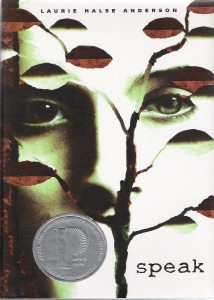
Speak up for SPEAK

Rape is a crime, an outrage, a sin, a horror. Writing about rape is NOT.

Laurie Halse Anderson’s brilliant YA novel, SPEAK, is under attack. Speak up for SPEAK.

Censorship is a crime, an outrage, a sin, a horror.

Q & A with Kimberly Gray

Last September at the Seascape Writers Retreat, I had the pleasure of meeting Kimberly Gray, who had been awarded a major grant for aspiring mystery authors. Kim has graciously agreed to answer a few questions about her work and what winning the grant has meant to her career.

First, about the grant she won: The William F. Deeck – Malice Domestic Grants for Unpublished Writers. Founded in 1993 and sponsored by Malice Domestic, Ltd., the grants are presented annually at the May conference. The grants recognize promising works in fiction and nonfiction which demonstrate commitment to  the “traditional mystery” style (no excessive gore, gratuitous violence, or explicit sex—think Dame Agatha) that is known as malice domestic.

The awards consist of $1,500 to allow recipients to attend a writers’ conference or workshop. For nonfiction, the grant may be used to offset research expenses. It also comps the recipients’ attendance and lodging at the annual conference in Bethesda. The grant period is currently in progress; the deadline is November 15. More details may be found at the MD site.

Kim Gray was awarded the grant in May, 2009. She’s here to share a bit about herself and to help promote the  Malice Domestic grant program by encouraging other writers to apply.

RDL: Kim, what is your writing background?

KG: I love mysteries! About 12 years ago I took a writing workshop with author Barbara Lee. She encouraged me to write what I loved to read. Up until that point I was writing essays and poetry. I had a few poems and essays published in college and high school magazines

RDL:  Tell us about your grant-winning project.

KG: My project that won the grant has the working title of Ghost Of A Chance. It is a paranormal mystery set in Baltimore City. The story revolves around Lottie Gershwin and her mother-in-law, Margot. Together they need to solve a murder… Margot’s.

RDL: What’s the status of the story now?

KG: The book is finished and is in the process of revision now.

RDL: How did you use the Malice grant?

KG: The grant gave me the means to attend a few workshops I would never have been able to afford. One in particular was Seascape, where I had the opportunity to work with many talented published and non-published writers.

RDL:  How did winning the grant affect your career?

KG: Winning the grant has opened doors to editors and agents a little easier. It has helped to give me faith in my talent and encouraged me not to give up on my dream.

RDL: Thanks, Kim! Best of luck with Ghost of a Chance.

Kim Gray is a writer and artist. In addition to her promising new work in the mystery genre, Kim also writes essays and poetry. When she’s not writing, cooking, traveling or listening to local bands, she’s working at Studio C .

You may (try to) follow her on Facebook–if you can keep up with her.