Author: Ramona DeFelice Long
A 7-Question Quiz Before Pitching
 Conference season begins soon, which means writers are polishing their pitches and embracing the art of articulating their story concepts. Five minutes—-or perhaps two—may be all the time you have to convince an agent or editor that your manuscript is worth a look.
To prepare, and not waste time, a lot of writers memorize lines that include word count, genre, title, and hook, because you want to look professional and polished. The danger in the memorized lines is sounding like a robot. And what if the nightmare happens and you choke?
As I have posted about before, I find the 2-minute pitch concept a bit cattle-callish, but it is an opportunity and it’s popular, so I will shelve my reservations and try to be helpful:
A pitch session does not have to be you on one side and an agent/editor on the other, with only memorized lines between you. Reciting pre-packaged lines will make you sound phony, like a telemarketer working from a script that includes all possible scenarios. You don’t want to sound like a machine. You want to be knowledgeable and passionate about the story you have written. However, you don’t want to fumble and sound unsure, or be too sure and sound pompous.
How do you talk about your book without sounding like a salesman, a nervous nelly, or a bore? You treat the pitch like a conversation. Be relaxed (okay, maybe slightly anxious). Be there to TALK. Don’t be the guy who spouts a bunch of buzz words and catch phrases you think the editor/agent will want to hear. Be the guy who is sharing an accurate assessment of your story.
You may have heard the statement that, the more complex the lie, the harder it is to remember. That’s why telling the truth is the easy. You don’t have to think about buzz words or what someone wants to hear. You only have to tell the truth.
Try approaching your pitch with these two concepts in mind: You are there to talk about your novel. You will tell the truth.
That does not mean you can’t prepare. Here are two tips and five questions:
- The agent/editor will need to know the particulars of your story. Become comfortable with the basics, but don’t sound like a trained monkey. Come up with an engaging sentence that is true: “My book is a contemporary thriller called BAD SALE. It’s set in Nebraska and is about a farmer—-a good guy—who is tricked by a childhood friend into buying bomb making supplies at the hardware store.”
- Notice there is no word count in this statement. If the agent/editor wants to know word count, he’ll ask. You’ll answer. Because you know the word count, right? Look at this sentence: “My contemporary thriller BAD SALE is a 95,000 word contemporary thriller set in Nebraska about an honest farmer who is tricked by a childhood friend into buying bomb-making supplies at the hardware store.” <<That’s not a bad log line, but is it conversational? No. Be conversational. Start by describing your novel as a thriller, tell where it’s set, and give the basic plot premise. When the agent/editor wants to know word count (and he will!) he will ask the question. Answer it: “It’s 95,000 words.”
This is how conversation works. Someone introduces an interesting topic. If the listener wants to know more, she will ask a question.
Now for more questions you may likely hear from an agent/editor:
- What are some other books and authors like yours? A couple of names here, recognizable ones. If there’s an author the agent/editor represents or publishes whose work is like yours, here’s where that goes. TELL THE TRUTH.
- Why did you choose my agency/publishing house? This is a legitimate question. Why DID you choose this person to represent you? You must have a reason to think you’d make a good team. Be ready to explain this. TELL THE TRUTH.
- What’s the hook? This gets into telemarketing territory, but you spent a year or more with this novel, so you know it intimately. An agent/editor wants to hear about a setting, a situation, a theme, a special voice, or any number of nebulous factors that would make your story sellable. So, what is it? Only you can answer this. Maybe your hook is that you wrote the book you like to read, and it’s a fun read. Say this with confidence, and I’d buy your book. TELL THE TRUTH.
- Why did you write this? If you have expertise, special interest, personal experience or bloodline connect to an aspect of the story, bring it up now. If you don’t, then it’s perfectly fine to say you love cozies, you’ve been reading them since you could read, and you wanted to add to the genre you love. TELL THE TRUTH.
- What are you offering an audience? You wrote the story. What do you want to say to the people who read it, through the action, characters, plot, and theme? If the justice system frustrates you and you wrote a story that brings closure to a crime, share that. If you are writing an issue story about failed adoptions because the subject is close to your heart, say that. TELL THE TRUTH.
How do you prepare the above information and turn it into a conversation? Let’s turn the questions into a quiz. Answer the questions below. TELL THE TRUTH. Don’t worry about what you think someone wants to hear. Remember, you’ll have an easier time remember the truth than anything you make up that you think sounds appealing.
Here they are, if you’d like to print and answer:
- What are your story’s basics?
- What is the word count?
- What are some other books and authors similar to yours?
- Why did you choose this agency/publisher?
- What’s your hook?
- Why did you write this?
- What are you offering to your audience?
Did you learn anything from this quiz? If so, please share.
Ramona
I Just Wanted You to Know
I didn’t notice the man until he pulled out a chair at my library table. It was meant to seat four but I’d spread out my laptop and bag, stacked some books and opened a notebook to show I was Working. It was a quiet weekday morning, and there were lots of empty carrels. No one had any reason to sit with me.
This man did. I looked up, surprised. I didn’t recognize him but he said hello. He was holding a book, which he set in front of him as he sat. He didn’t open the book. I looked at it and was surprised again. The man’s hands were shaking.
“Ramona?” he said. “You’re Ramona, aren’t you?”
Oh. He knew me. That was a relief. He wasn’t a weirdo. He was tall and dark-haired, early 30s maybe, but he wasn’t smiling as you do when you greet someone you know, and his hands now clutched the book as if he was nervous.
I smiled and said, “Yes, I’m Ramona,” in an appropriately quiet voice while my thoughts shifted to the possible places I’d have encountered him.
“You don’t know me,” he said, before I could fumble out an awkward “Who are you again?”
“I was at the Deer Park last weekend, for the Edgar Allan Poe event,” he said. “You read a poem.”
Another oh. It wasn’t a poem, actually, it was micro-fiction piece. 144 words, with pacing that could be mistaken for a poem when read aloud. Which I had done. Me and a dozen plus other writers, at an annual local event honoring a famous American author. The place was full of Edgar Allan Poe fans. Before reading, I’d had a couple of glasses of wine. I couldn’t remember every person there.
“It was a fun event,” I said, diplomatically, still wondering why he’d approached me. And why was he nervous?
“I just wanted to say how much I enjoyed your piece,” he said.
Wow. What a lovely thing to say. “Thank you! That’s so nice of you,” I said, genuinely touched, though still a bit mystified. Maybe he was a poet himself, and too shy to get up and read at the open mic. Was he looking for encouragement? I could do that. I’d be happy to do that. “Are you a poet?”
He said yes, but that was all, his face both open and inscrutable. I found myself clutching the edge of my laptop the same way he was clutching his book. Something else was happening here, a something else I seemed to be part of, but didn’t understand. I waited.
“I have a two-year old,” he said, the words coming out in a rush. “My wife stays home with him. For months she’s been saying how lonely she is when I’m at work. I never really understood what she meant until I heard you read ‘Countdown’.”
“Countdown” was my poem that wasn’t a poem.
“I went home and thought about it all night. I told my wife about it. I said I’d try to get home earlier and be more understanding.”
He loosened his death grip on the book and put his hands on top of it. They’d stopped shaking, I noticed. I also noticed that he smiled. Just a little one, and maybe it was a little sad, but it was a smile. He cocked his head toward the chairs under the window. “I sat over there for five minutes, staring at you, trying to work up the courage to tell you. I hope you don’t think it’s weird.”
“No,” I said. Weird? It was the biggest compliment I’d ever received, the biggest I could imagine. “I don’t think it’s weird. I can’t tell you how touched I am.”
He stood up. “I just wanted you to know,” he said, and now he seemed a little embarrassed. He said goodbye and left before I could ask his name or more about his work, or if I’d see him again at the next open mic.
That was sometime in 2008. I never saw this man again. When I think of him, I call him Joshua. No particular reason. He just looked like a Joshua.
“Countdown” was about one day in a young mother’s life, when her isolation feels overwhelming. I wrote it in a single morning, sitting at my dining room table, and I was mostly excited about the word count. I tend to babble on. Writing a full story in 144 words was exciting! I read it at the Poe event, never suspecting that in the audience was a young father who’d hear it and recognize something about himself.
I wonder if he has any idea how much our two minute conversation moved me, and continues to, six years later.
People write for different reasons. Too often I heard writers say their book is not great art, or it’s just a story to entertain, or they don’t write literature. I don’t know that anything I’ve written is great art, or wildly entertaining, or literature, but something you write may touch another person. That’s a gift. If that person tells you, that’s a greater gift.
Joshua, wherever and whoever you are, I have never forgotten you. When I write, you are the imaginary person I write for, no matter the subject. I hope your child is healthy, and you and your wife are happy. Because of what you did for me, whenever a piece of writing moves me, I try to tell the author.
Has someone ever given you a compliment that felt more like a gift than a piece of praise? Has a piece of writing moved you? Did you tell the author?
Ramona
PS – “Countdown” was published by the Wilmington News Journal in 2013, to promote the Newark Arts Alliance’s Open Mic. You can read it here.
A Reading List of the Unexpected
From Dictionary.com:
un·ex·pect·ed (adjective) — not expected; unforeseen; surprising: an unexpected pleasure; an unexpected development. Origin: 1580–90
Last Saturday night I gave a talk about seeking the unexpected in writing. I love twists and turns, pivoting plots, unreliable narrators and surprise endings, but also the more esoteric elements of the unexpected in stories: a unique narrative voice; a brave choice by an author; a quietly bold ending.
How are these general ideas—unique voice, brave choice, bold ending—put into practice? In my talk, I mentioned novels that included some element of the unexpected. In response to requests that night and a few subsequent emails, below is a list of stories I used as examples of the unforeseen and surprising. Each employed an unexpected element that added to my reading enjoyment:
Novels:
~ The Book Thief by Markus Zusak: The narrator is Death, but it is also a sympathetic book about an ordinary German neighborhood during the rise of Nazism.
~ The Lock Artist by Steve Hamilton – The antagonist is selectively mute, but more so, he is a criminal who is not particularly charming, amusing, or otherwise disarming, but someone who uses his single talent to get by.
~ Ellen Foster by Kaye Gibbons– There is a play on words in the title, but Ellen is a child narrator with a wise voice.
~ The Bridges of Madison County by Robert James Waller – A love story for the middle aged. There are not very many of those when it was written, and this book opened the door for similar stories to follow.
~ Diane Mott Davidson’s Goldy Bear cozy mystery series – In this series, the sleuth is a caterer. She also had been an abused wife. Cozies didn’t do issues or real life problems. DMD blew that out of the water, for good.
~ The Boy in the Striped Pajamas by John Boyne– Eight-year-old Bruno, the son of a high-ranking Nazi officer, thinks their new home Out-With is a farm and the people wearing “striped pajamas” are farm workers. Bruno’s innocent interpretation of his surroundings represents the willful blindness of adults during the Holocaust.
~ Never Let Me Go by Kazuo Ishiguro– It is revealed early on that Cathy is a clone but why she and her friends were created, and how they became fully developed individuals capable of love and hurt, is an unexpected byproduct of the project.
Short stories:
~ “The Story of an Hour” by Kate Chopin – A surprise ending that is so well foreshadowed, the reader never sees it coming.
~ “August Heat” by F. W. Harvey – An open ending that is also well foreshadowed, but what exactly will happen is unknown.
~ “A Sound of Thunder” by Ray Bradbury – A single change can change the world—and does.
Have you read a story with an element of the unexpected? If so, please share.
Seeking the Unexpected
Mrs. Rochester in the attic. Whoddunit on the Orient Express. Why the Stepford Wives are so obedient. Who fathered Rosemary’s Baby.
I like twists and turns in stories, especially those I don’t see coming. I didn’t know that Soylent Green is people—or maybe I just didn’t want to know.
In my own writing, I seek the unexpected, albeit maybe not so dramatically. Sometimes the surprises surprise me, too. I knew the ending of Evie but I wasn’t sure how she got there until I saw a newspaper ad for the state fair. The quirk in The Chances was born a decade ago, when a friend told me a story about seeing a woman on the side of the road. The Barking Dog needed to be quieted, but it took a few rewrites to realize how and by whom.
The unexpected is not always a twist or turn or big sexy revelation. The unexpected in a story can be the wise voice of a child narrator, a dark place that is full of light, ugliness within beauty or kindness within the jaded. I strive to write the unexpected and when I am reading the work of others, both as a reader and as an editor, I am delighted when I find it in a story.
 On Saturday, January 18, I’ll be speaking about Seeking the Unexpected at the Newark Arts Alliance. My talk is the third installment of the NAA’s Literary Arts Discussion Series. The first two discussions were led by Delaware’s Poet Laureate JoAnn Balingit and Charles Todd, the state’s acclaimed mother and son mystery writing team.

Because I write and edit professionally, I’ll read a story to show my point and discuss from there how to find and write the unexpected. I hope you’ll join us and support arts and literature in Delaware.
4 Ws and an R
 Who, What, When, Where, Why and How….Anyone who has ever worked for a news outlet is familiar with the 5 Ws and an H. My college training was in journalism, so I find myself looking for this familiar set of letters in news stories, and in fiction too. If you are a working writer planning out a story, addressing these six points of your plot is a good starting place.
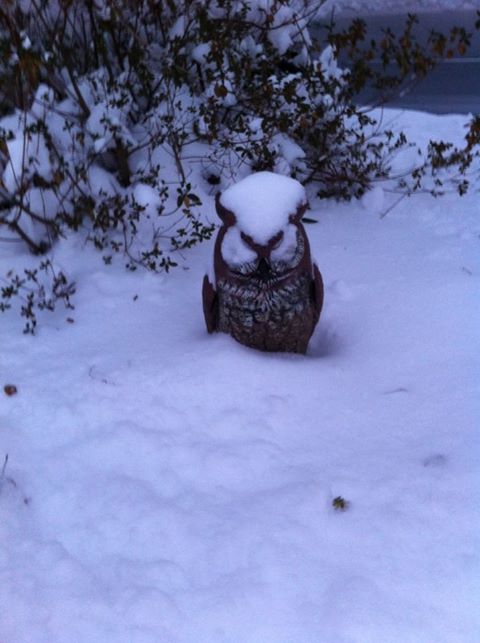
Another good starting place is a new year. Three days into a cold and snowy 2014, and I am thinking about a new set of letters, and how they can help me address the various points of my working life.
For me, the letters are 4 Ws and an R.
WRITE – The most obvious, but sometimes the most difficult to schedule. Carving out a couple of hours a day for my own writing is a must for 2014, so I have taken my own Sacred Writing Time Pledge. But I also want to share my work so “Writing” also means submitting, being critiqued, reading at open mics. And more blogging, maybe?
WORK – My editing calendar is a colorful blast of penciled-in client names, online classes, speaking engagements, conferences. Thank you, world, for giving me this work I love to do! This year, I have a new notion or two to expand my work life and offer useful services to my writing friends and clients. Stay tuned.
WALK – Face it, without the daily walk, I’m grumpy. No one likes grumpy. Walking builds a stronger body, but I’m fortunate to have a Walking Friend who is a non-writer. I’ve already written about her value to me, and her patience with my sometimes skewed thinking. I wonder how many writers depend on physical activity to work out plot problems and/or explore story ideas? If you are lucky enough to have a reader friend who will listen to your writerly ramblings, hug him or her for me.
WORKSHOP – I love to teach! But I also love to be taught. If I (or you) ever begin to think I (or you) know all there is to know about writing, it’s time to retire, and maybe buy a few pounds of humility. Writers are generous with their knowledge and experience. Conferences are full of useful and practical courses, and if you can’t travel, the online workshop world is right at your keyboard. I take courses, too, and am always on the lookout for classes to take. Recommendations are welcomed!
READ – I write in the morning, edit all afternoon, and in the evening I like to chill out and rest my brain. But at bedtime, I still need that hour of reading. Is it possible to sleep without sliding into the zone without a story? Not for me. For 2014, I’ve dusted off my reading diary. How many books will I read for pleasure this year?
Write, Work, Walk, Workshop, and Read – my 4 Ws and an R.
What letters work for your life?
Happy 2014!
Ramona
The Sacred Writing Time Pledge 2014
On New Year’s Day of 2012, I created the Sacred Writing Time Pledge. The Pledge was born in response to a writing group colleague who bemoaned her lack of organization, willpower, family cooperation, and other reasons (aka excuses) that prevented her from being the steady, daily, productive writer she wanted to be.
Writers write. Writers who get published complete work and submit that work to agents and editors. That’s how it works. The way to write for publication is to commit to it. That means nothing–and no one–stands in the way of your writing goals.
Don’t allow reasons (aka excuses) to gain power over you and undermine your goals. I’d like to invite my writing friends and colleagues to take the Sacred Writing Time Pledge for the first time, or renew from last year.
.
The Sacred Writing Time Pledge




 Ramona DeFelice Long